

Affordable Dog Grooming Supplies for Small Dogs
Table of Contents
- Why Small Dogs Need Their Own Grooming Supplies
- Dog Grooming Essentials That Cover the Basics
- Dog Brushes for Small Dogs: Match the Tool to the Coat
- Small Dog Nail Clippers and Paw Care
- Building a Small Dog Grooming Kit on a Budget
- Cost Per Use and Ongoing Replacement Costs
- Safe Home Grooming for Small Dogs
- Frequently Asked Questions
Last Updated: October 4, 2026
Why Small Dogs Need Their Own Grooming Supplies
Small dogs have shorter legs, finer coats, and thinner nails than larger breeds, so full-size tools often slip, pinch, or overwhelm them. That is why affordable dog grooming supplies for small dogs are sized differently, not just priced differently.
The evidence base here is thinner than most owners assume. A 2022 review by researchers S. E. McDonald and colleagues found that few studies have examined how access to grooming services and supplies affects companion-animal health and welfare (Grooming-Related Concerns Among Companion Animals). In practice, that means the sensible approach is matching tools to your dog's size and coat, not chasing marketing claims.
Below, we break down what you actually need, what you can skip, and what each item costs to run over a year.
Dog Grooming Essentials That Cover the Basics
The core dog grooming essentials for a small dog come down to four jobs: coat, nails, paws, and skin. Everything else is optional.
The Four Tasks Every Small Dog Needs
- Coat care: daily or every-other-day brushing to prevent mats and control shedding
- Nail trimming: every 3-4 weeks, since small dogs often wear nails down more slowly on short walks
- Paw and pad checks: burrs, ice, and hot pavement all affect small paws
- Skin and eye maintenance: wiping tear staining and checking for irritation
What You Can Skip for Now
A grooming cage, cage bank, or pet dryer only makes sense if you are grooming several dogs a week. For one small dog at home, they take up space and money you do not need to spend.
Dog Brushes for Small Dogs: Match the Tool to the Coat
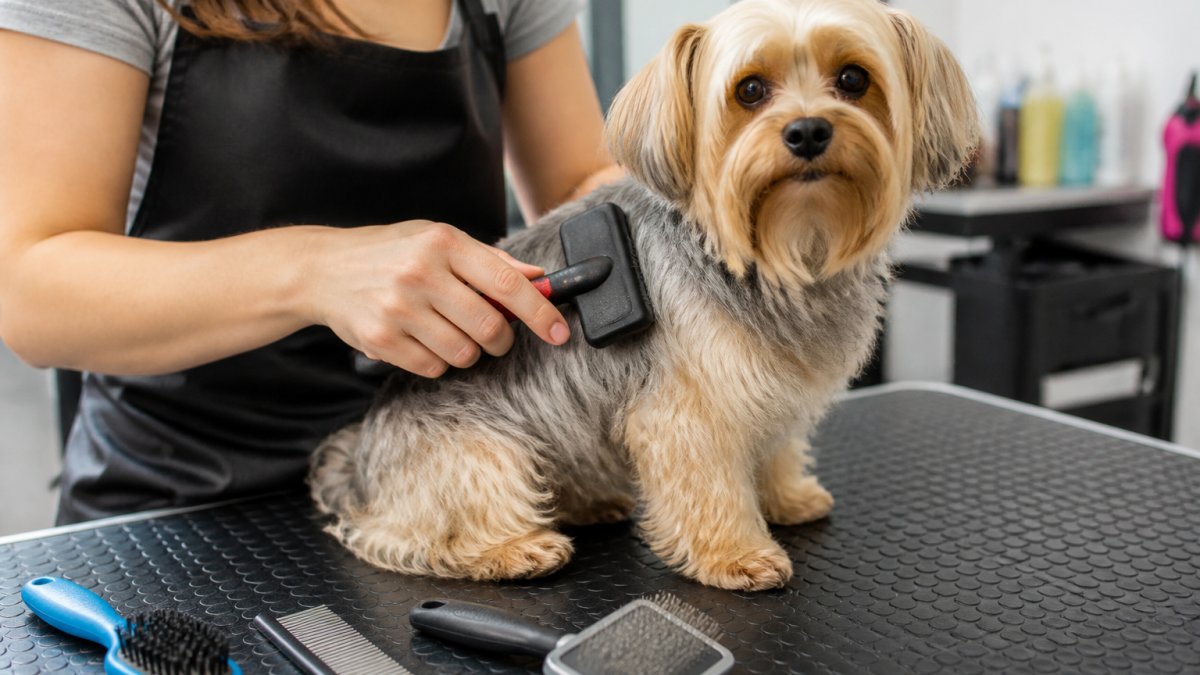
Dog brushes for small dogs should match the coat, not the breed name. Retail grooming selections typically span brushes, combs, shears, and dematting tools (Professional Dog Grooming Tools), but a small dog usually needs just one or two of those categories. The reason is simple mechanics: a slicker brush sized for a Labrador has pins spaced for a coat that is two to three times thicker than a Yorkie's, so the pins skate over the surface instead of reaching the skin.
Why Size Changes the Tool, Not Just the Price
A brush head wider than your dog's back cannot follow the body's contours, and pins longer than the coat is deep will scratch skin without lifting loose hair. For toy and small breeds, look for a slicker head roughly 2-3 inches wide with fine, slightly bent pins, and a metal comb with teeth spaced no more than about 1/16 inch apart. Those two dimensions, head width and pin or tooth spacing, matter more than brand.
Short, Long, and Double Coats
Short, smooth coats (Beagle, Pug, Chihuahua): a rubber curry or soft bristle brush lifts loose hair in under a minute. Skip the slicker here; it mostly polishes the surface.
Long, silky coats (Yorkie, Maltese, Shih Tzu): a slicker brush plus a metal comb.
Double coats (Pomeranian, Sheltie, Corgi): these shed heavily twice a year and benefit from a deshedding tool used weekly, not daily.
Curly or wavy coats (Poodle, Bichon): these need daily line brushing with a slicker and comb, because curls trap loose hair against the skin and form mats that tighten within days.
Matching Tool to Coat Type
| Coat Type | Primary Tool | Secondary Tool | Frequency |
|---|---|---|---|
| Short, smooth | Rubber curry | Soft bristle brush | 2-3x per week |
| Long, silky | Slicker brush | Metal comb | Daily |
| Double coat | Deshedding tool | Slicker brush | Weekly (seasonal daily) |
| Curly/wavy | Slicker brush | Metal comb | Daily |
For most small dogs, our Slicker Grooming Brush for Dogs & Cats ($14.99) covers the daily work on both short and long hair. If your dog has a dense double coat, the Dog & Cat Deshedding Grooming Brush ($60.75) removes undercoat more efficiently, though it costs more than the other brushes combined.
Small Dog Nail Clippers and Paw Care
Small dog nail clippers need a smaller blade opening than standard clippers, because a thick blade can crush a thin nail instead of cutting it cleanly. Stainless steel holds an edge longer and is easier to sanitize between uses.
Our Dog & Cat Nail Clipper ($12.50) is built for exactly this job. Trim small amounts at a time and stop before the pink quick, which sits closer to the tip on small dogs than on large ones. A nail file smooths sharp edges afterward. Check paw pads for cracks, burrs, or matted fur between the toes, since small dogs pick up debris more easily close to the ground.
Building a Small Dog Grooming Kit on a Budget
A small dog grooming kit does not need to be expensive, and it does not need to be bought all at once. Building one in stages keeps the upfront cost low and lets you add tools only as you need them. The key is to match the kit to how often you actually groom, not to how often you imagine you will.
Slicker Grooming Brush for Dogs & Cats →
Starter Kit by Budget and Grooming Frequency
| Budget | What to Include | Best For | Approx. Cost |
|---|---|---|---|
| Under $30 | Slicker brush, nail clipper | Weekly brushing, monthly nails | $27.49 |
| $30-$60 | Above plus grooming/flea tool set, tear stain wipes | Dogs prone to mats or tear staining | $57.47 |
| $60+ | Above plus deshedding brush, skin care liquid | Double coats, heavy shedding | $138.21 |
Which Kit Fits Your Routine
Occasional groomer (once a week or less): the under-$30 tier is enough. A slicker brush and a nail clipper cover the two jobs that matter most for a small dog, and you can add a comb later if you find mats forming.
Regular home groomer (two to three times a week): step up to the $30-$60 tier. The Pet Grooming & Flea Removal Tool Set ($27.99) bundles 30 plastic pieces for routine coat care and for carefully removing visible fleas or debris during grooming.
Heavy-shedding or double-coated dogs: the $60+ tier adds the deshedding brush and a skin care liquid. The Gentle Pet Skin Care Liquid ($19.99) comes in a compact 0.7 fl oz bottle, so frequent users will repurchase more often than occasional ones.
What to Skip Until You Need It
A grooming table, a pet dryer, and a full clipper set are the three most common impulse buys that sit unused. Add a table only if you groom more than once a week or want a stable, elevated surface, the Height-Adjustable Pet Grooming Table ($170.75) rotates 360 degrees and includes a storage compartment. Add clippers only if you plan to trim coat length yourself rather than just maintain it.
Cost Per Use: The Number That Actually Matters
Sticker price tells you what you pay once. Cost per use tells you what the tool costs you over its life. A $12.50 nail clipper used monthly for two years costs about 52 cents per trim. A $14.99 slicker brush used three times a week for a year works out to roughly 10 cents per session. A $60.75 deshedding brush used weekly for two years is about 58 cents per session, more than the slicker, but it replaces a professional deshedding appointment that costs far more per visit.
Cost Per Use and Ongoing Replacement Costs
Cost per use matters more than sticker price. A $12.50 nail clipper used monthly for two years costs about 52 cents per trim. A $14.99 slicker brush used three times a week for a year works out to roughly 10 cents per session.
Replacement schedules vary by tool. Clippers and stainless steel blades hold up for years with cleaning. Brushes lose bristles or bend pins after 12-18 months of regular use. Wipes and skin care liquids are consumables: the Gentle Pet Skin Care Liquid ($19.99) comes in a compact 0.7 fl oz bottle, so frequent users will repurchase more often than occasional ones.
Safe Home Grooming for Small Dogs
Safe home grooming starts with short sessions and a stable, non-slip surface. Small dogs have less body mass, so a fall from a table or a sudden jerk during nail trimming does more damage than it would to a large breed.
Keep these rules in mind:
- Introduce one tool at a time, with treats, before a full session
- Work in 5-10 minute blocks rather than one long sitting
- Never force a mat out with scissors near the skin
- Inspect skin as you work and stop if you see irritation
If you find persistent fleas, irritation, or skin problems, contact a veterinarian rather than treating it at home. The ASPCA notes that grooming-related supplies, including brushes, nail trimmers, and shampoo, are among the items distributed through community engagement programs to support in-home grooming (Increase Access to Dog and Cat Grooming Services), which reflects how routine these tools are for basic care.
Frequently Asked Questions
What should a basic dog grooming kit include for a small dog?
Start with four tools: a brush matched to your dog's coat, a nail clipper sized for small paws, a gentle pet shampoo, and a few grooming wipes. That set covers brushing, nail trims, bathing, and quick cleanups without buying anything you will not use. Add a comb or deshedding tool later if your dog's coat needs it.
Which brush is best for a small dog's coat type?
Match the brush to the coat, not the breed size. A slicker brush works for most short and medium coats and lifts loose hair without scratching skin. A dematting comb suits longer or double coats that tangle easily. The Slicker Grooming Brush for Dogs & Cats ($14.99) covers routine brushing for both short and long hair, so it is a practical first purchase if you are unsure where to start. Brush in the direction the coat grows.
Do small dogs need special grooming supplies?
They need tools sized for small bodies. Standard nail clippers can be too large for tiny paws, and full-size brushes can feel harsh on a small dog's skin. Look for compact clippers, smaller brush heads, and lightweight tools. The Dog & Cat Nail Clipper ($12.50) is built for small paws and claws. Research on grooming access and companion-animal welfare is still limited, so the practical rule is simple: if a tool feels too big or rough for your dog, it is.
Can I use human shampoo on my dog?
No. Human shampoo is formulated for human skin pH, and a dog's coat and skin have different needs. Use a pet-specific shampoo, and if your dog has skin concerns, ask your veterinarian before trying anything new. A gentle pet skin care product used as directed on its label is a safer addition to your routine than borrowing from your own bathroom shelf. Always follow the product's directions and stop use if irritation appears.
Grooming a small dog at home gets easier once your tools fit the dog instead of fighting it. Pets R Smarter stocks expert-approved grooming tools sized for small breeds, backed by our Tail Satisfaction Guarantee and a hassle-free shopping experience. Start with a slicker brush and a properly sized nail clipper, then add tools as your routine grows. Get started with Pets R Smarter and build a grooming kit your small dog will actually tolerate.