

Benefits of Regular Pet Brushing: A 2026 Guide
Table of Contents
- Why Pet Brushing Is the Most Underrated Preventative Care Habit
- How Often Should You Brush Your Dog? Frequency by Coat Type
- The Health Benefits of Regular Pet Brushing: From Skin to Savings
- Best Grooming Tools for Dogs: A Selection Guide for Every Coat
- How to Brush a Dog With Matted Hair Without Causing Pain
- Desensitizing Anxious Pets: Making Brushing a Calm Routine
- How Brushing Strengthens the Human-Animal Bond
- Frequently Asked Questions
Last Updated: September 16, 2026
Why Pet Brushing Is the Most Underrated Preventative Care Habit
According to a 2023 study published by the National Library of Medicine, 42% of dog owners report brushing their pet's teeth daily, yet far fewer keep up with coat care between professional appointments. That gap matters. Regular pet brushing is the single most effective home method for maintaining skin and coat health, and it takes less time per week than most owners assume. Below, we'll show you exactly how often to brush, which tools work for which coats, and how to handle mats without turning grooming into a fight.
What the 2026 Data Says About Home Grooming
The market reflects how seriously owners now take this habit. The "Bathing & Brushing" segment commands 34% of the global pet grooming market in 2026, per Persistence Market Research, and the broader category is valued at USD 19.5 billion with a 9.1% CAGR projected through 2036, according to Future Market Insights. A February 2026 U.S. News & World Report survey found that 72% of pet parents spend between $50 and $200 per month on combined pet expenses, grooming included.
How Often Should You Brush Your Dog? Frequency by Coat Type
"Regular" is not a schedule. Owners who brush when they remember end up with mats, and owners who brush daily on a short-coated dog waste time and irritate skin. Frequency depends on four things: coat type, shedding season, age, and current coat condition.
The Baseline Schedule by Coat Type
| Coat Type | Off-Season | Peak Shedding Season | Notes |
|---|---|---|---|
| Smooth (beagle, boxer) | 1x per week | 2x per week | Rubber curry; 3-5 minutes |
| Double (husky, German shepherd) | 2-3x per week | Daily | Rake first, slicker second |
| Curly (poodle, doodle) | Every other day | Daily | Must comb to skin; mats hide |
| Wire (schnauzer, terrier) | 2x per week | 2-3x per week | Hand-strip or clip every 8-12 weeks |
| Long/silky (Yorkie, Maltese) | Daily | Daily | Pin brush plus comb |
Peak Shedding Season Changes Everything
Most double-coated breeds blow coat twice a year, typically in spring and fall, when daylight shifts trigger the undercoat to release. During those windows, daily sessions for seven to fourteen days remove the loosened undercoat before it packs against the skin. Miss that window and the dead coat mats, traps moisture, and can cause hot spots. Short-coated dogs also shed more in spring and fall but need only a bump from once to twice weekly.
Age Adjustments
- Puppies under six months, Short sessions of two to three minutes, two to three times per week. The goal is acclimation, not coat care. Puppy coats are soft and tangle easily, so a slicker with flexible pins is enough.
- Adult dogs, Follow the coat-type schedule above.
- Senior dogs, Same frequency as adults, but shorter sessions and softer tools. Older dogs lose skin elasticity and tolerate pressure less well. Check for lumps and skin changes at every session.
- Dogs recovering from surgery or skin issues, Follow your veterinarian's guidance; brushing over incisions or hot spots can delay healing.
When Once a Week Is Not Enough
If you can feel mats forming behind the ears, under the collar, at the tail base, or in the armpits, weekly brushing is already failing. Other signals:
- Hair comes off in clumps rather than loose strands.
- The coat feels warm or damp at the skin.
- You see dandruff or flaking after brushing.
- Your dog flinches when you touch a specific area.
- Furniture and clothing collect noticeably more hair within a few days of a session.
How Long Each Session Should Take
A useful session runs long enough to reach skin on every body zone: back, sides, chest, belly, legs, tail, and behind the ears. For a short-coated dog, that is three to five minutes; a double coat in season, fifteen to twenty; a curly coat, ten to fifteen because the comb must reach skin. If a session regularly runs longer, the schedule is too infrequent, not the brushing too slow.
Building the Habit
Tie brushing to an existing routine, after the evening walk, before dinner, or during a favorite show. Two to three minutes on a consistent schedule beats a marathon session once a month, because the trigger becomes automatic rather than a decision.
The Health Benefits of Regular Pet Brushing: From Skin to Savings
The benefits of regular pet brushing extend well past appearance. Routine brushing distributes natural oils across the coat, stimulates circulation at the hair follicles, and removes dead hair before it becomes a mat. A 2026 review from Best Version Media documents that weekly brushing supports skin oil production and enhances circulation, which is why groomed coats look glossier and feel softer.
Distributing Natural Oils and Promoting Healthy Coat Growth
Every stroke spreads sebum from the skin along the hair shaft, giving a healthy coat its sheen and water resistance. Skip brushing for two weeks and you'll see dull topcoat, dry patches, and more shedding.
Reducing Shedding, Dander, and Painful Matting
Regular removal of dead hair means less of it on your furniture and fewer allergens in the air. Matting is the bigger concern. Tight mats pull on skin, restrict movement, and can hide wounds or parasites underneath. The ASPCA's grooming resources note that consistent home grooming prevents severe matting and the skin injuries that come with it.
Early Detection, Hygiene, and Lower Veterinary Costs
Hands-on brushing is a weekly health check. You'll feel lumps, ticks, hot spots, and flea dirt before they become expensive problems.
Best Grooming Tools for Dogs: A Selection Guide for Every Coat
Most owners own one brush and use it on everything, which is why sessions take too long, pull too hard, and leave half the undercoat behind.
Reading the Coat Before You Buy
Run your fingers through the coat from skin to tip.
Tool Types and What Each One Actually Does
- Slicker brush, Fine wire pins set at an angle.
Matching Tool to Coat Type
| Coat Type | Primary Tool | Secondary Tool | Avoid |
|---|---|---|---|
| Smooth (beagle, boxer) | Rubber curry brush | Bristle brush | Slicker (scratches skin) |
| Double (husky, German shepherd) | Undercoat rake | Slicker for topcoat | Bristle (does nothing) |
| Curly (poodle, doodle) | Slicker brush | Metal comb | Undercoat rake (tears curls) |
| Wire (schnauzer, terrier) | Slicker brush | Metal comb | Curry brush (misses texture) |
| Long/silky (Yorkie, Maltese) | Pin brush | Metal comb | Undercoat rake |
Bristle Material and Pin Length Matter
Two slicker brushes can behave completely differently.
When to Replace a Tool
A slicker brush is worn out when the pins bend, lose their tips, or no longer spring back.
Starter Kit vs. Full Kit
How to Brush a Dog With Matted Hair Without Causing Pain
Matted coats require patience, not force.
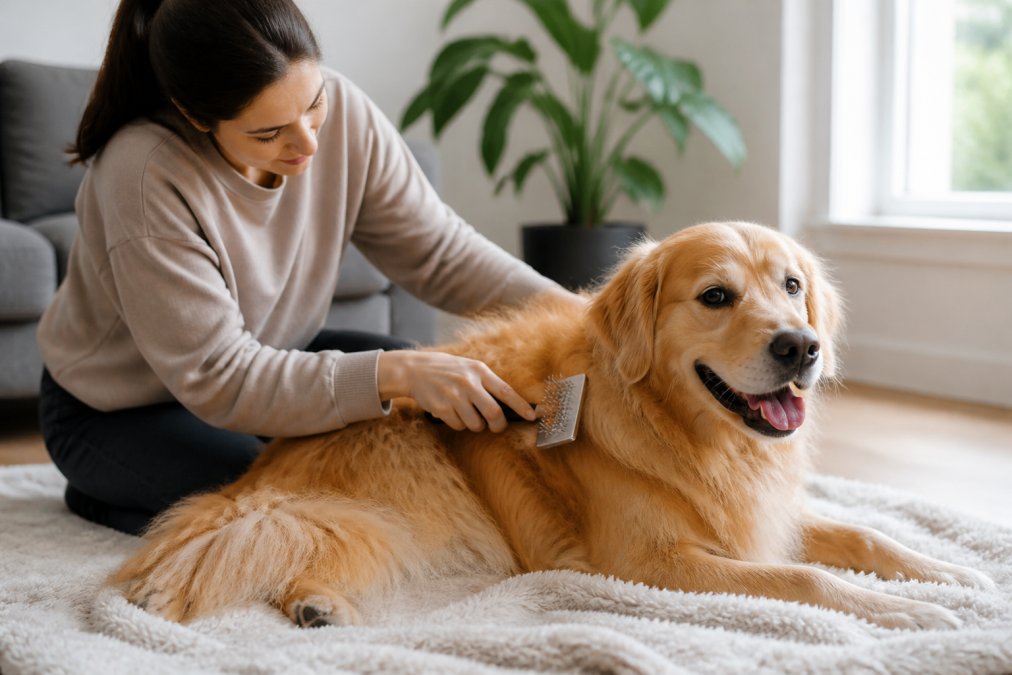
Desensitizing Anxious Pets: Making Brushing a Calm Routine
How Brushing Strengthens the Human-Animal Bond
Grooming is contact, and contact builds trust.
Frequently Asked Questions
What are the health benefits of brushing a pet regularly?
Regular pet brushing distributes natural oils across the coat, removes dead hair and dander, and stimulates skin circulation. It also gives you a daily chance to spot lumps, parasites, or skin irritation early. According to a 2023 PMC study, brushing is the single most effective method for maintaining dental and coat health between professional cleanings, and it supports preventative care that can reduce veterinary costs over time.
How often should you brush your dog?
Most dogs do well with a brushing session every one to three days. Short-coated breeds can often go a full week, while double-coated and long-haired breeds need daily or every-other-day brushing to prevent tangling and matting. Build the habit into your evening routine so it feels automatic.
Can regular brushing help reduce shedding in the home?
Yes. Brushing removes loose dead hair and undercoat before it lands on your furniture and floors. Deshedding tools reach the undercoat where most shedding originates, cutting down on the volume of hair that ends up in your home. Weekly brushing during heavy shedding seasons makes a noticeable difference, and it also reduces the dander that triggers allergies in some households.
What should I do if my dog hates being brushed?
Start with short sessions of one to two minutes and pair each one with treats or praise. Let your dog sniff the brush first, then touch it to a shoulder or hip before moving to the full body. A 2022 PMC study on grooming-related concerns notes that forced grooming can create anxiety, so never restrain or rush a nervous pet. If your dog stays stressed, ask your veterinarian about gradual desensitization techniques.
Most owners underestimate how much a five-minute brushing routine prevents, and the gap between knowing and doing is where problems start. Pets R Smarter exists to close that gap with expert-approved tools, premium quality products, and our Tail Satisfaction Guarantee, so you can build a grooming habit that actually sticks. Get started with Pets R Smarter and give your pet the coat care they deserve.