

Best Grooming Tools for Home Maintenance: Complete Guide
Table of Contents
- Essential Grooming Tools for Beginners
- Best Clippers for Home Dog Grooming
- Brushes and Combs for Coat Maintenance
- How to Groom a Dog at Home Safely
- Tool Sanitation and Blade Maintenance
- Budget vs. Professional-Grade Tools: What You Actually Need
- Tool Ergonomics: Comfort Matters for Your Hands
- Breed-Specific Grooming Tool Kits
Best Grooming Tools for Home Maintenance: Complete Guide
Last Updated: August 3, 2026
When pet owners invest in the best grooming tools for home maintenance, they're not just buying equipment, they're taking control of their pet's health, comfort, and appearance between professional appointments. At Pets R Smarter, we understand that choosing the right grooming tools can transform home care from a stressful chore into a manageable routine that strengthens your bond with your furry companion. This comprehensive guide walks you through essential tools, safety practices, and maintenance strategies that professionals use, so you can groom confidently at home.
Essential Grooming Tools for Beginners
The best grooming tools for home maintenance prioritize ease of use, safety features, and forgiveness when mistakes happen. Beginners need equipment with intuitive designs, clear safety guards, and straightforward maintenance.
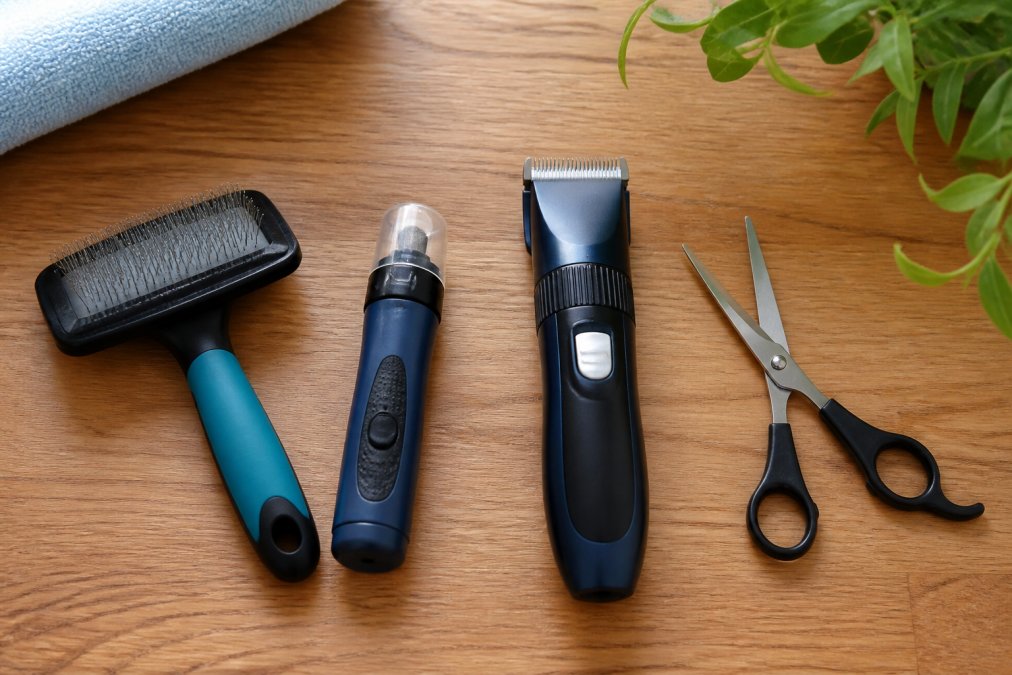
Start with these foundational tools: a slicker brush for everyday coat maintenance, cordless clippers with multiple blade guards, a nail grinder or trimmer, and grooming scissors for detail work. According to American Kennel Club grooming guidelines, regular grooming reduces skin infections and allows early detection of health issues like lumps or parasites.
Ergonomic handles with rubber grips and balanced weight distribution reduce hand fatigue during grooming sessions and prevent tension in your wrists and shoulders. Quality beginner kits from Pets R Smarter emphasize comfort alongside functionality, ensuring you can groom for 20-30 minutes without strain.
Best Clippers for Home Dog Grooming
Cordless clippers dominate the home grooming market because they eliminate setup complexity and offer superior maneuverability. You can move freely around your dog without managing a power cord, which is especially valuable when grooming anxious pets who need reassurance and movement.
Blade types directly determine cutting performance and finish quality. T-blade clippers cut close to the skin for sanitary trims and paw pads. Skip-tooth blades are gentler on thick, double-coated breeds because they cut through the undercoat without pulling. Ceramic blades stay sharper longer and run cooler than steel, reducing clipper burn risk on sensitive skin.
A size 10 blade leaves 1/8 inch of hair for general body trims on short-coated breeds. A size 30 blade cuts much closer for sanitary areas. Most home groomers benefit from having two or three blade sizes rather than trying to do everything with one blade.
Battery runtime matters more than advertised specifications suggest. A clipper claiming "60 minutes" of runtime may actually deliver 45 minutes of effective cutting before power drops significantly. Budget for 50-minute sessions to stay safely within the battery's optimal range.
Brushes and Combs for Coat Maintenance
The slicker brush is the workhorse of home grooming. Its fine, short wires close together remove loose hair, prevent matting, and smooth the coat. Use it in gentle, short strokes following the direction of hair growth. A slicker brush works on most coat types and is essential for daily maintenance between grooming sessions.
Undercoat rakes and deshedding tools target the dense undercoat that sheds seasonally. Double-coated breeds like Golden Retrievers, German Shepherds, and Huskies shed dramatically during seasonal coat blows. An undercoat rake removes loose undercoat hair before it ends up on your furniture. During shedding season, using an undercoat rake 2-3 times per week dramatically reduces the amount of hair in your home.
When your dog develops matted areas, common behind the ears, in the armpits, and on the tail, you need a detangling spray and a mat splitter or dematting comb. Spray the matted area lightly, wait 30 seconds, then gently work the mat apart using your fingers or a mat splitter. Never try to brush through a mat with a regular slicker brush; you'll cause pain and potentially skin damage.
Daily brushing prevents most matting from developing. For long-coated or curly-haired dogs, skipping even three days of brushing can lead to significant matting.
How to Groom a Dog at Home Safely
A grooming table elevates your dog to a comfortable working height, reducing strain on your back and giving you better control. Non-slip mats on the table prevent your dog from slipping and panicking. Position the table near a wall or in a corner to create a contained space where your dog feels secure.
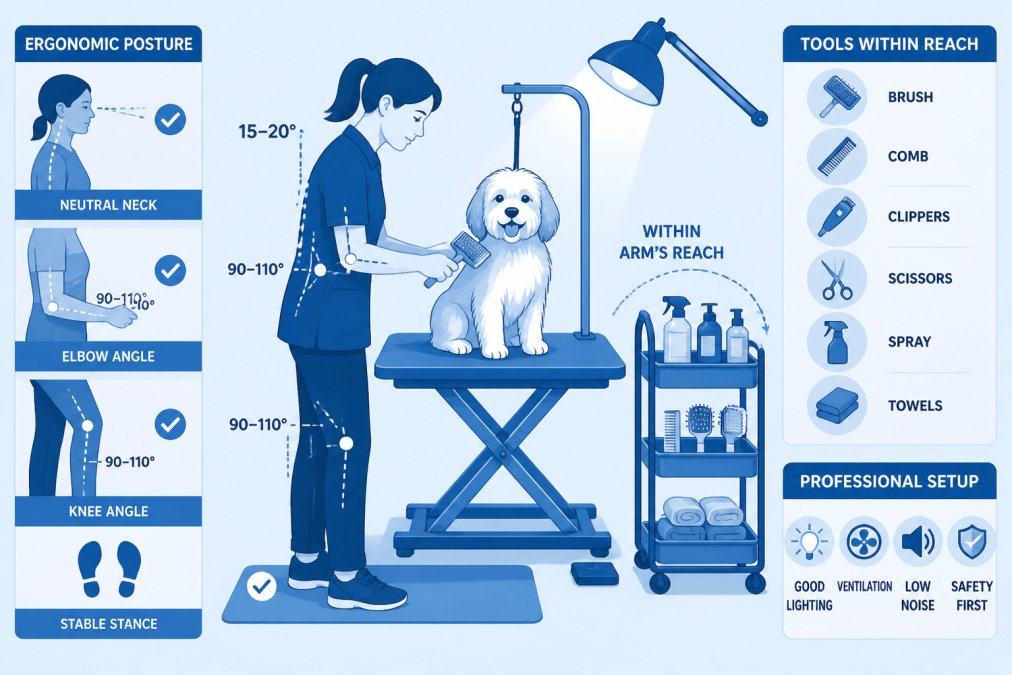
Good lighting is essential. Shadows hide skin conditions, parasites, and areas you've already trimmed. Position your grooming table under bright, natural light or use a clip-on work light. This allows you to catch potential health issues like hot spots, rashes, or unusual lumps that might warrant a vet visit.
Safety guards on clippers prevent accidental cuts. A size 10 guard leaves 1/8 inch of hair; a size 30 guard cuts much closer. Using the correct guard for each area of your dog's body prevents clipper burn and reduces anxiety. Never remove a safety guard to cut closer.
A grooming loop (a leash attachment on the grooming table) prevents your dog from jumping off. However, never leave your dog unattended while restrained. Keep one hand on your dog while grooming to maintain control and provide reassurance.
Tool Sanitation and Blade Maintenance
After each grooming session, wipe blades with a clean cloth to remove hair and skin debris. Once per week, soak blades in a blade cleaning solution for 10-15 minutes, then dry thoroughly before storage. This simple step extends blade life significantly and reduces the risk of skin infections from contaminated tools.
Store blades in a dry location away from moisture, which causes rust and corrosion. Professional blade sharpening costs $15-25 per blade and is worth the investment when blades become dull. Replace clipper blades every 6-12 months depending on usage frequency.
Store your complete grooming kit in a designated location where moisture and dust can't accumulate. A plastic toolbox with compartments keeps everything organized and protected.
Budget vs. Professional-Grade Tools: What You Actually Need
Home grooming doesn't require professional-grade equipment, but it does require quality basics. Professional-grade clippers offer stronger motors that maintain consistent cutting power even through thick coats. They run cooler and blades hold their edge longer. For home groomers who groom one or two dogs monthly, mid-range clippers ($80-150) offer the best value.
Invest in quality clippers and brushes; save money on accessories. Your clipper is the workhorse of your grooming kit. A $20 slicker brush works just as well as a $40 version. A $40 clipper that requires blade replacement every three months costs more annually than a $120 clipper that needs new blades annually.
Tool Ergonomics: Comfort Matters for Your Hands
Ergonomic design prevents repetitive strain injuries that develop over months of grooming sessions. Clippers with balanced weight distribution reduce hand fatigue. Hold your clippers in different positions during your grooming session, horizontal, vertical, and angled, to distribute the strain across different muscle groups.
Rubber or textured grips provide better control than smooth plastic, especially when your hands are wet or sweaty. Keep your wrist relatively straight rather than bent at extreme angles. Taking short breaks every 15-20 minutes prevents cumulative strain.
A sturdy, non-wobbling grooming table allows you to relax your grip and maintain proper posture throughout the session.
Breed-Specific Grooming Tool Kits
Double-coated breeds like Golden Retrievers, Huskies, and German Shepherds require different tools than single-coated breeds. An undercoat rake is essential for managing shedding and preventing matting. A slicker brush alone won't penetrate the undercoat effectively. A dematting comb helps address matting that occurs if undercoat maintenance is skipped.
Poodles, Doodles, and terrier breeds have hair that grows continuously and mats easily. These dogs need frequent brushing (3-4 times weekly) with a slicker brush and regular clipping every 6-8 weeks. A mat splitter becomes essential because these coats mat quickly. Clippers with skip-tooth blades work better on curly coats than standard blades.
Short-coated breeds like Labradors need less frequent brushing but benefit from deshedding tools during shedding season. A rubber curry brush or shedding blade removes loose hair efficiently.
| Breed Type | Primary Brushes | Clipping Frequency | Key Maintenance Challenge |
|---|---|---|---|
| Double-coated (Golden, Husky) | Undercoat rake, slicker brush | 2-3x yearly | Seasonal shedding, undercoat matting |
| Curly/Wiry (Poodle, Doodle) | Slicker brush, mat splitter | Every 6-8 weeks | Frequent matting, continuous growth |
| Short-coated (Labrador, Boxer) | Shedding blade, curry brush | As needed for sanity | Seasonal shedding management |
| Wire-haired Terriers | Slicker brush, stripping knife | Every 8-12 weeks | Hand-stripping for show coat |
Choosing the best grooming tools for home maintenance means matching equipment to your dog's specific coat type and your commitment level. Start with quality basics, a good clipper, slicker brush, and nail grinder, then add breed-specific tools as you develop your grooming routine.
Regular grooming at home catches health issues early, maintains your dog's comfort, and deepens your relationship through hands-on care. Pets R Smarter has curated premium grooming tools specifically designed for home use, prioritizing safety, durability, and comfort for both you and your pet. Start your grooming journey with equipment that's been tested for real home use, backed by our Tail Satisfaction Guarantee.
Frequently Asked Questions
What are the essential grooming tools I need to start home maintenance?
Start with these core tools: a slicker brush for detangling, an undercoat rake for deshedding, cordless clippers with safety guards, nail grinders for paw pads, and ear cleaning supplies. For most coat types, these handle routine maintenance. Add scissors for precise trimming around the face and paws. Choose tools with ergonomic handles to reduce hand fatigue during longer grooming sessions.
How do I groom a dog at home safely without professional training?
Use a grooming table to keep your dog at a comfortable height and prevent injury. Always attach a safety guard to clippers to avoid cutting skin. Work in good lighting and keep your dog calm with treats. Start with basic maintenance like brushing and nail care before attempting full-body trims. Watch instructional videos specific to your dog's coat type, and consider consulting a professional groomer for breed-specific guidance on your first attempt.
What's the difference between budget and professional-grade grooming tools?
Professional-grade tools use higher-quality stainless steel blades that stay sharp longer and require less frequent sharpening. Budget tools often dull faster and may have weaker motors. Professional clippers typically have better ergonomic design to reduce hand strain during extended use. While professional tools cost more upfront, they often last years longer, making them more economical over time. For occasional home maintenance, quality mid-range tools offer good balance between cost and durability.
How often should I clean and maintain my grooming tools?
Clean blades immediately after each grooming session by wiping with a dry cloth and removing hair. Once weekly, disinfect blades with a blade cleaner or spray. Oil clipper blades every 2-3 uses to prevent rust and maintain cutting performance. Store tools in a dry location away from moisture. Replace or sharpen dull blades promptly, as they pull hair instead of cutting cleanly, causing discomfort to your dog and frustration during grooming.
Are breed-specific grooming tool kits worth buying?
Breed-specific kits can be helpful if they include the right tools for your dog's coat type. Double-coated breeds need undercoat rakes and slicker brushes for deshedding. Curly-haired breeds benefit from detangling combs and specific clipper blade lengths. However, you don't need a complete kit if you already own basic tools. Research your breed's grooming needs and buy individual tools as needed. Quality matters more than having a full kit with tools you won't use.
This article was written using GrandRanker