

Best Interactive Puzzle Toys for Cat Enrichment
Table of Contents
- Why Interactive Puzzle Toys Matter for Indoor Cats
- Best Cat Puzzle Feeder Options to Try
- How to Introduce a Puzzle Feeder to a Cat
- Interactive Cat Toys for Bored Cats: Matching Play Styles
- DIY Cat Enrichment Ideas on a Budget
- Choosing the Right Difficulty Level for Your Cat
- Frequently Asked Questions
Last Updated: October 10, 2026
Why Interactive Puzzle Toys Matter for Indoor Cats
Indoor cats need mental stimulation just as much as outdoor cats need physical space. Without engagement, cats become bored, anxious, and prone to destructive behaviors. At Pets R Smarter, we understand that the best interactive puzzle toys for cat enrichment aren't just toys, they're tools that keep your cat's mind sharp and body active.
Research shows that cats in enriched environments exhibit fewer behavioral problems. A study of shelter cats found that 85% engaged with food puzzles without increased aggression, demonstrating that puzzle-based enrichment works across different living situations. Puzzle toys aren't luxuries, they're essential for feline wellbeing.
The best interactive puzzle toys for cat enrichment slow down eating, encourage natural hunting behaviors, and provide mental challenges that keep cats engaged for longer periods.
Best Cat Puzzle Feeder Options to Try
Choosing the right puzzle feeder depends on your cat's age, mobility, and food preferences. Below are our top recommendations from Pets R Smarter's curated selection.
Dog Treat Puzzle Toy
The Dog Treat Puzzle Toy ($12.99) is a plastic-based puzzle designed for both cats and puppies. It's straightforward in mechanism, cats work to extract treats from compartments, making it ideal for beginners or older cats just discovering puzzle toys.
The compartments hold kibble or small treats, requiring cats to use their paws and nose to access food. It's affordable and easy to clean. Best for cats new to puzzle enrichment.
Silicone Slow-Feeding Lick Mat
The Silicone Slow-Feeding Lick Mat transforms feeding into an extended activity. Spread wet food, treats, or tuna juice across the textured surface; cats work through the meal over 10-15 minutes instead of seconds. The silicone construction is durable, dishwasher-safe, and encourages slower consumption that aids digestion. Best for cats who eat too quickly or need calming activities.
Plush Interactive Puzzle Toy for Pets
The Plush Interactive Puzzle Toy for Pets ($14.99) combines texture with sound. Made from bite-resistant fleece with squeaky elements, this toy appeals to cats that enjoy tactile interaction and auditory feedback.
The plush material satisfies hunting instincts while the squeaker provides immediate feedback. Best for playful cats who enjoy interactive hunting-style play.
Interactive Track Ball Cat Toy
The Interactive Track Ball Cat Toy ($22.50) is a self-contained system where a ball moves within a plastic track. Cats bat the ball, watching it roll and respond to their movements. The spinner disk adds complexity, requiring cats to figure out how to make the ball move.
Cats return to it repeatedly because the ball's unpredictable movement mimics prey, making it valuable for extended solo play when you're away. Best for active cats needing serious mental and physical engagement.
Interactive Cat Teaser Ball
The Interactive Cat Teaser Ball ($6.99) is an affordable entry point into puzzle enrichment. Its simple design makes it accessible for any cat, and the low price means you can buy multiple balls for different rooms.
The ball's lightweight design is safe for senior cats, and affordable pricing makes rotation practical. Best for budget-conscious owners or as a supplementary toy.
Interactive Catnip Fish Toy
The Interactive Catnip Fish Toy ($5.25) leverages catnip's natural appeal. The fish shape mimics prey, and the catnip filling provides olfactory stimulation that most cats find irresistible.
The chew-resistant construction lasts through enthusiastic play. Best for catnip-responsive cats needing simple, aromatic enrichment.
How to Introduce a Puzzle Feeder to a Cat
Introducing a puzzle feeder requires patience. A gradual introduction over 2-4 weeks ensures your cat develops genuine problem-solving skills and positive associations with puzzle play.
Phase 1: Exploration (Days 1-3)
Place the puzzle feeder near your cat's regular feeding area without food inside. Let them investigate at their own pace without forcing interaction.
During this phase: leave the toy accessible, praise any investigation, and avoid putting food inside.
Phase 2: Easy Rewards (Days 4-10)
Place a small amount of kibble in the easiest compartments. Use only 5-10 pieces per session, keep sessions to 5-10 minutes once or twice daily, and reward exploration with praise.
Phase 3: Gradual Difficulty Increase (Weeks 2-3)
Gradually increase challenge by hiding kibble deeper, using fewer entry points, and introducing two-step compartments. Extend sessions to 10-15 minutes as engagement increases.
Phase 4: Integration into Daily Feeding (Week 3 Onward)
Once your cat reliably solves the puzzle, you can begin replacing a portion of their regular meals with puzzle feeding.
Portion Control and Feeding Integration
Puzzle feeders should redistribute meals, not increase daily calories. Divide your cat's daily kibble allowance into 2-3 puzzle sessions spread across morning, afternoon, and evening.
A typical transition: Week 1-2 one puzzle session plus two regular meals; Week 3-4 two puzzle sessions plus one regular meal; Week 5 onward two to three puzzle sessions daily.
Cleaning and Food Safety
Rinse compartments after each use. Weekly, wash with hot soapy water and a bottle brush; silicone mats are dishwasher-safe. Air-dry thoroughly before refilling.
Recognizing Readiness to Advance
Your cat is ready for increased difficulty when they consistently solve the puzzle in under 5 minutes, return multiple times daily, and show focused problem-solving behavior.
| Introduction Phase | Duration | Goal | Feeding Integration |
|---|---|---|---|
| Exploration | 2-3 days | Familiarity with the toy | No food inside |
| Easy puzzles | 1 week | Basic problem-solving | Supplementary sessions only |
| Moderate difficulty | 2-3 weeks | Sustained engagement | 1-2 puzzle meals per day |
| Regular use | Ongoing | Daily enrichment | 2-3 puzzle meals replacing regular meals |
Preventing Common Mistakes
Never force interaction, curiosity-driven learning is more effective. If your cat shows frustration, stay at the current difficulty for another week. Track kibble amounts to avoid overfeeding.
Interactive Cat Toys for Bored Cats: Matching Play Styles
Different cats have different play preferences. Some cats are hunters, others are climbers or pounders. Matching toys to your cat's natural play style ensures they'll actually use them.
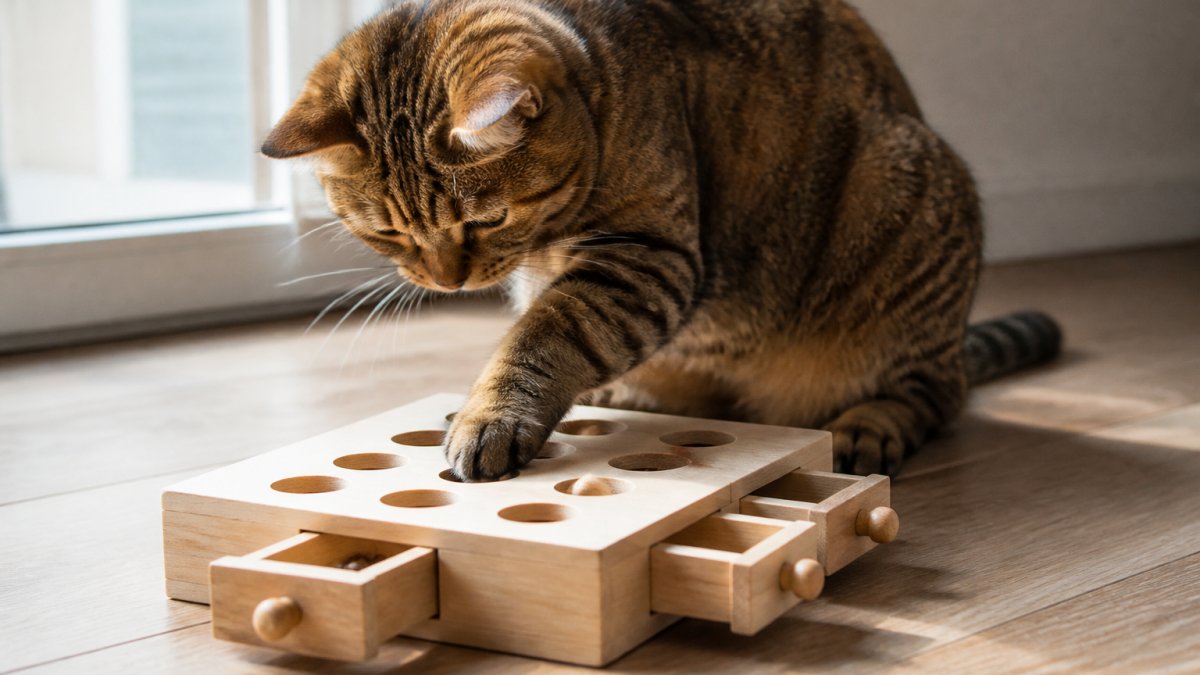
Hunter-type cats need toys simulating prey movement like the Interactive Track Ball Cat Toy. Explorers enjoy investigating textures and compartments in the Dog Treat Puzzle Toy or Silicone Slow-Feeding Lick Mat. Social cats benefit from interactive toys you can use together, like the Plush Interactive Puzzle Toy. Identify your cat's play style by observing whether they stalk moving objects, investigate corners, or seek your attention, then match toys accordingly.
DIY Cat Enrichment Ideas on a Budget
Paper bags (handles removed) create exploration opportunities; rotate weekly. Crumpled paper balls provide batting entertainment. Cardboard boxes with holes cut in the sides offer peek-and-pounce games. Ice cubes in a shallow dish provide sensory stimulation. Toilet paper tubes stuffed with crumpled paper or treats create simple puzzles.
Choosing the Right Difficulty Level for Your Cat
Difficulty matching prevents frustration while maintaining engagement. A puzzle that's too simple gets ignored; one that's too hard causes stress.
Beginner-Level Puzzles: Simple Compartments and Sliding Mechanisms
Beginner cats need toys with straightforward cause-and-effect: sliding compartments, shallow recesses with visible treats, and single-step actions. These build confidence and positive associations. Expect your cat to solve them in 2-5 minutes. If your cat ignores a beginner toy, the issue is usually introduction strategy, place it near their food bowl without food for 2-3 days.
Intermediate-Level Puzzles: Multi-Step Actions and Textured Surfaces
Intermediate cats handle moderate complexity, typically cats aged 2-8 years with some play experience. These puzzles demand:
- Two or more sequential steps: lift a flap, then push a compartment; or bat a piece, then extract food from underneath
- Textured or sticky surfaces (like the Silicone Slow-Feeding Lick Mat) that require sustained licking or pawing
- Partially hidden rewards where cats must work to access food that's not immediately visible
- Moderate material durability: silicone or reinforced plastic that resists tearing but may show wear after 6-12 months of daily use
Expect engagement of 5-15 minutes. Your cat should show focused attention and return to the toy multiple times per week. If your cat abandons it after one attempt, it may be too hard, simplify by placing treats in the easiest compartments first.
Advanced-Level Puzzles: Unpredictable Movement and Problem-Solving
Advanced cats are typically active, intelligent, and aged 1-7 years. They thrive on:
- Self-moving components (like the Interactive Track Ball Cat Toy) where the toy's behavior changes based on the cat's actions
- Variable difficulty: the same toy presents different challenges depending on how the cat approaches it
- Sustained engagement: cats return repeatedly over weeks because the puzzle never becomes fully "solved"
- Durable construction: reinforced plastic tracks, secure ball housings, and components designed to withstand aggressive batting
Advanced puzzles should hold your cat's attention for 10-20+ minutes per session. These toys are ideal for cats who need serious mental and physical engagement, especially during periods when you're away.
Diagnosing Difficulty Mismatch
Observe your cat's response over 3-5 days before concluding a toy is the wrong difficulty:
- Engaged cats return repeatedly, show focused attention, and may vocalize or pounce with intent
- Frustrated cats abandon toys quickly (under 1 minute), show stress signals like tail twitching or ear flattening, or attempt to destroy the toy
- Bored cats investigate once, then ignore the toy; this usually means it's too simple or they need a better introduction
If your cat shows frustration, simplify by placing treats in the easiest compartments or reducing the number of steps required. If they're bored, increase difficulty by hiding treats deeper or rotating to a more complex toy.
Material Durability and Longevity by Difficulty Level
Higher-difficulty toys often use more robust materials because they endure more aggressive play:
- Beginner toys (plastic compartments, simple sliders) typically last 6-12 months with daily use
- Intermediate toys (silicone mats, textured surfaces) often last 12-18 months; silicone is dishwasher-safe and resists tearing
- Advanced toys (track systems, moving balls) are built for durability but may require occasional cleaning of ball tracks to prevent jamming
Inspect toys weekly for cracks, loose pieces, or worn edges. Replace immediately if your cat can ingest fragments. Rotating toys every 2-3 weeks extends their lifespan and maintains novelty.
Frequently Asked Questions
What are the best interactive puzzle toys for bored cats?
The best interactive puzzle toys combine mental stimulation with food rewards or self-play elements. Food-dispensing puzzles like the Dog Treat Puzzle Toy ($12.99) engage cats' natural hunting instincts, while rolling toys like the Interactive Track Ball Cat Toy ($22.50) encourage independent play. A 2016 study found that 85% of group-housed cats engaged with food puzzles without increased aggression, showing these toys work across different cat personalities. Choose based on your cat's play style: some prefer treat-hunting, others enjoy batting and chasing.
How do I introduce a puzzle feeder to a cat that has never used one?
Start by placing the puzzle feeder where your cat can investigate it without pressure. Load it with a favorite treat or kibble your cat already enjoys, then let them explore at their own pace. Some cats figure it out immediately; others need a few days. You can demonstrate the mechanism by moving the pieces yourself to show how treats fall out. Begin with easier puzzles and gradually increase difficulty as your cat gains confidence. Keep sessions short and positive to build a strong association with the toy.
Should I use a food puzzle for meals or treats?
Both approaches work, depending on your cat's routine. Using a puzzle for daily meals (spreading kibble across a Silicone Slow-Feeding Lick Mat at $14.75, for example) provides consistent enrichment and slows eating, which aids digestion. Using puzzles for treats creates special play sessions that reward your cat throughout the day. Many cat owners combine both: puzzle feeders for meals and treat-based puzzles for play. This variety prevents boredom and keeps mental stimulation fresh.
How often should my cat use interactive puzzle toys?
Daily interaction with puzzle toys works best for enrichment. Cats benefit from having access to self-play toys (like rolling balls or teaser toys) throughout the day and guided puzzle sessions during your active playtime. Rotating between different puzzles every few days maintains novelty and engagement. Most cats thrive with 15-30 minutes of structured play plus access to independent toys. Monitor your cat's interest and adjust frequency based on their energy level and engagement.