

Best Pet Grooming Wipes for Quick Cleanups: 2026 Review
Table of Contents
- Quick Comparison: Top Pet Grooming Wipes for 2026
- How We Evaluated These Pet Grooming Wipes
- Earth Rated Dog Wipes: Best Overall for Quick Cleanups
- Pet Tear Stain Cleaning Wipes: Best for Face and Eye Area
- Hypoallergenic Dog Wipes for Paws: What to Look For
- How to Clean Dog Paws After a Walk
- Pet Grooming Wipes vs Baby Wipes: Key Differences
- Cost-Per-Wipe Breakdown and Value Analysis
- Frequently Asked Questions
Last Updated: September 15, 2026
Quick Comparison: Top Pet Grooming Wipes for 2026
The best pet grooming wipes for quick cleanups balance gentle ingredients, durable fabric, and honest pricing. This review from Pets R Smarter breaks down what actually works, backed by verified ratings and cost-per-wipe math.
The pet wipes market is valued at USD 0.72 billion in 2026 and is projected to reach USD 1.33 billion by 2035, a 6.5% compound annual growth rate, according to Business Research Insights pet wipes market report. That growth reflects a simple reality: most owners need between-bath cleaning, not another full grooming session.
Below, we rank the top pet grooming wipes for quick cleanups, explain how we scored them, and show exactly what each wipe costs per use.
| Product | Price | Count | Cost Per Wipe | Best For |
|---|---|---|---|---|
| Earth Rated Dog Wipes | $9.98 | 100 | $0.10 | Overall quick cleanups |
| Pet Tear Stain Cleaning Wipes | $16.99 | 50 | $0.34 | Face and eye area |
How We Evaluated These Pet Grooming Wipes
We scored each wipe on four criteria: ingredient safety, fabric durability, scent profile, and cost per wipe. Customer ratings carried weight only when backed by meaningful review volume.
Earth Rated grooming wipes hold a 4.9 out of 5-star average across 372 customer reviews, according to Earth Rated product reviews. That's an unusually high score for a consumable, and it reflects consistency rather than a single viral batch.
Everyday 2-in-1 dog wipes sit at 4.6 out of 5 stars on Walmart, while standard sanitary wipes average 4.4 out of 5, based on Walmart dog grooming wipes listings. The gap between 4.9 and 4.4 sounds small. In practice, it separates wipes owners rebuy from wipes that sit in a closet.
Earth Rated Dog Wipes: Best Overall for Quick Cleanups
Earth Rated takes the top spot because it solves the most common cleanup problem at the lowest per-wipe cost: $9.98 for 100 wipes, about a dime per use.
Each premoistened wipe measures roughly 8 x 8 inches, large enough for a full paw pass without folding. The alcohol-free, paraben-free formula is built around aloe, shea butter, chamomile, cucumber, and baking soda, handling dirt removal and deodorizing in one step.
The lavender scent is the one honest drawback. Dogs with fragrance sensitivities may do better with an unscented option, and the scent lingers longer than some owners expect.
Pet Tear Stain Cleaning Wipes: Best for Face and Eye Area
Tear stain wipes are a different product category, and treating them like body wipes is a mistake. This two-bag set gives you 50 premoistened wipes for $16.99, roughly $0.34 per wipe.
The higher cost reflects the job: wiping around the eyes requires a gentler touch, smaller format, and stricter ingredient standards than a paw wipe. This selection is for external use on the fur only.
Two rules matter: avoid direct eye contact, and stop if irritation appears. Tear staining often has an underlying cause, from tear duct issues to diet, so a wipe manages surface buildup rather than fixing the source.
If staining persists after two weeks of consistent use, that's a veterinarian conversation, not a wipe upgrade.
Hypoallergenic Dog Wipes for Paws: What to Look For
A hypoallergenic dog wipe is formulated to minimize common irritants, typically by excluding alcohol, parabens, and heavy fragrance. For paw cleaning, that matters more than scent, but "hypoallergenic" is a marketing term, not a regulated one. No federal standard governs it on a pet wipe label, so the ingredient panel tells you far more than the word.
Here's the shortlist of what to check before buying:
- Alcohol-free: Isopropyl and ethyl alcohol strip the lipid layer that keeps paw pads supple. Repeated use on cracked winter pads makes fissures worse, not better.
- Paraben-free: Methylparaben and propylparaben are preservatives many owners avoid. They prevent mold in a wet wipe, so a paraben-free wipe needs a substitute preservative, check that it has one, or the wipe is a bacterial risk once opened.
- pH-balanced: Pet skin runs closer to neutral (roughly 6.5 to 7.5) than human skin. A wipe formulated for human pH can disrupt the skin barrier with routine use.
- Fragrance-free or lightly scented: "Fragrance" on a label can represent dozens of undisclosed compounds. If your dog has reacted before, unscented is the safer default.
- Short ingredient list: Fewer ingredients means fewer things to react to, but a short list with no preservative is worse than a longer list with one.
Ingredients that trigger most reactions
When owners report paw licking, redness between the pads, or chin acne after switching wipes, the culprits cluster into a few categories:
- Essential oils: Tea tree, eucalyptus, peppermint, citrus, and lavender oils are common in "natural" wipes. Tea tree in particular is toxic to dogs when ingested, and paw-licking after a wipe is a direct ingestion route.
- Artificial fragrance and dyes: Fragrance mixes and dyes like FD&C Blue or Yellow are frequent contact allergens. A wipe that turns your white dog's paw blue is a dye problem, not a cleaning problem.
- Preservatives: Beyond parabens, methylisothiazolinone (MI) and methylchloroisothiazolinone (MCI) are potent sensitizers in some wet wipes. Reactions often build over weeks rather than appearing on first use.
- Surfactants: Harsh detergents can leave residue that irritates skin and attracts more dirt.
Life-stage matters more than most guides admit
Puppy and senior skin behave differently, and the same wipe can be fine for one and irritating for the other.
- Puppies: Their skin barrier is still developing, and they lick their paws far more than adults. Choose the shortest ingredient list you can find, skip essential oils, and use plain warm water on a soft cloth for the first few months if unsure.
- Seniors: Older dogs often have thinner skin, reduced oil production, and slower healing. A wipe that's merely drying for a young dog can cause cracking in a senior. Look for skin-conditioning agents like aloe or shea butter, and check paws weekly for fissures.
- Dogs with known allergies: If your dog has been diagnosed with atopic dermatitis or food allergies, treat any new wipe as a trial. Wipe one paw, wait 24 hours, and check for redness before doing a full pass.
How to troubleshoot a suspected reaction
If irritation appears after introducing a new wipe, stop using it and note the date. Most contact reactions improve within a few days of removal. Photograph the area daily to show your veterinarian whether it's improving. Swelling, hives, or difficulty breathing is an emergency, seek veterinary care immediately.
A common mistake is reaching for human baby wipes instead. More on that below, because the pH difference is not a minor detail.
How to Clean Dog Paws After a Walk
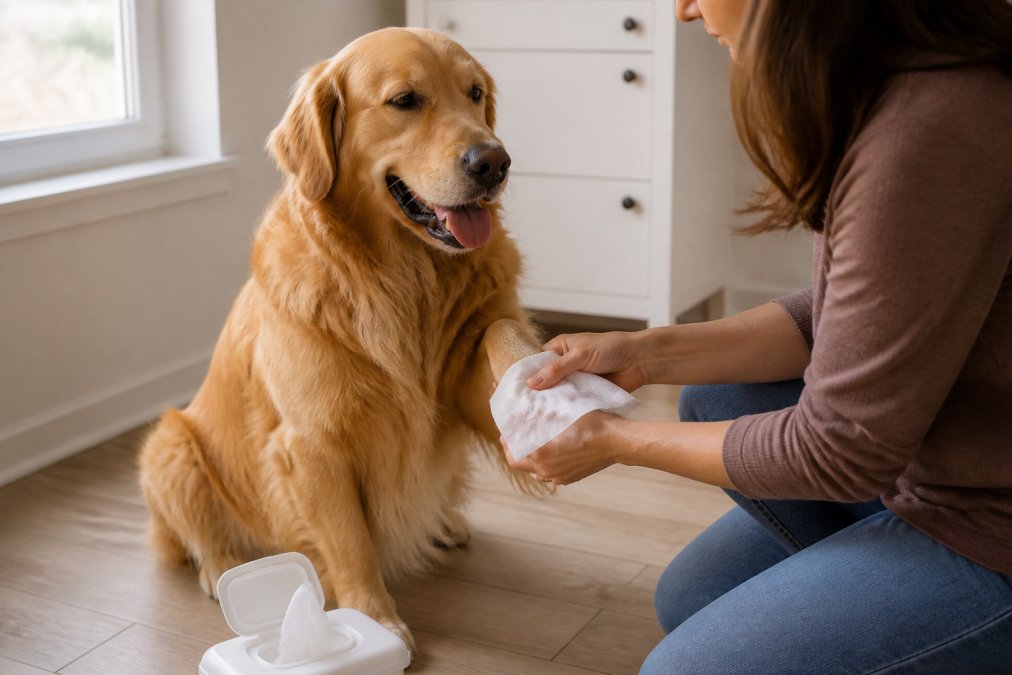
Cleaning dog paws after a walk takes about 60 seconds per dog with the right wipe and technique. The goal is removing dirt, allergens, and road residue before your dog tracks them indoors.
Follow this sequence:
- Have a wipe ready before you open the door
- Start with the back paws, since dogs tolerate those first
Pet Grooming Wipes vs Baby Wipes: Key Differences
Cost-Per-Wipe Breakdown and Value Analysis
Here's how the math works across common formats:
| Package Size | Typical Price | Cost Per Wipe |
|---|---|---|
| 50 wipes | $16.99 | $0.34 |
| 100 wipes | $9.98 | $0.10 |
| 100 wipes | $12-$15 | $0.12-$0.15 |
| 200 wipes | $18-$24 | $0.09-$0.12 |
The number most reviews skip: cost per cleanup
Shelf life changes the math
Durability is a cost variable, not a footnote
What to actually compare
Frequently Asked Questions
Are pet grooming wipes safe to use daily?
Yes, most pet grooming wipes are formulated for daily use, especially for quick cleanups like paw wiping after walks. Look for alcohol-free and paraben-free options to avoid drying out your pet's skin. Earth Rated wipes, for example, contain aloe, shea butter, and chamomile, which are gentle enough for regular use. Always check the label for specific guidance and stop use if you notice irritation.
What ingredients should I avoid in pet grooming wipes?
Avoid wipes containing alcohol, parabens, and artificial fragrances, as these can irritate your pet's skin or cause allergic reactions. Also steer clear of wipes with harsh chemicals like bleach or ammonia. Instead, look for pet grooming wipes that are pH-balanced, hypoallergenic, and made with soothing ingredients like aloe or oatmeal. Always read the ingredient list before buying, especially for pets with sensitive skin.
Can I use baby wipes on my dog or cat?
Human baby wipes are not formulated for pets and can disrupt the pH balance of their skin, leading to dryness or irritation. Pet grooming wipes are designed specifically for animals, with pet-safe ingredients and textures that effectively remove dirt and dander without causing harm. For quick cleanups, always choose pet-specific wipes like Earth Rated or tear stain wipes rather than human baby wipes.
How do I choose the right grooming wipes for my pet's coat type?
For short coats, textured or quilted wipes work well to trap dirt and loose fur. For long coats, look for larger, absorbent wipes that can handle more surface area without tearing. Sensitive skin benefits from hypoallergenic, fragrance-free options. If your pet has tear staining, dedicated eye-area wipes like Pet Tear Stain Cleaning Wipes are ideal. Always consider your pet's specific needs and test a small area first.