

Cat Grooming Gloves for Shedding: 2026 Reviews
Table of Contents
- Cat Grooming Gloves for Shedding: Quick Comparison
- How We Evaluated These Cat Grooming Gloves
- Benefits of Deshedding Gloves for Cats
- How to Use Grooming Gloves on Cats
- Cat Grooming Glove vs Brush: Which Works Better for Shedding?
- Sizing, Fit, and Materials: Choosing the Right Glove
- Caring for Cats With Sensitive Skin or Allergies
- Frequently Asked Questions
Last Updated: September 13, 2026
Cat Grooming Gloves for Shedding: Quick Comparison
The pet grooming glove market was valued at $487.3 million in 2025 and is projected to reach $792.6 million by 2034, a 5.8% compound annual growth rate, according to Dataintelo's Pet Grooming Glove Market Research Report. That growth tracks with something every cat owner already knows: loose fur ends up everywhere. This guide from Pets R Smarter breaks down what actually works in cat grooming gloves for shedding reviews.
The short answer: grooming gloves excel at surface-level fur collection and helping nervous cats tolerate handling, but they are not a full replacement for a dedicated undercoat tool. Below, we compare the options worth your money, explain how to use them correctly, and flag where they fall short.
| Option | Price | Best For | Key Strength |
|---|---|---|---|
| Dog & Cat Deshedding Grooming Brush | $60.75 | Heavy seasonal shedding | Deep undercoat extraction |
| Slicker Grooming Brush for Dogs & Cats | $14.99 | Daily maintenance | Short and long coats |
| Pet Grooming & Flea Removal Tool Set | $27.99 | Multi-tool households | 30-piece kit, flea check |
| Bodhi Dog Shampoo Brush | $16.92 | Bath-time deshedding | Wet or dry use |
| Reusable Pet Hair Remover | $9.99 | Furniture and clothing | Portable cleanup |
| Protective Pet Handling Gloves | $15.25 | Anxious or scratchy cats | Handling barrier |
How We Evaluated These Cat Grooming Gloves
A widely reviewed grooming glove has accumulated over 60,000 consumer reviews with a 4-star average, with owners reporting their cats "tolerated this glove much better" than traditional shedding brushes, according to Yahoo Style's grooming glove coverage. That tolerance factor matters more than raw extraction power for most households. Silicone-nubbed designs report up to 90% loose fur removal efficiency in manufacturer testing, though independent testing suggests that figure applies to surface hair, not deep undercoat.
Benefits of Deshedding Gloves for Cats
Deshedding gloves solve a problem brushes create: fear. The soft silicone tips feel like petting, so most cats stay relaxed through a full grooming session instead of bolting after thirty seconds. That single difference is why so many owners stick with gloves long-term.
The practical benefits stack up quickly. Loose fur collects on the textured surface as you stroke, dander lifts away from the skin, and the massage action stimulates circulation, which supports coat health over time. For cats that hate being held, the glove lets you groom in short passes during normal cuddling rather than a formal session. And because the fur binds to the nubs, cleanup is usually a matter of peeling it off in one piece. The MeowTested analysis of grooming tools notes gloves work best as an acclimation tool, with specialized brushes handling deeper extraction.
How to Use Grooming Gloves on Cats
Start with short sessions on a calm cat, using slow strokes in the direction of the coat. Most cats accept the glove within a few tries because it mimics petting. Keep the first sessions under two minutes and stop before your cat gets restless.
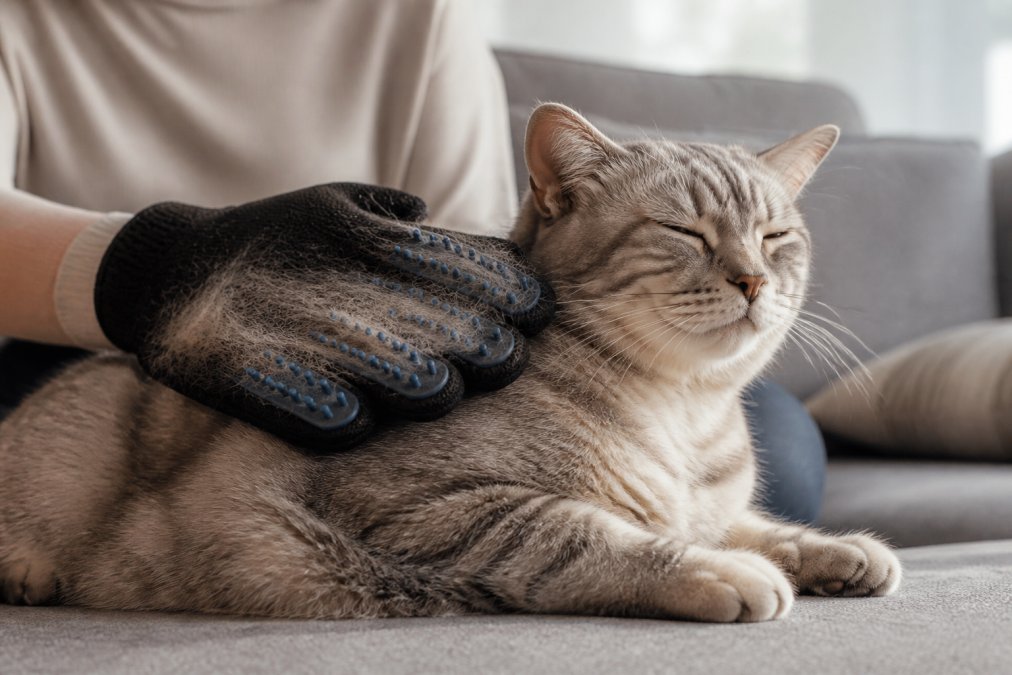
Here is the sequence that works:
- Let your cat sniff the glove before it goes on your hand
- Begin with slow strokes along the back and shoulders
- Work toward the flanks and belly only if your cat stays relaxed
- Check the glove every few strokes and peel off collected fur
- End with a treat, every single time
Cat Grooming Glove vs Brush: Which Works Better for Shedding?
For deep deshedding, a brush wins. For daily loose fur pickup on a cat that hates brushes, the glove wins. That is the honest split, and most guides gloss over it. The reason comes down to reach: a glove's silicone nubs sit at the surface of the coat, while a slicker brush or undercoat rake is built to penetrate the topcoat and pull dead hair from the underlayer where mats actually start.
The MeowTested comparison of grooming methods found gloves are less effective than specialized extraction tools for deep undercoat removal, which matches what owners report in community threads. Where gloves pull ahead is consistency: a tool your cat accepts gets used daily, and daily surface removal adds up. Brushes reach deeper but only if your cat lets you finish the job.
Here is how the tools actually divide the work:
| Tool | Reach | Best Moment | Watch-Out |
|---|---|---|---|
| Grooming glove | Surface coat | Daily, during cuddling | Leaves undercoat behind |
| Slicker brush | Topcoat and light undercoat | Weekly maintenance | Can scratch sensitive skin if pressed hard |
| Undercoat rake / deshedding brush | Deep undercoat | Peak seasonal shedding | Overuse irritates skin; never use on mats |
| Metal comb | Finishing and mat detection | After any brush session | Snags tangles if used first |
A common pattern among experienced owners is a two-pass routine: glove first to settle the cat and lift surface fur, then a slicker or deshedding brush to clear what the glove cannot reach, finished with a metal comb to check for tangles the brush missed. For long-haired cats, that sequence is close to mandatory, because a glove alone will not break up the loose undercoat that turns into mats behind the front legs and along the belly.
One more integration note: if your cat has a diagnosed skin condition, skip the metal comb entirely and stick to soft silicone nubs. Abrasive tools do more harm than good on compromised skin, no matter how much fur they pull.
Sizing, Fit, and Materials: Choosing the Right Glove
Fit determines whether a grooming glove works at all. A loose glove slides, twists, and pulls fur unevenly, which means you miss patches and your cat feels the drag. A glove that is too tight cuts off circulation in your fingers and forces you to grip harder, which reads as tension to a nervous cat. The fix is a glove with an adjustable wrist strap and a palm that sits flush against your hand, with nubs that stay in contact with the coat through a full stroke.
Hand size is the most overlooked variable in grooming glove reviews. Most gloves are sold in a single "one size fits most" cut, which works for average hands and fails everyone else. If your hands run small, look for a glove with a hook-and-loop wrist closure you can cinch down, and check the palm width measurement rather than trusting the size label. If your hands run large, prioritize gloves with a stretch panel across the back of the hand so the nubs do not lift off the coat mid-stroke. A five-finger design gives you more control than a mitt, but a mitt covers more surface area per pass, which matters for cats that only tolerate short sessions.
Materials matter too, and the differences are practical rather than cosmetic:
- Silicone bristles are the most common and easiest to clean. They flex under light pressure, which suits cats with thin or sensitive skin, and the collected fur usually peels off in one piece.
- Rubber nubs offer firmer texture for dense or double coats. They grip more fur per stroke but can feel scratchy if you press down, so use light pressure.
- Nitrile-backed gloves exist for owners who need a handling barrier, but the nitrile is for your protection, not the cat's coat, and the nub density is usually lower.
For cats with sensitive skin, softer silicone tips reduce scratching risk. If your cat scratches during handling, the Protective Pet Handling Gloves ($15.25) add a cloth-and-PVC barrier, though they are not bite-proof and should only be used with calm, supervised handling.
Caring for Cats With Sensitive Skin or Allergies
Cats with allergies or skin conditions need gentler handling, and grooming gloves fit that job well when used carefully. The soft nubs lift dander and loose hair without dragging across irritated skin the way stiff brush bristles can.
Keep sessions short, inspect the skin as you work, and stop immediately if you see redness, flaking, or signs of discomfort. Wash the glove after each use to prevent dander and debris from building up on the surface. If your cat has a diagnosed skin condition, check with your veterinarian before adding any new grooming tool to the routine. For bath-time support, the Bodhi Dog Shampoo Brush ($16.92) has flexible latex-free rubber bristles that work wet or dry, and the Reusable Pet Hair Remover ($9.99) handles the fur that lands on your clothes and furniture afterward.
Frequently Asked Questions
What are the best gloves for shedding cats?
The best cat grooming gloves use silicone nubs or soft rubber tips that grab loose fur without scratching skin. Look for an adjustable wrist strap, a breathable mesh back, and a textured surface that collects hair instead of scattering it. Popular options have earned over 60,000 reviews with a 4-star average, according to Yahoo Style.
Do grooming gloves help with cat dander?
Yes. Regular use of cat grooming gloves removes loose fur, dirt, and dander from the coat before it spreads around your home. Fewer loose hairs mean less dander settling on furniture and fabrics. Gloves work best as part of a consistent grooming routine, especially during shedding season. Pair glove sessions with a bath brush like the Bodhi Dog Shampoo Brush for a more thorough clean during bath time.
How often should you use a grooming glove on a cat?
Two to three short sessions per week work well for most cats. During shedding season, daily sessions of five to ten minutes help control loose fur before it mats or lands on your furniture. Keep sessions brief and stop if your cat shows signs of stress. Gloves double as a tolerance tool, helping cats acclimate to handling, according to MeowTested. A calm, treat-rewarded routine builds trust over time.
Are deshedding gloves good for cats?
Deshedding gloves remove loose fur, provide a massage-like experience, and help cats tolerate grooming better than traditional brushes. They work well as a tolerance tool but are less effective than specialized extraction tools for deep undercoat removal. For cats with thick double coats, pair gloves with a slicker brush. The Slicker Grooming Brush for Dogs & Cats ($14.99) reaches deeper into the undercoat.
Does the pet hair removal glove really work?
Yes, with realistic expectations. Silicone-nubbed gloves remove loose fur, and users report fur peeling off in a single sheet when it binds well. However, some users note hair does not always clump together, which can cause scattering. Gloves excel at surface-level hair removal and daily maintenance. For deep deshedding of the undercoat, combine gloves with a dedicated deshedding brush.