

Curved Scissors for Dog Grooming: The 2026 Buyer's Guide
Table of Contents
- Why Curved Scissors Are Essential for Dog Grooming
- Curved vs Straight Grooming Shears: Which Do You Need?
- How to Use Curved Shears on Dogs Safely
- Choosing the Right Blade Length and Curvature
- Japanese Steel vs Stainless Steel: What Matters
- Maintaining Dog Grooming Scissors for Long-Term Performance
- Ergonomics and Handedness: Comfort for Every Groomer
- Conclusion
- Frequently Asked Questions
Last Updated: September 21, 2026
Why Curved Scissors Are Essential for Dog Grooming
Dogs account for 74.9% of all curved grooming scissor applications, according to Dataintelo's Pet Grooming Scissors Market Report, which tells you something important: this tool exists because dog coats demand it. Curved scissors for dog grooming are shears with a bowed blade that lets you cut rounded contours, scoop out paw pads, and shape topknots without jabbing flat steel into sensitive areas.
Curved vs Straight Grooming Shears: Which Do You Need?
Straight shears cut flat lines across flat surfaces. Curved shears cut around curves. Most grooming kits need both, but if you're only doing maintenance trims at home, curved scissors do more of the work than you'd expect.
| Feature | Curved Shears | Straight Shears |
|---|---|---|
| Best for | Faces, paws, ears, topknots | Body coats, legs, back |
| Cut style | Rounded, contoured | Flat, even lines |
| Skill needed | Moderate | Beginner |
| Risk near eyes | Lower with blunt tip | Higher |
| Typical use | Shaping, detailing | Bulk trimming |
The market for curved grooming scissors is projected to grow at a 7.5% compound annual rate, per Dataintelo's market analysis, driven largely by pet owners doing more grooming at home.
How to Use Curved Shears on Dogs Safely
Safety starts before the first cut. A calm dog, sharp shears, and short sessions beat speed every time.
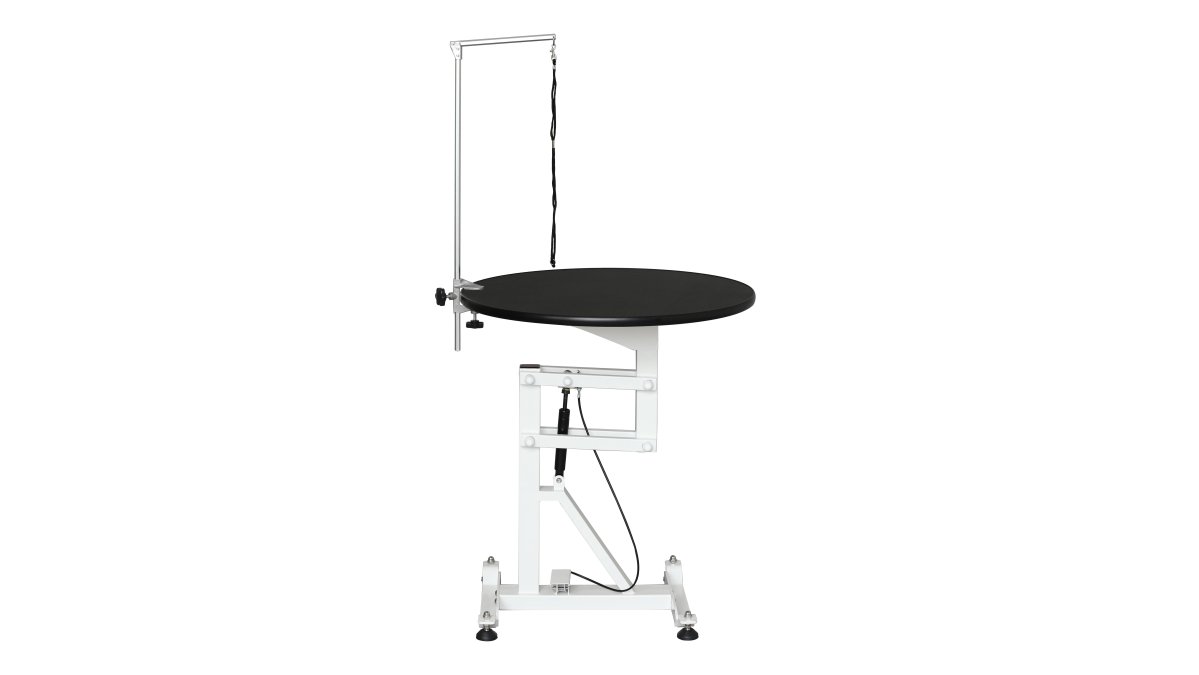
- Brush the coat completely to remove tangles.
- Secure your dog on a stable surface, like a grooming table with a no-slip top.
- Hold the shears with the curve facing your dog's body.
- Cut in small, deliberate snips, never long chops.
- Check your work every few cuts and reward calm behavior.
Trimming the Face, Paws, and Ears
Blunt or rounded safety tips are non-negotiable around the face. The curved blade lets you follow the natural line of the muzzle and brow without angling the points toward skin. For paws, scoop the curve upward between the pads to clear hair that traps debris. Around ears, work with the ear flat against your palm and trim only the fringe, never inside the canal.
Common Mistakes to Avoid
The biggest mistake is using curved shears for bulk coat removal. They're detailing tools, not clippers. Other frequent errors: cutting over tangles, which folds hair and creates uneven lines, and working with dull blades that pull instead of slice. A common mistake is also trimming a nervous dog in one long session.
Choosing the Right Blade Length and Curvature
Blade length decides control. Curved grooming scissors are made in lengths from 4 to 10 inches, though 6.5-inch to 8-inch models are the most common for standard coat maintenance, according to Transgroom's guide to grooming scissor types. Shorter blades suit faces and paws. Longer blades cover more coat per cut but demand steadier hands.
| Curve range | Typical use | Why it works |
|---|---|---|
| 20-30 degrees (shallow) | Body contouring, blending leg-to-body transitions, tidying furnishings | The gentle bow follows the dog's topline without gouging |
| 30-45 degrees (moderate) | Faces, topknots, teddy-bear heads, ear fringe | Enough arc to round a muzzle or brow in one pass |
| 45-60 degrees (deep) | Paw pads, hocks, sanitary areas, hollows | The tight scoop lifts hair out of concave spaces |
| 60+ degrees (extreme) | Pads only, tight crevices | Tips nearly meet; unusable for surface work |
Matching Curve to Coat Type
Coat texture changes the math. A dense, curly doodle coat needs a slightly deeper curve than a flat-coated breed, because the arc has to clear more volume per snip. Fine, silky coats (Yorkies, Maltese) respond best to shallow curves, a deep scoop on fine hair produces visible stair-stepping. Double coats (Huskies, Shepherds) are usually carded and stripped rather than scissored, so curvature is a secondary concern there.
Matching Curve to Your Hand
Curve depth also affects wrist angle. A deep 60-degree shear forces your hand higher and your wrist into more rotation, which is fine for a 30-second paw-pad pass and miserable for a 20-minute face trim. If you groom one dog every few weeks, a single moderate-curve 7-inch shear covers 80% of the work.
Length and Curve Together
The two specs interact. A 4-inch shallow shear is a detail blender for faces. A 4-inch deep shear is a pad scoop. A 7-inch moderate shear is the all-rounder. An 8-inch shallow shear is a body-finishing tool for large breeds. Buy by the task, not by the number on the package.
Japanese Steel vs Stainless Steel: What Matters
Steel grade is the spec shoppers compare most and understand least. The real variables are hardness, edge geometry, and corrosion resistance, and they trade off against each other.
Hardness and Edge Retention
Hardness is measured on the Rockwell C scale (HRC). The practical range for grooming shears runs roughly 56 to 62 HRC:
Pet Grooming & Flea Removal Tool Set →
- 56-58 HRC, softer, easier to sharpen, but the edge rolls faster on thick coats.
- 59-61 HRC, the sweet spot most professional shears target. Holds an edge through long sessions without becoming brittle.
- 62+ HRC, very hard, very sharp, but chips if you drop them or cut over a tangle.
Convex vs Beveled Edges
Edge geometry matters as much as the steel. A convex edge is ground to a rounded, razor-like profile, it glides through coat and is the standard on professional shears, but it requires a specialist to sharpen. A beveled edge has a flat, angled grind, it's more durable, easier to maintain, and a better choice for home groomers who don't want to ship shears out for service.
Corrosion Resistance
Higher-carbon Japanese steels hold an edge better but stain faster if left damp. Standard stainless resists rust more readily but sacrifices some sharpness. Neither survives being stored wet, see the maintenance section below.
Cost and Care Trade-Off
Japanese steel shears can run from $150 to $400 per pair, based on Wow Grooming's 2026 equipment pricing update, and they need drying after every wash. Standard 440C stainless is the practical middle ground: it takes a good edge, costs less, and tolerates a bit more neglect. For a home groomer trimming one dog every few weeks, 440C is often the smarter buy.
Maintaining Dog Grooming Scissors for Long-Term Performance
Maintenance is where most shears die early. Two habits keep them cutting for years: correct tension and clean, dry storage.
Tension Adjustment and Blade Alignment
The tension screw controls how tightly the blades press together. Too loose, and hair folds between the blades instead of cutting. Too tight, and you'll feel resistance and accelerate wear. Test by holding the shears tip-up and letting the top blade fall. It should close smoothly under its own weight without slamming shut.
Sanitization and Rust Prevention
If you're building a full kit, the Pet Grooming & Flea Removal Tool Set ($27.99) keeps 30 routine grooming pieces together, so you're not hunting for a comb mid-trim. Inspect your dog's skin as you work, and see a veterinarian if you find persistent fleas or irritation.
Ergonomics and Handedness: Comfort for Every Groomer
Most shears are built for right-handed users, which leaves left-handed groomers fighting the tool. If you're left-handed, look for a true left-handed pair with the finger rest and offset handle reversed. Using a right-handed shear in your left hand forces your wrist into an awkward angle and makes straight cuts nearly impossible.
Conclusion
The right curved scissors for dog grooming turn a frustrating chore into a clean, comfortable trim, but only if you match blade length, curvature, and steel to your dog's coat and your own hands. Pets R Smarter curates expert-approved grooming tools built around pet comfort and safety, from the height-adjustable grooming table to the 30-piece grooming and flea removal set.
Frequently Asked Questions
What size curved shears should I buy for home grooming?
For most home grooming, 6.5-inch to 8-inch curved scissors work best. These sizes give you enough reach for body work while staying manageable around the face and paws. If your dog is small or you're focused on detail trimming, a 6.5-inch pair is easier to control. Larger dogs with thick coats may benefit from 8-inch shears for efficiency. The curved blade helps you follow body contours without switching tools constantly.
Are curved or straight scissors better for dog grooming?
They serve different purposes, so most groomers keep both. Curved scissors excel at contouring rounded areas like the head, paws, and tail, and they help you shape without creating harsh lines. Straight shears are better for flat surfaces and general trimming. If you only buy one pair, curved shears offer more versatility for shaping and finishing work. For full grooming, start with curved and add straight later.
How do you use curved scissors on a dog's face?
Use the curved blade to follow the natural roundness of your dog's head, keeping the tips pointed away from the eyes. Work slowly and use the blunt tip for safety near sensitive areas. Trim in small sections, brushing the coat upward as you go. Always keep your fingers between the scissors and your dog's skin to prevent nicks. For anxious dogs, take breaks and reward calm behavior.
How often should I sharpen or replace curved grooming scissors?
Professional groomers typically sharpen their scissors every 3 to 6 months, depending on use. Home groomers may only need sharpening once a year. Signs it's time include the blade folding hair instead of cutting it, or if you feel yourself using more pressure. Proper maintenance, including cleaning after each use and adjusting the tension screw, extends the life of your shears. Store them in a case to protect the edges.