

DIY Dog Grooming Tips for Matted Fur: Safe Steps
Table of Contents
- Why Matted Fur Happens and How to Read Matting Severity
- Best Dematting Tools for Dogs: What You Actually Need
- Step-by-Step: How to Groom Matted Fur at Home
- Pain Cues, Anxiety, and Post-Dematting Skin Care
- When to See a Professional Groomer for Mats
- How to Prevent Dog Fur Matting Between Grooming Sessions
- Tool Maintenance and Sanitation for Safer Grooming
- Conclusion: Patience Over Force
- Frequently Asked Questions
Last Updated: October 2, 2026
Why Matted Fur Happens and How to Read Matting Severity
Matted fur forms when loose hair tangles around the coat's undercoat and tightens into felt-like clumps.
At Pets R Smarter, we hear from pet parents every week who feel guilty about mats. Here's the truth: mats aren't a sign you're a bad owner.
Mats form from friction, moisture, and skipped brushing. The longer hair stays tangled, the tighter it binds.
Matting severity breaks into three levels:
- Mild: Small tangles you can work through with fingers and a slicker brush
- Moderate: Dense knots close to the skin, still loose enough to separate
- Severe: Solid felted patches pressed against the skin, often with hidden irritation
Breed-Specific Matting Patterns
Some coats mat faster than others, and the pattern tells you where to focus.
Double-coated breeds like huskies and golden retrievers shed undercoat that traps against the skin. Curly coats like poodles and doodles mat in dense, felted clumps. Long silky coats like Yorkies mat behind the ears and under the collar.
If you know your breed's pattern, you can brush the trouble spots first and skip the guesswork.
Best Dematting Tools for Dogs: What You Actually Need
The best dematting tools for dogs are a slicker brush, a mat breaker or dematting comb, a wide-tooth metal comb, and blunt-tip grooming scissors. You do not need a full professional kit to start.
Here's what each tool does:
- Slicker brush: Lifts loose hair and works out surface tangles
- Mat breaker: Cuts through dense knots with a bladed edge
- Wide-tooth comb: Checks for hidden mats after brushing
- Blunt-tip scissors: Trims out mats that won't separate safely
A slicker grooming brush is the workhorse for daily upkeep. For heavier shedding, a deshedding brush pulls loose undercoat before it becomes a mat.
Step-by-Step: How to Groom Matted Fur at Home
Work slowly, in small sections, and stop the moment your dog shows pain. Patience removes more mats than force ever will.
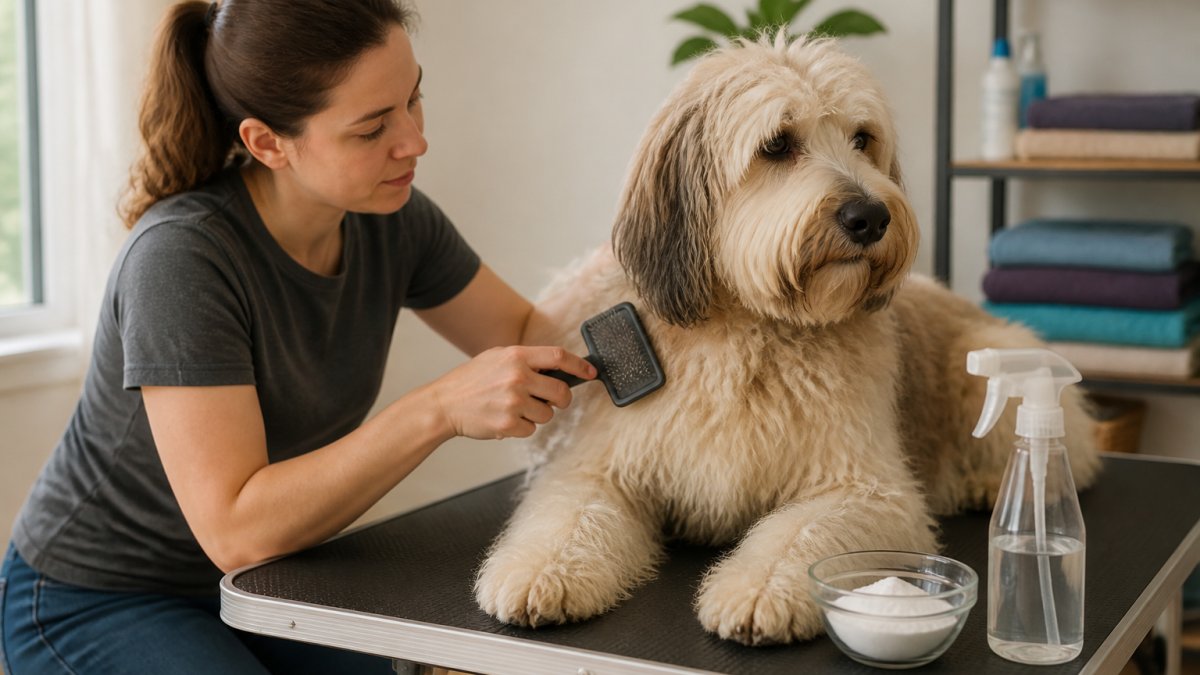
Here's the process:
- Set up a calm space. Use a stable surface like a height-adjustable grooming table so your dog feels secure. Put a non-slip mat under your dog's feet and keep treats within reach.
- Check the coat. Run your fingers over the body to map every mat. Note location, size, and how close each one sits to the skin. This map tells you which mats to tackle first, always start with the loosest, most accessible ones to build trust.
- Section the coat. Use hair clips or your free hand to isolate one mat at a time. Working on a single small section prevents you from yanking adjacent skin.
- Start at the edges. Never push a comb or mat breaker into the center of a mat. Work the outer edge loose first, then move inward in small increments. Think of it like untangling a knot in a shoelace, you loosen the perimeter before the core.
- Hold the skin flat. Place your non-dominant hand between the mat and the skin, pressing the coat flat against the body. This creates a buffer so the tool pulls on hair, not skin.
- Follow coat growth direction. Brush with the hair, never against it. Going against the grain drives tangles tighter and causes discomfort.
- Check with a comb. After each pass, run a wide-tooth metal comb through the section. If the comb glides through without catching, the section is done. If it snags, keep working the edge.
- Take breaks. Short sessions beat one long, stressful one. A common pattern is two to three minutes of work, then a 30-second break with praise and a treat.
The Cornstarch Method for Tight Knots
Cornstarch is a simple trick for stubborn knots. Sprinkle a small amount into the mat, work it in with your fingers, then tease the knot apart with a comb.
For extra slip, a light detangling spray helps. Avoid soaking the coat, which can tighten the mat again. Work the cornstarch in with your fingertips first, then switch to a wide-tooth comb, not a slicker, until the knot starts to give.
Post-Dematting Skin Care
Once the mats are out, the skin underneath is often red, warm, or tender, especially if the mat sat against it for days or weeks. This is the step most DIY guides skip, and it matters.
After each session:
- Check the skin in good light. Look for redness, small cuts, or moist patches.
- Clean minor irritation with a pet-safe wipe or a cool, damp cloth. Pat dry, don't rub.
- Apply a thin layer of pet-safe soothing balm or ointment if the skin is raw. Avoid human products that contain fragrances, alcohol, or hydrocortisone unless your veterinarian approves them.
- Keep the area dry and uncovered for a few hours so it can breathe.
- Watch for signs of infection over the next 24-48 hours: swelling, discharge, a bad smell, or worsening redness. If any appear, call your veterinarian.
A dog whose skin is irritated after dematting may be more sensitive to brushing for a few days. Ease off the area, keep sessions short, and reward calm behavior to rebuild positive associations.
Pain Cues, Anxiety, and Post-Dematting Skin Care
Watch your dog, not just the mat. Pain cues tell you when to stop.
Signs to pause immediately:
- Whining, yelping, or pulling away
- Lip licking or whale eye
- Sudden stillness or stiffening
- Snapping or air-snapping
If your dog shows any of these, stop. Forcing through a mat can cause skin trauma and make future grooming sessions harder.
After dematting, check the skin for redness or irritation. A little soothing balm or a cool rinse can calm the area. Keep sessions short and reward calm behavior to lower dog anxiety over time.
Slicker Grooming Brush for Dogs & Cats →
When to See a Professional Groomer for Mats
See a professional groomer when mats are severe, pressed tight to the skin, or cover large areas of the body. At that point, shaving is often the only safe and comfortable option.
Industry guidance from PetSmart's grooming resources notes that for heavy matting, shaving is the humane choice to avoid harming the dog's skin. Trying to brush out severe mats causes real pain, and in some cases the skin underneath is already damaged before you ever see it.
Call a pro if you see:
- Solid felted patches touching the skin
- Mats with a bad smell or visible sores
- A dog that won't let you near the area
- Mats around the eyes, ears, or sanitary areas
- Skin that is pink, red, or weeping under a mat
- A mat that feels like a hard lump rather than a soft tangle
- Any mat you've worked on for more than 15 minutes without meaningful progress
Why shaving is sometimes the kind choice:
When a mat is tight against the skin, the hair is essentially welded to itself.
What to tell your groomer:
- Where the mats are and how long they've been there
- What tools you've already tried
- Whether your dog has shown pain, snapping, or fear during home sessions
- Any skin conditions, allergies, or prior grooming injuries
There's no shame in handing off a tough case. A groomer has the tools and training to do it safely, and many will walk you through a prevention plan so the mats don't return.
How to Prevent Dog Fur Matting Between Grooming Sessions
Preventing mats is far easier than removing them. A short daily routine keeps the coat healthy and cuts down on painful sessions.
Build these habits:
- Brush 3-5 times a week, daily for long or curly coats
- Focus on friction zones: behind ears, under collar, armpits, and tail base
- Use a slicker brush for surface work and a comb for a deep check
- Keep up with sanitary trims and regular grooming frequency
- Dry your dog fully after swimming or baths
Loose hair left in the coat is the number one cause of new mats. Remove it before it traps.
Tool Maintenance and Sanitation for Safer Grooming
Clean tools protect your dog's skin and keep grooming safe. Most owners skip this step, and it's where problems start.
After every session:
- Pull trapped hair from brush bristles
- Wash combs and brushes in warm soapy water
- Dry tools fully to prevent rust
- Wipe down tables and clipper blades
- Check mat breakers for dull or damaged teeth
Dull blades pull hair instead of cutting it, which hurts your dog. Replace worn tools before they cause a bad experience.
Keep a small spray bottle of pet-safe disinfectant near your grooming station. A quick wipe between dogs or sessions stops bacteria and dander from building up on shared tools.
Conclusion: Patience Over Force
Matted fur tests your patience, but it never has to become a battle. Read the severity, pick the right tools, and work in small, calm steps. When mats are severe, hand off to a pro without guilt.
At Pets R Smarter, we make at-home grooming easier with expert-approved tools built for comfort and safety. Our slicker brush and grooming set keeps the essentials in one place, and every order is backed by our Tail Satisfaction Guarantee.
Get started with Pets R Smarter and give your dog a grooming routine that feels calm, not stressful.
Frequently Asked Questions
How do groomers get rid of matted fur?
Groomers start by assessing matting severity. For loose tangles, they work in small sections using a slicker brush and mat breaker, holding the coat at the base to avoid pulling skin. For tight mats, professional guidance says shaving is the only effective and comfortable option, because brushing out severe matting can cause pain and skin trauma. They never bathe a matted dog first, since washing tightens mats and makes removal harder.
Is it safe to cut out dog mats with scissors?
No. Scissors are the most dangerous tool for mat removal because dog skin is thin and often pulled up into the mat, so it is easy to cut the skin instead of the fur. If a mat is too tight to loosen with a mat breaker or your fingers, stop and book a professional groomer. Clippers with a guarded blade are safer than scissors for any coat that has to come off.
What loosens matted dog fur without causing pain?
Cornstarch worked into a dry mat absorbs oil and adds slip so fibers separate with less pulling. A pet-safe detangling spray helps on lighter tangles. Always work in the direction of coat growth, use gentle pressure, and hold the hair between the mat and the skin so the dog does not feel the tug. Never bathe a matted dog before dematting, because water tightens the knots.
How often should I groom my dog to prevent matting?
Brush two to three times a week for most coats, and daily during seasonal shedding or after baths. Pay extra attention to friction zones like the armpits, behind the ears, the collar line, and the sanitary trim area. Keeping loose hair removed with a slicker brush or deshedding tool stops tangles from forming in the first place, and a consistent routine is far easier on your dog than occasional marathon sessions.