

Dog Coat Types and Grooming Needs: A Complete Guide
Table of Contents
- Understanding Dog Coat Types and Grooming Needs
- How to Identify a Dog's Coat Type
- Grooming Needs for Short and Smooth Coats
- Long and Medium Coats: Preventing Tangles and Mats
- Double Coats and Undercoat Care
- Curly, Wavy, and Wire Coats: Specialized Grooming
- How Often to Brush a Dog Based on Coat Type
- Grooming Tools for Different Dog Coats
- Frequently Asked Questions
Last Updated: October 10, 2026
Understanding Dog Coat Types and Grooming Needs
Understanding dog coat types grooming needs is essential for keeping your pet healthy, comfortable, and looking their best. Every dog has unique coat characteristics that determine which grooming tools work best and how often maintenance should happen. At Pets R Smarter, we help pet owners match their grooming approach to their dog's specific coat type.
The coat type your dog has directly influences shedding patterns, matting risk, and the tools you'll need. A short smooth coat requires completely different care than a curly or double coat. Getting this right saves time, prevents skin irritation, and keeps your dog comfortable during grooming sessions.
How to Identify a Dog's Coat Type
Identifying your dog's coat type starts with understanding two key factors: texture and length. Run your hands through your dog's fur and feel whether it's smooth, wiry, curly, or wavy. Look at the overall length and check whether there's a dense undercoat beneath the outer layer.
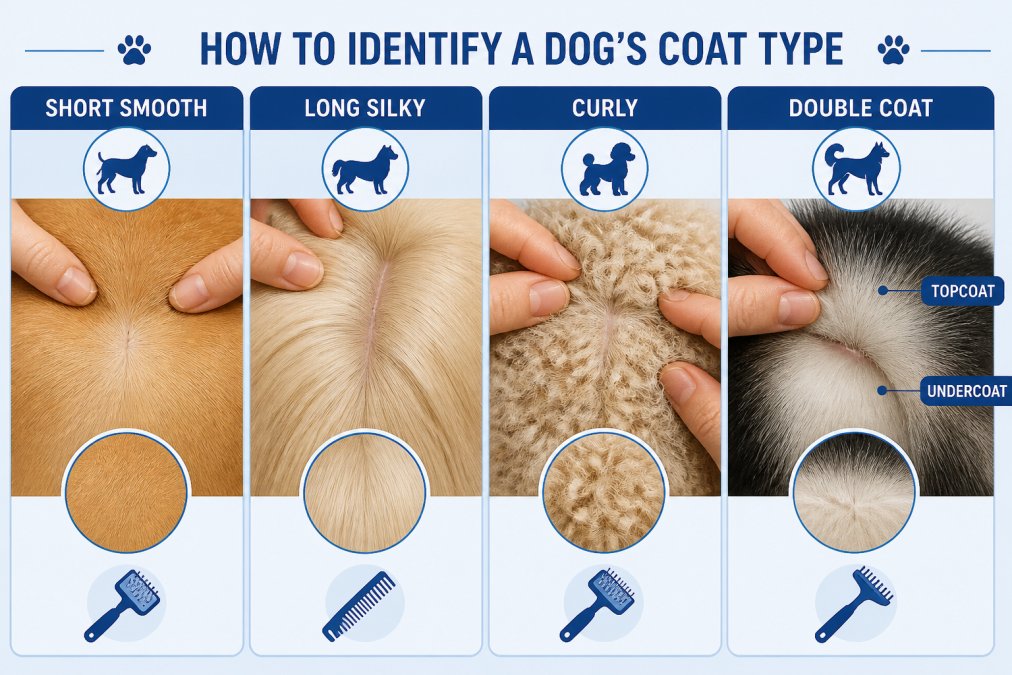
A Practical Coat-Identification Decision Tree
Use this step-by-step process to identify your dog's coat type:
Step 1: Check for an undercoat Part the fur at the shoulder or behind the ear and look at the skin. If you can see skin easily and the hair feels uniform in texture all the way down, your dog likely has a single coat. If the undercoat is visibly dense, fluffy, and distinctly softer than the outer layer, you're dealing with a double coat.
Step 2: Assess texture Run your fingers against the grain of the coat. Does the hair feel smooth and lie flat? That's a smooth coat. Does it feel coarse, wiry, and stand slightly away from the skin? That's a wire coat. Do your fingers sink into soft, looped or wavy hair? That's a curly or wavy coat.
Step 3: Measure length Use a ruler or your fingers to gauge overall coat length:
- Short coats: Under 1 inch; hair lies close to the body
- Medium coats: 1-3 inches; noticeable length but not flowing
- Long coats: Over 3 inches; hair extends visibly from the body
Step 4: Combine your observations Your dog's coat type is the combination of undercoat presence, texture, and length. For example:
- Smooth single coat + short length = short smooth coat (like a Boxer)
- Curly single coat + medium to long length = curly coat (like a Poodle)
- Double coat + long length + smooth texture = long double coat (like a Golden Retriever)
- Wire texture + short to medium length + single coat = wire coat (like a Terrier)
Single Coats vs. Double Coats
Single coats have one layer of hair. They shed less seasonally and are easier to groom. Breeds like Poodles and some Terriers have single coats.
Double coats have two layers: a soft undercoat and a tougher outer coat. These dogs shed more heavily, especially during spring and fall. German Shepherds, Golden Retrievers, and Huskies are double-coated breeds.
Mixed and Changing Coats
Not all dogs fit neatly into one category. Mixed-breed dogs often inherit coat traits from multiple parents, resulting in unusual combinations, for example, a dog with a curly texture but minimal undercoat, or a long coat with a wire texture.
Puppies also undergo coat changes. Many puppies are born with soft, fluffy coats that transition to their adult coat texture and density between 6 months and 2 years of age. If your young dog's grooming needs seem to shift, a coat change may be underway.
Seasonal coat changes are normal for many dogs. Double-coated breeds often "blow their coat" in spring and fall, temporarily shedding massive amounts of undercoat. Single-coated dogs may also show increased shedding during seasonal transitions.
Grooming Needs for Short and Smooth Coats
Short and smooth coats need regular brushing to remove loose hair and keep skin healthy. These coats shed year-round but don't mat easily. Brush your dog once or twice weekly with a slicker brush or pin brush to manage shedding.
Bathing short-coated dogs every 4-6 weeks helps remove dead hair and keeps skin clean. Use warm water and a gentle dog shampoo. Dry thoroughly after bathing.
Long and Medium Coats: Preventing Tangles and Mats
Long and medium coats require more frequent brushing to prevent mats and tangles. These coats trap debris and moisture, creating ideal conditions for matting. Brush 3-4 times per week with a slicker brush or comb.
Start at the skin and work outward. Use gentle, short strokes. Never pull through mats forcefully, as this damages the hair and hurts your dog.
Mats form when loose hair tangles with the coat. Caught early, they're easy to remove. Left untreated, they pull the skin and cause discomfort.
Bathe long-coated dogs every 4-8 weeks. Brush before bathing to remove loose hair and mats. After bathing, dry completely and brush again.
Double Coats and Undercoat Care
Double-coated dogs shed heavily, especially during seasonal changes. The undercoat sheds twice yearly in massive amounts. Regular undercoat removal prevents matting and reduces shedding around your home.
Brush double-coated dogs 2-3 times weekly year-round. During shedding season, increase to daily brushing. Use an undercoat rake or deshedding tool to remove loose undercoat hair.
Never shave a double-coated dog. The undercoat regulates body temperature. Shaving removes this protection and can cause skin problems.
Curly, Wavy, and Wire Coats: Specialized Grooming
Curly and wavy coats mat quickly. These textures trap hair and moisture. Brush 4-5 times weekly with a slicker brush and comb to prevent matting.
Wire coats need regular brushing to maintain their texture. Use a pin brush or wire brush. Brush against the grain to lift and separate the wiry hair.
Slicker Grooming Brush for Dogs & Cats →
Curly-coated dogs often need professional grooming every 6-8 weeks. Professional groomers have specialized tools and expertise to maintain these coats properly.
Bathe curly and wavy coats every 3-4 weeks. Use conditioner to help manage tangles. Dry with a towel and brush while damp to prevent mats from forming.
How Often to Brush a Dog Based on Coat Type
Brushing frequency for dog coat types grooming depends directly on coat type. Short smooth coats need brushing once or twice weekly. Medium coats need 2-3 times weekly. Long coats need 3-4 times weekly. Curly and wavy coats need 4-5 times weekly.
| Coat Type | Brushing Frequency | Best Tool | Shedding Level |
|---|---|---|---|
| Short smooth | 1-2x weekly | Slicker brush | Moderate |
| Medium | 2-3x weekly | Pin brush | Moderate to high |
| Long | 3-4x weekly | Slicker brush & comb | High |
| Double | Daily during shedding | Undercoat rake | Very high |
| Curly/wavy | 4-5x weekly | Slicker brush | Low |
| Wire | 2-3x weekly | Pin brush | Low to moderate |
During heavy shedding seasons, increase frequency by 1-2 sessions per week. Consistency prevents mats and keeps your dog's skin healthy.
Grooming Tools for Different Dog Coats
The right tools make grooming easier and more effective. However, using unsuitable tools can damage your dog's coat, cause skin irritation, or create safety hazards. Understanding which tools work for each coat type, and which to avoid, is essential for safe at-home grooming.
Tool Selection by Coat Type
Slicker brushes have short, fine, short wires close together on a flat or slightly curved surface.
Pin brushes have longer wires spaced farther apart, set in a flat or slightly curved head. These are ideal for long, medium, and wire coats.
Undercoat rakes have two or three rows of short, sturdy wires designed to penetrate the undercoat without damaging the outer coat.
Metal combs with wide and narrow teeth help detangle, check for mats, and finish grooming.
Deshedding tools (such as the FURminator or similar designs) remove loose undercoat and shed hair efficiently.
Bristle brushes have natural or synthetic bristles and work best on short smooth coats.
Common Grooming Mistakes and Safety Boundaries
Never shave a double-coated dog. The undercoat regulates body temperature and protects skin from sun and moisture. Shaving removes this protection and can cause sunburn, heat stress, and skin problems.
Do not cut or pull out mats. Using scissors or forcefully pulling mats damages hair, causes pain, and can lacerate skin.
Avoid metal tools on wet or damp coats. Metal brushes and combs can pull and break wet hair.
Do not use human hair tools on dogs. Human hairbrushes and combs are not designed for dog coat density and texture. They can break hair, miss undercoat, and cause discomfort.
Check tool condition regularly. Bent, rusty, or dull tools can damage the coat and cause skin irritation. Replace or repair tools as needed.
When to Seek Professional Help
If your dog has severe matting, a coat condition you cannot identify, signs of skin irritation, or a coat type you're unsure how to groom, consult a professional groomer or veterinarian.
Building a Basic Grooming Tool Kit
You do not need every tool for every dog. Start with the essentials for your dog's coat type:
- For short smooth coats: slicker brush, bristle brush, metal comb
- For medium coats: pin brush, slicker brush, metal comb
- For long coats: pin brush, slicker brush, metal comb, mat splitter
- For double coats: undercoat rake, slicker brush, metal comb
- For curly/wavy coats: slicker brush, metal comb, pin brush
- For wire coats: pin brush, metal comb, wire brush
Invest in quality tools that will last. A grooming table keeps your dog at a comfortable working height and prevents strain on your back, making grooming safer and more efficient for both of you.
Frequently Asked Questions
What are the main types of dog coats?
Dog coats fall into several categories based on texture and length: short and smooth coats, long and medium coats, double coats with undercoat and topcoat, curly and wavy coats, and wire or wiry coats. Single-coated breeds have one layer of hair, while double-coated breeds have a dense undercoat beneath a longer topcoat. Understanding your dog's coat type is essential for selecting the right grooming tools and establishing an effective grooming routine that keeps the coat healthy and free from mats and tangles.
How often should I brush my dog based on coat type?
Brushing frequency depends on your dog's coat type. Short and smooth coats need brushing once or twice weekly to manage loose hair and maintain skin health. Long and medium coats require daily or every-other-day brushing to prevent tangles and mats. Double-coated dogs need frequent brushing, especially during seasonal shedding. Curly and wavy coats benefit from daily brushing to prevent matting. Using the right brush for your dog's coat type, like a slicker brush for long coats or an undercoat rake for double coats, makes grooming more comfortable for your pet.
How can I prevent mats and tangles in my dog's coat?
Regular brushing is the most effective prevention strategy. Brush thoroughly from skin to tip, paying special attention to areas prone to matting like behind the ears, under the legs, and around the tail. Detangle gently using the right grooming tools for your dog's coat type. Bathe your dog regularly and dry completely. Address any mats immediately when they form, as they worsen over time and can cause skin irritation and discomfort.
What grooming tools work best for my dog's coat type?
Different coat types require specific tools. Short and smooth coats benefit from a slicker brush or pin brush to remove loose hair and stimulate skin health. Long and medium coats need a slicker brush, pin brush, and metal comb for detangling. Double-coated dogs require an undercoat rake or deshedding brush to remove the dense undercoat safely without damaging the topcoat. Curly and wavy coats need a slicker brush and metal comb to prevent matting. The Slicker Grooming Brush for Dogs & Cats and Dog & Cat Deshedding Grooming Brush from Pets R Smarter are professional-approved tools designed for routine coat care across multiple coat types.
Grooming your dog regularly prevents mats, reduces shedding, and keeps skin healthy. The challenge is knowing which tools and techniques work for your dog's specific coat. Pets R Smarter offers premium grooming tools selected by industry professionals and backed by our Tail Satisfaction Guarantee. Start with the right brush for your dog's coat type, and you'll see the difference better grooming makes in your dog's comfort and appearance.