

Durable Pet Grooming Brushes for Beginners: A 2026 Guide
Table of Contents
- Types of Durable Pet Grooming Brushes for Beginners
- Best Pet Grooming Tools for Beginners: Our Top Picks
- Easy to Use Dog Brush: Choosing for Your Skill Level
- Pet Brush for Sensitive Skin: Gentle Grooming Options
- How to Brush a Dog for the First Time: Step-by-Step Routine
- Common Beginner Mistakes with Grooming Brushes and How to Avoid Them
- What to Consider Before Buying Durable Pet Grooming Brushes
- Introducing Grooming Brushes to Puppies and Anxious Pets
Durable Pet Grooming Brushes for Beginners: A 2026 Guide
Last Updated: August 2, 2026
Choosing durable pet grooming brushes for beginners requires understanding your dog's coat type, the specific tools designed for different grooming needs, and how to use them without causing discomfort or skin irritation. Below, we'll show you exactly how to choose the right tools, use them effectively, and build a grooming routine that keeps your dog's coat healthy while making the process enjoyable for both of you.
Types of Durable Pet Grooming Brushes for Beginners
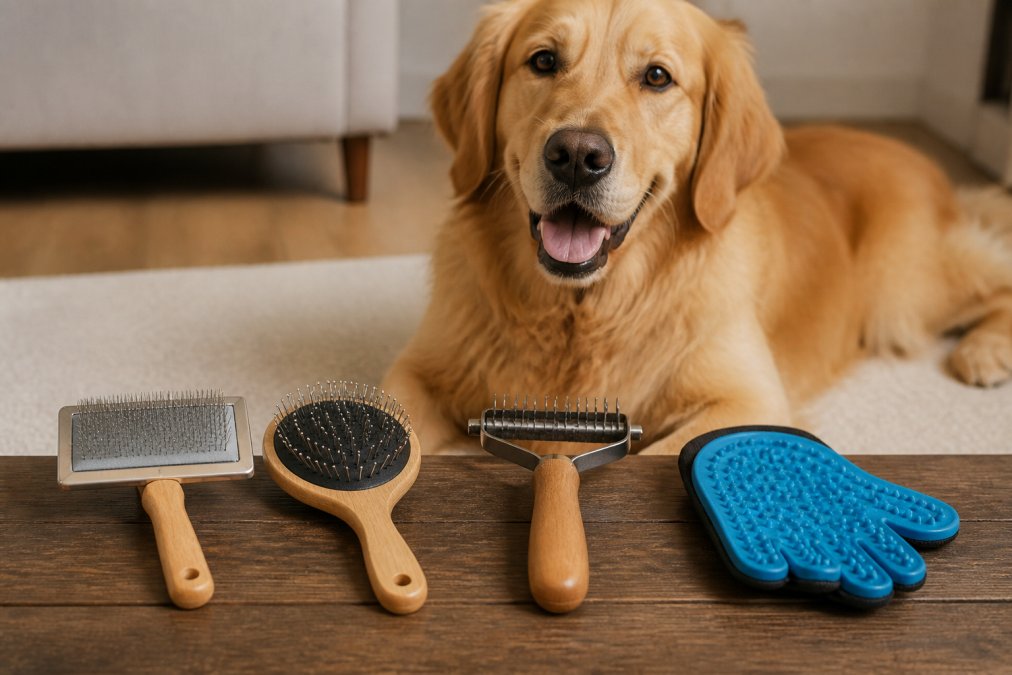
Each brush type serves a specific purpose. The five main categories, slicker brushes, pin brushes, undercoat rakes, rubber grooming mitts, and curry combs, each address different coat conditions and grooming goals.
Slicker Brushes
A slicker brush is a flat, rectangular brush with short, fine wires close together on a metal plate. These brushes excel at removing loose hair, detangling minor knots, and smoothing the coat. The self-cleaning mechanism on many models retracts the wires to push out collected hair, eliminating manual cleanup frustration.
Beginners appreciate slicker brushes because they're intuitive to use. However, they aren't designed for severe matting. The Hertzko Self-Cleaning Slicker Brush demonstrates what beginners should look for: fine angled bristles, an ergonomic anti-slip handle for comfort during extended sessions, and a self-cleaning button that makes maintenance effortless.
Pin Brushes
Pin brushes have longer, thinner wires spaced further apart than slicker brushes, with each wire ending in a small ball to prevent skin scratching. They're gentler than slickers and work well for fluffing coats and distributing natural oils. The Safari by Coastal Pet Products Wire Pin Brush demonstrates the category well, lifting shedding hair while distributing natural oils for a soft, shiny coat.
Undercoat Rakes and Deshedding Tools
Undercoat rakes target the dense undercoat that many dogs develop, especially those with double coats. The FURminator Undercoat deShedding Tool uses a stainless steel blade that safely removes loose undercoat hair. Many owners report 90% reduction in loose hair when used correctly. These tools work best during seasonal shedding periods when undercoats are loosening naturally.
Rubber Grooming Mitts and Curry Combs
Rubber grooming mitts, like the KONG ZoomGroom, use flexible rubber fingers to collect loose hair while providing a gentle massage. These tools work on both wet and dry coats, making them versatile for bath time and regular grooming. Curry combs feature short, curved wires arranged in a circular pattern and are excellent for short-coated dogs. Both are ideal for beginners because they're nearly impossible to use incorrectly.
Best Pet Grooming Tools for Beginners: Our Top Picks
Rather than buying every brush available, beginners should start with two essential tools: one for detangling and removing loose hair, and one for maintaining coat health between grooming sessions.
Self-Cleaning Slicker Brushes for Easy Maintenance
The Hertzko Self-Cleaning Slicker Brush stands out because it eliminates the most frustrating part of grooming for beginners: cleaning the brush itself. The self-cleaning button retracts the bristles to push out collected hair instantly. Users report that the ergonomic handle reduces hand fatigue during 20-30 minute grooming sessions.
What beginners often miss is that slicker brushes work best as maintenance tools, not rescue tools for severely matted coats. If your dog hasn't been brushed in weeks and has developed thick mats, you'll need a dematting tool first.
Deshedding Tools for Heavy Shedding Dogs
The FURminator Undercoat deShedding Tool addresses heavy shedding in double-coated breeds. Owners report removing visible mats of loose hair in single grooming sessions. However, deshedding tools require proper technique. Using too much pressure or grooming a matted coat can irritate the skin. The tool works best during seasonal shedding when the undercoat is naturally loosening.
Gentle Rubber Brushes for Sensitive Coats
The KONG ZoomGroom Rubber Brush serves dogs with sensitive skin or those anxious about grooming. The flexible rubber fingers provide a massaging sensation that many dogs find soothing. The brush works on both wet and dry coats, making it useful during bath time while promoting blood circulation to the skin.
| Brush Type | Best For | Key Feature | Ideal Coat Type |
|---|---|---|---|
| Slicker Brush | Detangling & maintenance | Self-cleaning button | Medium to long hair |
| Pin Brush | Daily grooming | Gentle on skin | All types |
| Undercoat Rake | Heavy shedding | Reaches undercoat | Double coats |
| Rubber Mitt | Anxious dogs | Massaging feel | Short to medium |
| Curry Comb | Short coats | Circular motion | Short hair |
Easy to Use Dog Brush: Choosing for Your Skill Level
A brush that's difficult to hold or requires special technique discourages consistent grooming. The easiest brushes share three characteristics: ergonomic handles that fit comfortably, intuitive motion patterns that feel natural, and immediate feedback showing the brush is working.
Slicker brushes and rubber mitts rank highest for ease of use. Both require simple back-and-forth or circular motions that don't demand special training. The handle matters more than most beginners realize. A brush with a thin, hard handle causes hand cramping during 20-minute sessions. Ergonomic handles with soft grips distribute pressure across your palm, reducing fatigue.
Pet Brush for Sensitive Skin: Gentle Grooming Options
Dogs with sensitive skin, allergies, or skin conditions require brushes that won't irritate the epidermis. Rubber grooming mitts are the gentlest option available. The flexible rubber fingers can't scratch or irritate skin, and the massaging action promotes healing by improving blood circulation.
Pin brushes come second in gentleness. The ball-tipped wires prevent scratching, and the wider spacing between wires means less contact with skin. Metal slicker brushes require careful technique for sensitive skin dogs, use light pressure and avoid the same area repeatedly. If your dog has active skin inflammation or open sores, skip metal brushes until the skin heals.
How to Brush a Dog for the First Time: Step-by-Step Routine
A structured routine ensures you cover the entire dog while building positive associations with grooming.
Preparing Your Dog and Choosing the Right Brush
Choose a time when your dog is calm. Introduce the brush to your dog without using it. Let them sniff it and become familiar with the tool. For anxious dogs, hold the brush nearby during treats so they associate it with positive experiences.
Begin grooming on the shoulders and sides, areas where most dogs tolerate brushing easily. This builds confidence before tackling sensitive zones like the face, paws, and rear end.
Basic Brushing Technique for Different Coat Types
Short-coated dogs require gentle circular motions with a rubber mitt or curry comb. Medium-coated dogs benefit from pin brushes for maintenance and slicker brushes for detangling. Long-coated dogs require the most time, typically 30-45 minutes. Start with a pin brush, then follow with a slicker brush to remove loose undercoat. For double-coated breeds during shedding season, use an undercoat rake after initial brushing.
Addressing Mats, Tangles, and Problem Areas
Mats develop when loose undercoat tangles with topcoat hair. Early intervention prevents mats from becoming severe. When you encounter a mat, hold the base close to the skin with one hand to prevent pulling. Use a slicker brush or dematting comb to gently work through the mat, starting at the outer edges and working inward.
Problem areas develop predictably: behind the ears, under the armpits, and around the rear end. Spend extra time on these zones during grooming sessions.
Common Beginner Mistakes with Grooming Brushes and How to Avoid Them
Mistake 1: Using the wrong brush for your dog's coat type. Identify your dog's coat type first (short, medium, long, curly, double), then select brushes designed for that specific type.
Mistake 2: Brushing a completely dry coat. Dry brushing causes hair breakage and discomfort. Lightly mist the coat with water to reduce friction.
Mistake 3: Grooming only the visible outer coat. Use a pin brush first to work through the entire coat depth, then follow with a slicker brush for the topcoat.
Mistake 4: Avoiding sensitive areas. Use gentler tools and lighter pressure on sensitive zones rather than skipping them entirely.
Mistake 5: Grooming only when the coat is severely matted. Consistent grooming every 3-7 days prevents matting and keeps sessions short and pleasant.
What to Consider Before Buying Durable Pet Grooming Brushes
Strategic brush selection saves money and prevents frustration.
Matching Brushes to Coat Type and Length
Coat type is the primary factor determining which brushes you need. Short-coated dogs need rubber mitts, curry combs, and pin brushes. Medium-coated dogs benefit from pin brushes for daily maintenance and slicker brushes for detangling. Long-coated dogs require slicker brushes, pin brushes, and often deshedding tools for seasonal shedding.
Double-coated dogs shed heavily during seasonal transitions and specifically benefit from undercoat rakes or deshedding tools. Without these specialized tools, loose undercoat accumulates and matting develops.
Durability, Handle Comfort, and Build Quality
Durability matters because grooming happens regularly. Look for brushes with stainless steel wires or rubber bristles that resist corrosion. Soft-grip rubber handles last longer than plastic and remain comfortable.
Handle comfort directly affects how often you groom. An uncomfortable handle causes hand fatigue, discouraging consistent grooming. The handle should feel balanced and ergonomic.
Budget-Friendly Options That Last
Building a complete grooming toolkit doesn't require spending hundreds of dollars. Start with two foundational brushes: a pin brush for daily maintenance and a slicker brush for detangling. Total investment runs $20-30 for quality beginner options.
Add a rubber mitt or curry comb as your third tool for $10-15. For dogs with double coats or heavy shedding, add an undercoat rake or deshedding tool for $15-45. Building your toolkit gradually allows you to understand your dog's specific needs before investing in specialized tools.
Introducing Grooming Brushes to Puppies and Anxious Pets
Puppies and rescue dogs often have negative associations with grooming or no prior experience. Introducing brushes gradually builds positive associations and prevents lifelong grooming anxiety.
Start with a rubber mitt rather than a metal brush. Spend just 30 seconds on the first session, focusing on areas most dogs enjoy: the shoulders and sides. Pair grooming with high-value treats so the dog associates brushing with rewards.
Gradually increase session length by 30-second increments. By week two, most puppies tolerate 2-3 minute sessions. By week four, many accept 10-minute grooming sessions without stress. For anxious rescue dogs, the process takes longer but follows the same principle.
Introduce different brush types one at a time. After your dog is comfortable with a rubber mitt, introduce a pin brush. Only after the dog accepts pin brushes should you introduce a slicker brush.
Keeping your dog's coat healthy and mat-free requires the right tools and consistent technique. Durable pet grooming brushes for beginners don't need to be expensive or complicated, they need to match your dog's coat type and fit comfortably in your hand. Pets R Smarter partners with industry professionals to ensure every grooming tool prioritizes your pet's comfort and health while making the grooming process easier for you. With the right brush, a structured routine, and patience during the introduction phase, grooming becomes a bonding experience rather than a stressful chore. Backed by our Tail Satisfaction Guarantee, your investment in quality grooming tools pays dividends in coat health, reduced shedding, and a dog that actually enjoys grooming sessions.
Frequently Asked Questions
What type of brush is best for a beginner pet owner?
Start with a slicker brush or pin brush, depending on your dog's coat type. Slicker brushes work well for removing loose hair and tangles on medium to long coats, while pin brushes suit longer-haired breeds and help distribute natural oils. For short-haired dogs, a rubber grooming mitt is gentle and easy to use. Self-cleaning slicker brushes are particularly beginner-friendly because they remove collected hair with a button push, making grooming less frustrating.
How do I choose the right grooming brush for my pet's coat type?
Match your brush to your dog's coat structure. Double-coated breeds like Golden Retrievers benefit from undercoat rakes and deshedding tools to remove loose undercoat without damaging the topcoat. Long-haired, single-coated dogs do well with pin brushes or slicker brushes for detangling. Short-haired breeds respond to rubber mitts or curry combs. Curly or wiry coats need pin brushes with wider spacing. Always test the brush gently on a small area first to ensure it doesn't irritate sensitive skin.
What makes a pet grooming brush durable for regular home use?
Durable brushes feature stainless steel pins or bristles that resist bending and corrosion, ergonomic handles with non-slip grips for comfortable extended use, and sturdy construction that withstands daily grooming sessions. Self-cleaning mechanisms with retractable bristles reduce wear on the brush head. Look for brushes with reinforced bases where bristles attach to the handle, as this is a common failure point. Quality brushes maintain their effectiveness for months or years with proper care, making them better long-term investments than cheaper alternatives that degrade quickly.
Can I use the same brush on my dog's sensitive skin without causing irritation?
Yes, but choose carefully. Rubber grooming mitts and brushes with softer, rounded bristles are gentlest on sensitive skin because they massage rather than scratch. Avoid slicker brushes with very fine, tightly packed wires on irritated areas. Always use light, gentle pressure and brush in the direction of hair growth. If your dog has existing skin conditions, consult your veterinarian before grooming. Start with short sessions to let your dog adjust, and watch for signs of discomfort like excessive scratching or redness.
How often should beginners brush their dog to see real benefits?
For most dogs, 2-3 times per week prevents mats and reduces shedding noticeably. Double-coated breeds benefit from daily or every-other-day brushing during shedding seasons to remove loose undercoat and maintain coat health. Short-haired dogs may need only weekly brushing. Regular brushing improves blood circulation to the skin, distributes natural oils, and prevents painful mats from forming. Puppies and anxious pets benefit from frequent short sessions (5-10 minutes) to build positive associations with grooming before they develop fear or resistance.
This article was written using GrandRanker