

Essential Dog Grooming Safety Tips: A Step-by-Step Guide
Table of Contents
- Assessing Your Dog's Temperament and Behavior Before Grooming
- Setting Up a Safe Dog Grooming Station at Home
- Essential Dog Grooming Safety Equipment You Need
- How to Calm a Dog for Grooming: Desensitization and Positive Reinforcement
- Safe Dog Nail Trimming Techniques: Avoiding the Quick
- Handling Sensitive Areas Safely: Face, Ears, and Paws
- Safe Bathing Techniques and Water Temperature Control
- What to Do If You Accidentally Injure Your Dog During Grooming
Last Updated: August 17, 2026
Assessing Your Dog's Temperament and Behavior Before Grooming
Before grooming, understand your dog's baseline temperament and stress signals. A dog showing stress signals like lip licking, yawning, tucking her tail, or trying to escape is communicating that she needs a different approach.
Observe how your dog reacts to touch in everyday situations. Does she pull away when you touch her paws? Does she flinch when you brush near her ears? These signals indicate which areas need desensitization work before grooming.
Setting Up a Safe Dog Grooming Station at Home
A well-designed grooming station keeps both you and your dog safe. Start with a non-slip mat as your foundation. A grooming table or sturdy elevated surface at waist height reduces strain on your back and gives you better control. Secure restraint options like a grooming loop prevent sudden movements that could cause accidents with sharp tools.
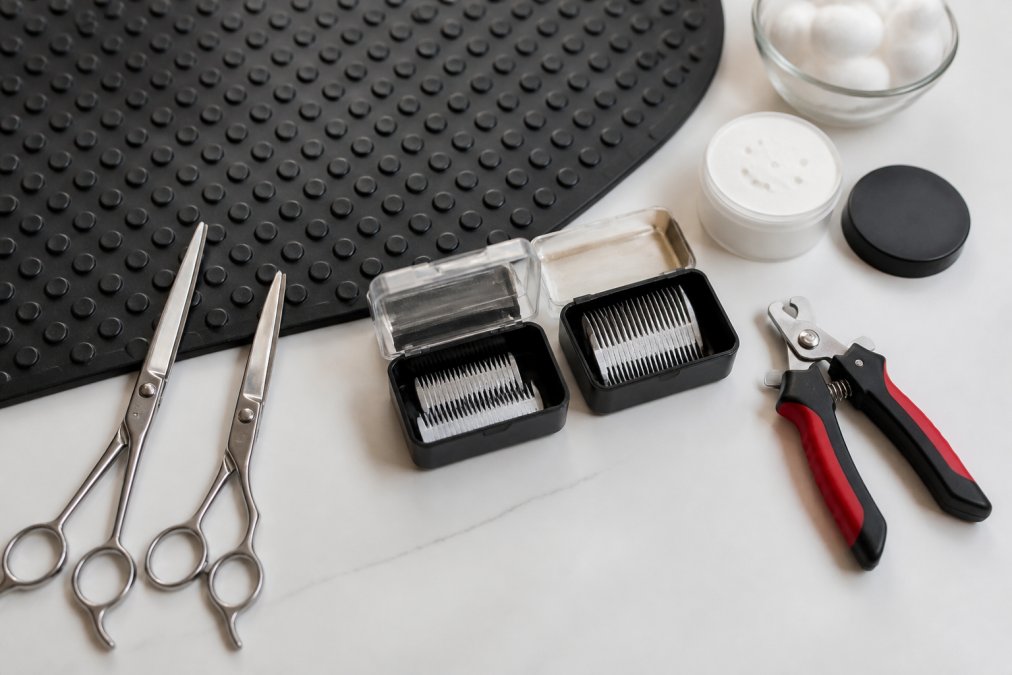
Bright lighting is critical, you need to see exactly what you're doing, especially around the eyes, ears, and paw pads. Keep tools organized within arm's reach in a grooming caddy. Have styptic powder, cotton balls, and a first aid kit immediately available. A warm room reduces stress for your dog.
Essential Dog Grooming Safety Equipment You Need
Choosing the Right Tools
Sharp, well-maintained tools require less pressure, reducing the risk of slipping and injuring your dog's skin. Grooming shears should be sharp, properly weighted, and comfortable in your hand. Look for shears with rounded tips for work around sensitive areas like the face and ears.
Clipper blades must match your dog's coat type. A number 10 blade cuts short; a number 30 cuts very short. A number 7 or 8 is standard for body work on most dogs. Using the wrong blade size requires more passes over the same area, increasing the chance of clipper burn.
Scissor-type nail clippers give you more control and are generally safer for beginners. A styptic powder or styptic pen is essential, keep it within immediate reach during nail trimming. Cotton balls, soft cloths, and tearless shampoo are basics for safe bathing.
Maintaining and Sanitizing Your Equipment
Dirty tools spread bacteria and can cause skin infections. After each grooming session, wipe your blades and shears with a clean cloth to remove hair and debris. Once a week, soak your blades in warm soapy water for five minutes, then dry thoroughly. For deeper sanitization, use a blade sanitizer spray or soak in a solution made from one part white vinegar and one part water for 10 minutes.
Clipper blades heat up during use. Let blades cool between uses. Oil your clipper blades regularly, a drop of clipper oil every few minutes of use keeps them running smoothly and prevents overheating. Check your equipment before every grooming session for rust, dull blades, or broken handles.
How to Calm a Dog for Grooming: Desensitization and Positive Reinforcement
A calm dog is a safe dog. Start desensitization weeks before attempting actual grooming. Let your dog see your grooming tools without using them. Touch her with the tools, run the clipper across her coat without turning it on. Let her hear the sound of clippers from across the room.
Pair grooming tools and sounds with positive experiences. Give treats when your dog sees the clippers. Reward her for letting you touch her paws, ears, and face. Short sessions early on are more valuable than long ones. A five-minute positive grooming session where your dog stays calm is worth more than a 20-minute session where she's stressed.
Use positive reinforcement during grooming. Pause frequently to give treats and praise. If your dog starts showing stress signals, stop immediately. Create a calm environment with soft music, a warm room, and a patient demeanor. Your dog picks up on your tension.
Safe Dog Nail Trimming Techniques: Avoiding the Quick
Nail trimming is where most home grooming accidents happen. The quick, the blood vessel and nerve inside the nail, is easy to hit if you're not careful. Understanding nail anatomy prevents this.
The quick is visible in light-colored nails as a small dark circle in the center. In dark nails, you can't see it, so estimate by trimming only the clear or light part of the nail. Stop before the nail starts to curve downward, which is where the quick typically begins.
Angle your clippers perpendicular to the nail, not at an angle. Cut in one smooth motion, don't squeeze slowly. Quick, decisive cuts are less likely to cause pain or bleeding. For dark nails, look at the underside. You'll see a small dark spot in the center, that's the quick. Trim only the clear part in front of that spot.
If you accidentally clip into the quick and bleeding starts, apply styptic powder immediately and press gently for 30 seconds. Check for dewclaws (extra nails higher up on the leg) that are easy to miss. Nail trimming frequency depends on your dog's activity level. Dogs that walk on pavement naturally wear down nails. Dogs that mostly walk on grass or carpet need trimming every 3-4 weeks.
Handling Sensitive Areas Safely: Face, Ears, and Paws
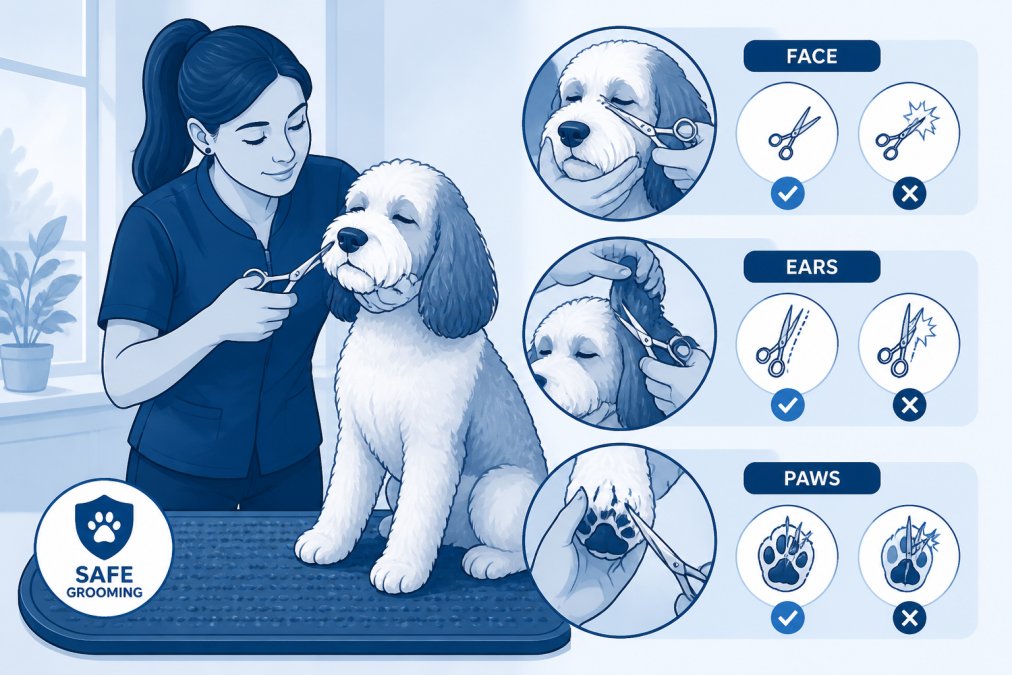
The face, ears, and paws are the most sensitive areas during grooming. These areas have thin skin, sensitive nerve endings, and areas where even minor cuts can cause disproportionate bleeding or infection.
Face grooming requires extra caution around the eyes. Never point clippers or shears directly at the eyes. Work from the side, moving away from the eye. Keep your hand steady and use short, controlled strokes. Consider using safety scissors with rounded tips for this area.
Ear cleaning and grooming requires starting desensitization weeks before grooming. Gently touch and massage her ears during calm moments, rewarding her with treats. During grooming, work slowly and pause frequently. Use cotton balls to clean inside the ear flap, but never push cotton or tools deep into the ear canal. Clean only the visible parts. Trim hair around the outside of the ear with great care, keeping your shears or clippers away from the ear flap itself.
Paw grooming involves trimming hair between the pads and around the paw. Work slowly and let your dog get used to having her paws handled. Trim hair between the pads carefully, the skin between pads is thin and easily irritated. Check paw pads for cuts, cracks, or infections while grooming.
Safe Bathing Techniques and Water Temperature Control
Water temperature control is critical for safety and comfort. Test water temperature on your inner wrist before applying it to your dog. If it feels too hot for you, it's too hot for your dog. Aim for warm water around 85-90°F.
Start by wetting your dog's body gradually. Don't dump water over her head immediately. Wet her legs and body first, letting her acclimate to the water. Then carefully wet her face and head, avoiding the eyes and ears. Use a washcloth or your hand to control water flow near the face.
Apply tearless shampoo and work it into a lather. Rinse thoroughly, leftover shampoo causes skin irritation and itching. Use cotton balls in the ears to prevent water from getting into the ear canal. Dry your dog completely after bathing using towels to remove excess water. If you use a dog dryer, use low heat and keep it moving. Watch for signs of stress during bathing, if your dog is trembling or trying to escape, end the bath.
What to Do If You Accidentally Injure Your Dog During Grooming
Even careful groomers occasionally cause minor injuries. Knowing how to respond quickly and calmly can prevent complications.
Minor cuts or nicks are the most common grooming injury. Apply pressure with a clean cloth for 30 seconds, then apply styptic powder directly to the wound. Press gently for another 30 seconds. The bleeding should stop within a minute. Monitor the cut for signs of infection over the next few days.
Clipper burn appears as redness or irritation on the skin, caused by blades that are too hot or dull. Stop grooming immediately and let the area cool. Avoid further grooming in that area for at least a week.
Nail quick injuries cause bleeding that looks alarming but is usually minor. Apply styptic powder immediately and hold pressure for 30 seconds. Avoid walking or exercise that puts pressure on the injured paw for a few days.
Eye irritation from shampoo or water is uncomfortable but usually resolves quickly. Rinse the eye with cool, clean water for 30 seconds. If irritation persists beyond a few hours or your dog shows signs of pain, contact your veterinarian.
Contact your veterinarian if:
- Bleeding doesn't stop after 5 minutes of pressure and styptic powder
- A cut appears deep or won't close
- Your dog shows signs of pain or limping after the session
- Irritation or swelling develops in the days after grooming
- Your dog develops signs of infection
After any injury, give your dog time to recover before attempting grooming again.
Safe dog grooming starts with understanding your dog's temperament and setting up a proper grooming station. The tools you choose, how you maintain them, and the techniques you use all directly impact your dog's safety and your grooming success. According to veterinary guidance on pet grooming safety, proper technique and equipment maintenance are the foundation of injury prevention.
At Pets R Smarter, we understand that grooming safety isn't just about avoiding accidents, it's about building a positive relationship between you and your dog around grooming care. Our curated selection of premium grooming equipment is chosen specifically for safety features like rounded-tip shears, quality clipper blades that stay sharp longer, and proper weight distribution for control. With the right tools and techniques, grooming becomes a routine part of pet care rather than a source of stress. Start with desensitization, invest in quality equipment, and approach each grooming session with patience and preparation. Your dog will thank you with cooperation and calm behavior, and you'll have the confidence that you're grooming safely at home.
Frequently Asked Questions
How can I keep my dog calm during grooming?
Start desensitization early by letting your dog see and touch grooming tools without using them. Use positive reinforcement like treats and praise during short grooming sessions. Watch for stress signals such as trembling, excessive panting, or trying to escape, and take breaks if needed. Establish a calm environment free from loud noises, and consider grooming during times when your dog is naturally tired. Consistency and patience help reduce grooming anxiety over time.
What safety equipment is needed for at-home dog grooming?
Essential dog grooming safety equipment includes grooming shears with rounded tips, clipper blades designed for pet use, a non-slip mat to prevent sliding, styptic powder to stop bleeding from accidental nicks, and proper restraint options like grooming loops or tables. You'll also need tearless shampoo, towels, and ear cleaning supplies. Sanitization supplies such as disinfectant wipes or blade wash keep tools clean and prevent skin irritation. Invest in quality equipment that matches your dog's size and coat type for safer, more effective grooming.
How do I safely trim my dog's nails without hitting the quick?
Identify the nail quick, the pink or dark center line in the nail that contains blood vessels. Trim only the clear or white portion of the nail, staying about 2-3 millimeters away from the quick. For dogs with dark nails, trim small amounts and look for a small dark dot in the center when you've reached the quick, this is your stopping point. Use sharp nail clippers designed for dogs, trim at a 45-degree angle, and have styptic powder nearby in case you accidentally cut too short. If unsure, trim less rather than more.
What should I do if I accidentally cut my dog while grooming?
Stay calm to keep your dog relaxed. For minor nicks, apply styptic powder directly to the wound and hold pressure for 3-5 minutes. Gently clean the area with cool water and a clean cloth. Monitor the wound for signs of infection such as increased swelling, redness, or discharge. If bleeding doesn't stop after 10 minutes, the cut is deep or large, or your dog shows signs of infection, contact your veterinarian immediately. Keep your dog's grooming area clean and use sanitized tools to prevent infection.
This article was written using GrandRanker