

Top 10 Gentle Grooming Solutions for Dogs
Table of Contents
- Why Gentle Grooming Solutions Matter for Your Dog
- How to Desensitize a Dog to Grooming: Building Confidence Step by Step
- Calming Grooming Techniques for Dogs: Creating a Stress-Free Environment
- Essential Grooming Tools for Sensitive Skin Dogs
- Hypoallergenic Dog Shampoo and Skin-Friendly Wipes
- Quiet Nail Grinders and Clippers for Anxious Dogs
- Detangling and De-Matting Products That Prevent Stress
- Gentle Grooming for Senior Dogs: Special Considerations
Last Updated: August 11, 2026
Why Gentle Grooming Solutions Matter for Your Dog
A traumatic bath or nail trim can create anxiety that lasts years, making every grooming session a battle. Gentle grooming solutions prevent behavioral problems before they start. When dogs feel safe during grooming, they're calmer at the vet, more cooperative at home, and genuinely healthier because you'll maintain their coat and nails regularly instead of avoiding the stress.
Anxious dogs often develop skin problems from stress-induced licking, ear infections from improper cleaning, and matted coats from avoided brushing. At Pets R Smarter, we understand that premium grooming tools designed with sensitivity in mind are foundational to your pet's wellbeing. The difference between a dog that dreads grooming and one that tolerates it often comes down to the tools you use and the approach you take.
This guide covers effective gentle grooming solutions for dogs, from desensitization techniques that rewire anxiety to specialized tools that make the process genuinely comfortable. You'll find product recommendations backed by real features, plus step-by-step methods you can implement today.
How to Desensitize a Dog to Grooming: Building Confidence Step by Step
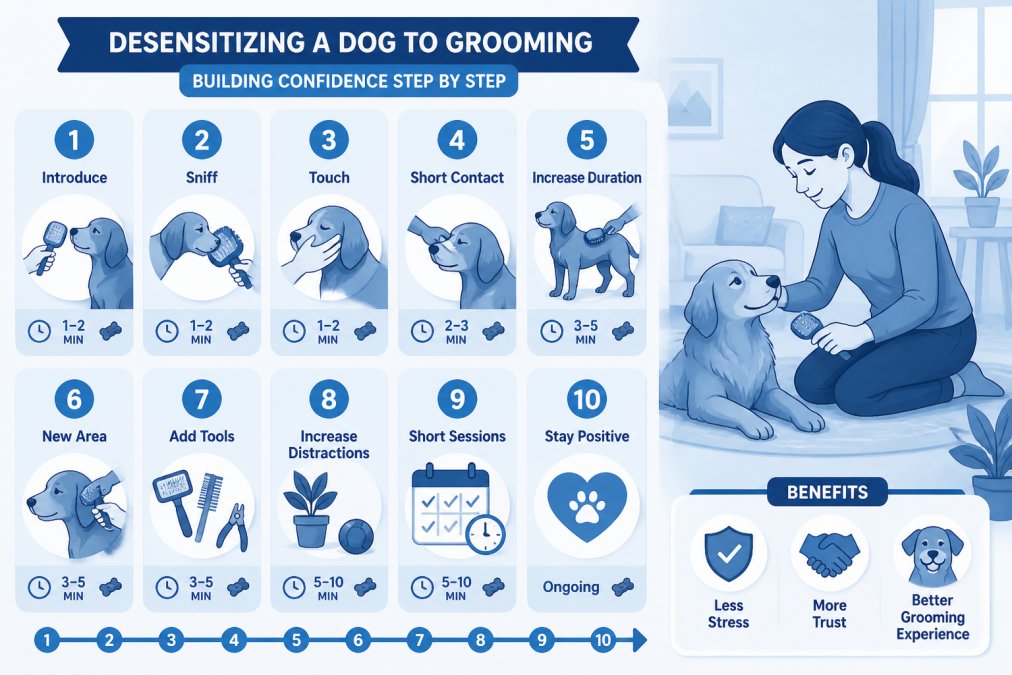
Desensitization works because it rewires your dog's emotional response to grooming from fear to neutral or positive. Start by understanding that your dog's anxiety isn't stubbornness, it's a genuine fear response triggered by unfamiliar sensations, sounds, and loss of control.
Start with Short Sessions and Positive Reinforcement
Begin with 2-3 minute sessions where you simply let your dog see and smell grooming tools without using them. Hold a brush nearby while offering treats. Let them lick peanut butter off a slicker brush so they associate it with something good. This phase should take a full week or more.
Once your dog shows curiosity rather than fear, do a single stroke with the brush on their shoulder, then immediately stop and reward. The key is ending on a positive note before they get stressed. Gradually extend to five strokes, then ten, over multiple sessions. High-value treats like chicken, cheese, or freeze-dried liver work better than kibble because the motivation is higher.
Introduce Tools Gradually Without Pressure
After brush desensitization, introduce other tools one at a time. Let your dog hear the sound of a nail grinder or clipper from across the room during treat time. Move it closer over multiple sessions. When you finally use it, do it for one second on one nail, then stop. A single nail counts as success.
This approach prevents learned helplessness that develops when dogs experience overwhelming grooming sessions. Many anxious dogs became anxious because someone held them down and did a full groom while they panicked. Undoing that requires proving the opposite: grooming is brief, optional-feeling, and rewarding.
Calming Grooming Techniques for Dogs: Creating a Stress-Free Environment
Environment matters as much as tools. A chaotic, loud space will stress even a confident dog. Your own energy transfers directly to your dog; if you're tense about grooming, they sense it.
Set the Right Atmosphere for Relaxation
Groom in a quiet room with minimal distractions. Close doors, turn off the TV, and ask household members to stay out. Use soft, warm lighting rather than harsh overhead lights. Some dogs calm down with gentle background music or white noise, which masks sudden sounds that trigger startle responses.
Temperature matters too. A cold room makes dogs tense; warm rooms promote relaxation. If you're bathing your dog, use lukewarm water, not hot or cold.
Use Gentle Handling and Massage During Grooming
How you touch your dog during grooming is as important as what tools you use. Firm, confident strokes calm more than tentative, light touching. Use steady pressure and slow movements.
Incorporate massage into grooming. Between brush strokes, use your fingers to gently massage the area you just brushed. This feels good to your dog and helps you identify mats or skin issues. For dogs with severe anxiety, consider grooming in short sessions spread across multiple days. A 5-minute shoulder-and-chest brushing on Monday, 5 minutes on the back Tuesday, and 5 minutes on the hindquarters Wednesday is less stressful than a 15-minute full-body session.
Essential Grooming Tools for Sensitive Skin Dogs
The right tools make the difference between grooming that feels invasive and grooming that feels neutral or pleasant. Tools designed for sensitive skin prioritize comfort over speed.
Ball-Tipped Slicker Brushes: Gentle Bristles Without Scratching
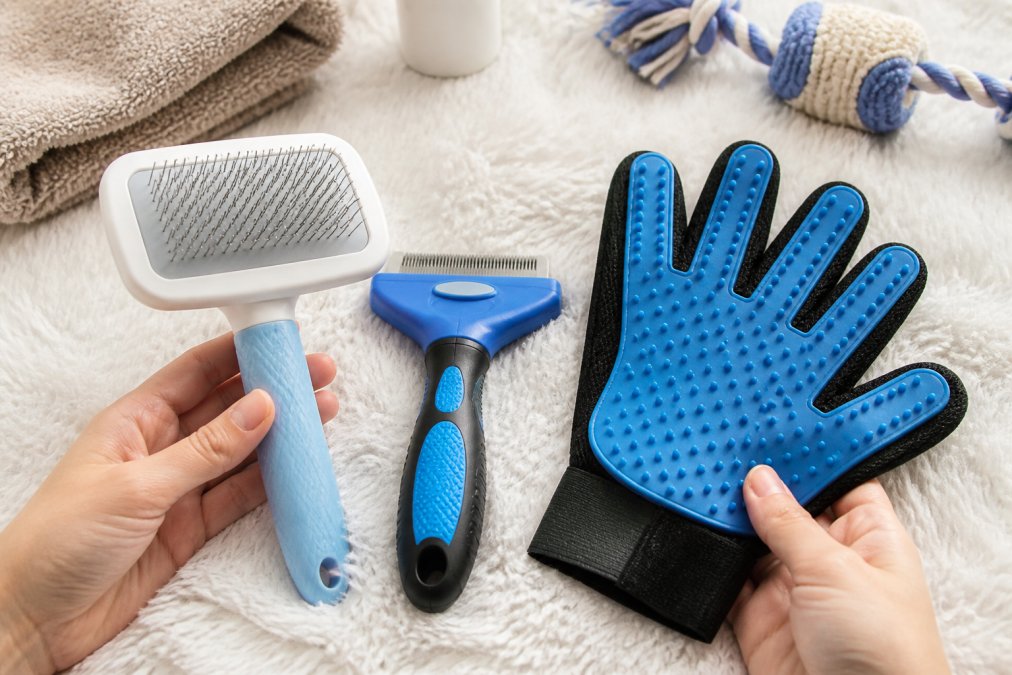
A ball-tipped slicker brush is the gentlest option for dogs with sensitive skin. The rounded tips on each bristle prevent the sharp scratching that standard slicker brushes cause. The Groom Professional Ball Pin Slicker Sensitive Skin Dog Brush features a flexible cushion that reduces pressure on skin while the curved head reaches tricky areas like armpits and inner thighs where mats often form.
De-Shedding Tools: Removing Loose Hair Without Irritation
De-shedding tools target the undercoat without damaging the topcoat. The Tangle Teezer De-Shedding Dog Grooming Brush uses patented two-tiered teeth technology: short teeth remove loose undercoat while longer teeth protect the topcoat. This prevents the bald patches and irritation that aggressive de-matting tools cause.
De-shedding is essential for double-coated breeds like Golden Retrievers, German Shepherds, and Huskies. Use de-shedding tools 1-2 times weekly during shedding season and monthly during off-season. The two-tiered design means you can't over-brush; the tool stops when it reaches the undercoat layer.
Grooming Gloves: A Hands-On Approach to Comfort
HandsOn Gloves transform grooming from a tool-based activity to a tactile, massage-like experience. The textured gloves remove loose hair while your hands massage and stimulate blood circulation. Many dogs that hate brushes tolerate gloves because the sensation feels closer to petting than grooming.
These gloves work for wet or dry grooming. During bathing, they remove loose hair while shampooing. On dry coat, they're excellent for anxious dogs because the sensation is familiar and comforting. Gloves are less effective for severe matting compared to specialized tools, but they're your best option for dogs with extreme grooming anxiety.
Hypoallergenic Dog Shampoo and Skin-Friendly Wipes
What you wash your dog with matters as much as how you groom. Standard dog shampoos contain fragrances and detergents that irritate sensitive skin, creating itching that makes grooming sessions stressful.
Why Hypoallergenic Formulas Matter
Hypoallergenic dog shampoo removes allergens and irritants without stripping natural oils. Earth Rated Thick Hypoallergenic Dog Grooming Wipes contain soothing ingredients like aloe, shea butter, chamomile, and cucumber. They're pH-balanced for dog skin, which is more acidic than human skin. Regular dog shampoos are too alkaline, disrupting the skin barrier.
Dogs with sensitive skin benefit from unscented formulas. Fragrance, even "natural" fragrance, triggers reactions in sensitive dogs. Hypoallergenic shampoos also reduce the itching that makes dogs anxious during grooming. A dog whose skin is calm cooperates better than one whose skin is burning.
Quick-Clean Wipes for Between-Bath Maintenance
Grooming wipes let you maintain your dog's coat and remove allergens without full baths. Use them to wipe paws after walks, clean faces and ears, and spot-clean dirty areas. This reduces the frequency of full baths, which is better for sensitive skin since bathing strips natural oils.
DOUXO S3 PYO Pads are veterinarian-recommended for dogs with skin irritation or hot spots. For routine cleaning, Earth Rated wipes are sufficient and gentler. Keep wipes in your car, by the door, and in your grooming kit so you'll actually maintain your dog's coat between grooming sessions.
Quiet Nail Grinders and Clippers for Anxious Dogs
Nail anxiety is one of the most common grooming stressors. The sound of clippers startles dogs, and the pressure of clipping creates fear of pain. Quiet grinders solve the sound problem; proper technique solves the pressure problem.
The Oster Gentle Paws Pet Nail Grinder operates at a whisper-quiet level compared to standard clippers. The 2-speed design lets you choose the grind speed based on your dog's comfort and nail thickness. The LED light illuminates the nail so you can see exactly where you're grinding, preventing over-grinding into the quick.
Grinders take longer than clippers, but for anxious dogs, the extra time is worth it. Start with just one nail per session, using the low speed setting. Gradually increase to multiple nails as your dog acclimates.
Detangling and De-Matting Products That Prevent Stress
Mats and tangles make grooming painful and stressful. Preventing mats through proper brushing is easier than removing them. We Love Doodles Unscented Dog Detangler Spray removes knots without harsh chemicals or heavy fragrances.
The fragrance-free formula is essential for sensitive dogs. Apply the spray to matted areas, wait 2-3 minutes for it to penetrate, then gently brush with a slicker brush or comb. Use detangler as prevention: spray problem-prone areas (armpits, behind ears, hindquarters) weekly on long-coated dogs, even if mats haven't formed yet.
For severe mats, patience matters more than force. Spray, wait, gently work the mat apart with your fingers, then brush. Never pull or yank, as this causes pain and teaches your dog that mats mean painful grooming.
Gentle Grooming for Senior Dogs: Special Considerations
Senior dogs have different grooming needs than younger dogs. Arthritis makes standing difficult; sensitive skin becomes more fragile; anxiety often increases with age.
Senior dogs benefit from shorter grooming sessions. A 10-minute session is better than 30 minutes. Use a non-slip mat or towel to provide cushioning and stability. Keep the room warm, use warm water for baths, and have a towel ready immediately after to prevent chilling.
Nail care becomes critical for senior dogs. Long nails change gait, putting additional stress on arthritic joints. Use a quiet grinder rather than clippers. Grind nails every 2-3 weeks rather than waiting for them to get long.
Skin becomes more fragile with age. Use the softest brush available; ball-tipped slicker brushes are ideal. Bathe less frequently (monthly instead of weekly) to prevent skin drying. When you do bathe, use hypoallergenic, moisturizing shampoo.
Many senior dogs develop anxiety around grooming from years of uncomfortable experiences. Desensitization still works at any age. Short, positive sessions with high-value treats create new associations.
Gentle grooming solutions for dogs create a foundation where regular maintenance happens without battle. Dogs that tolerate grooming get healthier skin, better coat condition, and fewer behavioral problems. Pets R Smarter curates products specifically chosen for their gentle design and effectiveness with sensitive dogs. From quiet nail grinders to ball-tipped slicker brushes to hypoallergenic wipes, each tool is selected to make grooming easier and less stressful. With the right approach and the right tools, you can transform grooming from something your dog dreads into something they tolerate, or even enjoy.
Frequently Asked Questions
What are the best gentle grooming solutions for dogs with sensitive skin?
The best gentle grooming solutions for dogs with sensitive skin include ball-tipped slicker brushes that prevent scratching, hypoallergenic dog shampoos with soothing ingredients like aloe and chamomile, and grooming gloves that provide a massaging action. Specialized tools like the StripHair Gentle Groomer offer multi-purpose functionality specifically designed for sensitive areas. Pair these tools with fragrance-free detangler sprays and hypoallergenic wipes to maintain coat health without irritation between baths.
How do you groom an unwilling or anxious dog?
Grooming an anxious dog requires patience and desensitization. Start with short sessions and reward calm behavior with treats and praise. Introduce grooming tools gradually without using them initially, letting your dog become familiar with their presence. Use quiet, cordless clippers to minimize stress-triggering noise. Create a calm environment with soft lighting and gentle handling. Grooming gloves and massage-based tools often feel less intimidating than traditional brushes, making them ideal for nervous dogs building tolerance.
What calming grooming techniques work best for stressed dogs?
Effective calming grooming techniques include establishing a quiet, comfortable space free from distractions, using gentle massage movements during brushing to boost circulation and relaxation, and maintaining a slow, unhurried pace. Speak in a soft, reassuring tone throughout the process. Take breaks when your dog shows signs of stress. Grooming gloves and soft-bristled tools feel less invasive than traditional brushes. For senior dogs or those with severe anxiety, consider professional groomers experienced with anxious pets, or use therapeutic grooming tools designed specifically for stress reduction.
Can I groom my dog at home without professional training?
Yes, you can perform basic at-home grooming with the right tools and approach. Start with essential tasks like brushing, de-shedding, and using grooming wipes to maintain coat health. Ball-tipped slicker brushes and de-shedding tools are designed for safe home use with minimal risk of injury. For nail trimming, battery-powered grinders with LED lights make the process easier and safer. Avoid complex tasks like full haircuts until you gain experience. Many gentle grooming solutions are specifically designed for pet owners, not just professionals, and include user-friendly features like ergonomic handles and flexible cushioning.
What signs indicate my dog is stressed during grooming?
Signs of grooming-induced stress include trembling, excessive panting, whining or vocalization, attempting to escape, stiff body posture, and avoidance behaviors like hiding when grooming tools appear. Some dogs may show lip licking, yawning, or ear flattening as early stress signals. If you notice these signs, stop immediately and take a break. Gradually reintroduce grooming using desensitization techniques and calming methods. Switching to gentler tools like grooming gloves or soft-bristled brushes can significantly reduce stress responses in sensitive or anxious dogs.
This article was written using GrandRanker