

Home Grooming for Beginners: A Complete Guide
Table of Contents
- Why Home Grooming Matters for Your Dog
- Essential Dog Grooming Tools for Beginners
- Pre-Grooming Health Check and Body Assessment
- How to Bathe a Dog at Home: Step-by-Step
- Dog Nail Trimming Tips for Beginners
- Brushing, Detangling, and Coat Maintenance
- Keeping Your Dog Calm During Home Grooming
- Common Grooming Mistakes to Avoid
Why Home Grooming Matters for Your Dog
Regular grooming maintains your dog's coat health, prevents skin irritation, and helps you spot potential health issues early. A matted coat traps moisture and bacteria against the skin. Overgrown nails affect how your dog walks and can lead to joint problems. Ears that aren't cleaned regularly become breeding grounds for infection.
At Pets R Smarter, we believe every dog owner should feel confident handling basic grooming tasks. You don't need professional training to brush your dog properly, trim nails safely, or give a thorough bath. The grooming frequency your dog needs depends on coat type, breed, and lifestyle. A dog with a dense undercoat needs more frequent brushing than a short-haired breed. Once you understand these variables, home grooming becomes manageable and even enjoyable.
Essential Dog Grooming Tools for Beginners
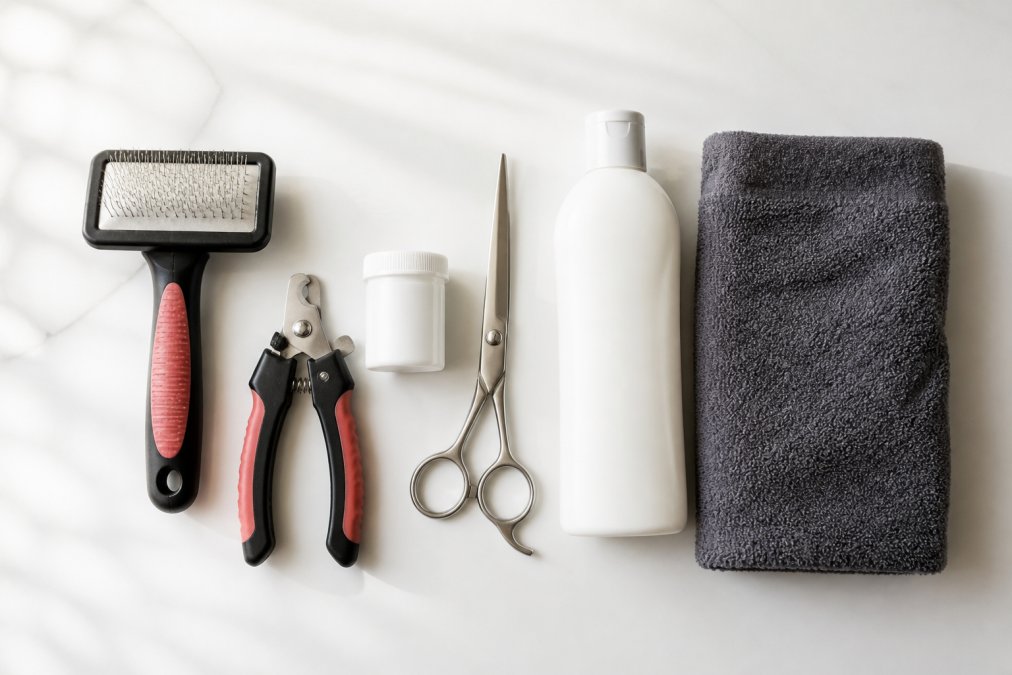
Building a grooming kit doesn't require buying everything at once. Start with the essentials and add specialized tools as you develop your skills. Quality tools make the work faster and less stressful for your dog.
Brushes and Detangling Tools
The slicker brush is the foundation of any home grooming toolkit. This flat brush with short, fine wires removes dead hair, prevents mats, and works on most coat types. For dogs with dense undercoats, a deshedding tool removes the soft undercoat without damaging the guard hairs on top.
A detangling spray helps you work through matted fur without yanking and causing pain. For long-haired breeds, a metal comb with both wide and narrow teeth helps you check whether you've removed all dead hair and tangles.
Nail Care Essentials
Nail clippers come in two main styles: guillotine clippers and scissor clippers. Most beginners find scissor clippers easier to control. For large dogs with thick nails, a grinder tool offers a gentler alternative that sands the nail instead of cutting it.
Styptic powder stops bleeding if you accidentally cut into the quick of the nail. In light-colored nails, you can see a small dark circle in the center. In dark nails, trim small amounts and stop when you see a tiny dark spot appearing in the center of the nail.
Bathing and Drying Equipment
A non-slip mat for your bathing area prevents your dog from sliding and panicking. A handheld showerhead or bathing sprayer gives you better control than a fixed showerhead. Dog shampoo formulated for your dog's coat type prevents irritation and keeps the coat healthy. A microfiber towel dries faster than a regular towel.
Health Check and Safety Items
A grooming table with a non-slip surface makes it easier to handle your dog and see what you're doing. A grooming loop or restraint prevents your dog from jumping off the table and keeps your dog safe. Never leave a restrained dog unattended.
Pre-Grooming Health Check and Body Assessment
Before you start any grooming session, take five minutes to assess your dog's overall health and skin condition. Run your hands over your dog's entire body, feeling for lumps, bumps, or areas of sensitivity. Check the skin for redness, flaking, or unusual odors. Look at the ears for redness or discharge. Examine the paws for cracks or signs of infection.
If your dog has skin irritation, hot spots, or signs of infection, grooming can make these worse. Check your dog's nails to see how much they need trimming and examine the coat for mats and tangles.
How to Bathe a Dog at Home: Step-by-Step
Bathing your dog at home saves money and gives you control over water temperature, products, and handling. Most dogs tolerate home bathing better than professional grooming facilities because they're in a familiar environment with their owner.
Preparation and Water Temperature
Gather everything you need before you start: shampoo, towels, non-slip mat, handheld sprayer, and any ear cleaning solution. Brush your dog thoroughly before bathing. Wet matted fur becomes even more matted and harder to work through.
Fill the tub with 3-4 inches of warm water. Test the temperature on your inner wrist; it should feel comfortably warm, not hot.
Shampooing and Rinsing Safely
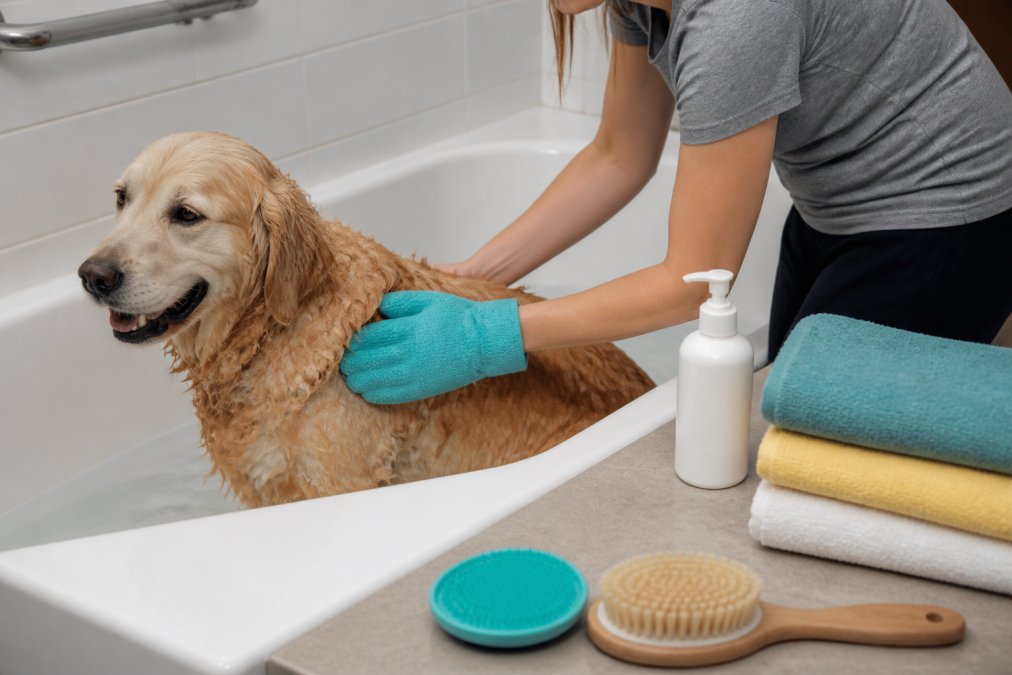
Wet your dog's body gradually, starting at the back legs and working forward. Avoid spraying the face and ears directly. Instead, use a washcloth to gently wet the head.
Apply shampoo starting at the neck and working backward, massaging it into the coat with your fingers. Work the shampoo down to the skin, not just the surface. Rinse thoroughly with lukewarm water. Shampoo residue left in the coat causes itching and irritation. Rinse multiple times until the water runs clear.
If your dog has ear issues, use a specialized ear cleaning solution after bathing. Apply it gently into the ear canal, massage the base of the ear, and let your dog shake out the excess.
Drying Your Dog's Coat
Squeeze excess water from the coat gently. Wrap your dog in a microfiber towel and let them shake. Towel dry by gently pressing the towel against the coat rather than rubbing, which tangles the hair.
For dogs with dense undercoats, a low-heat blow dryer finishes the job and prevents moisture from being trapped against the skin. Hold the dryer 6-8 inches from the coat and keep it moving. Never point it directly at the face or ears.
Dog Nail Trimming Tips for Beginners
Nail trimming intimidates many beginners, but the process becomes straightforward once you understand the anatomy and practice with confidence.
The nail consists of the hard outer shell and the quick, the living tissue inside containing blood vessels and nerves. Your goal is to trim the nail without cutting into the quick. In light-colored nails, you can see the quick as a small dark circle. In dark nails, you have to estimate based on the nail's shape and thickness.
Hold the nail clippers perpendicular to the nail, not at an angle. Trim only the curved part of the nail that extends past the paw pad. Moderate trimming every 3-4 weeks is safer than aggressive trimming less frequently.
If you cut into the quick and bleeding starts, apply styptic powder immediately and press gently for a few seconds. Stay calm and reassuring so your dog doesn't develop fear of nail trimming.
For anxious dogs, trim one or two nails per session rather than all four feet at once. This builds positive associations and prevents stress from escalating.
Brushing, Detangling, and Coat Maintenance
Regular brushing is the foundation of healthy skin and coat. Brushing removes dead hair, distributes natural oils, and prevents mats from forming. Brush your dog 2-3 times per week for most breeds. Dogs with dense undercoats need more frequent brushing, up to daily during shedding season.
Use the right tool for your dog's coat type. A slicker brush works for most coats. A deshedding tool removes the undercoat without damaging guard hairs. A metal comb checks your work and removes any remaining tangles.
Brush in the direction the coat grows, not against it. Work section by section, starting at the head and working toward the tail. Lift each section of coat and brush the underside, not just the surface.
Handling Matted Fur and Undercoat
Mats develop when dead hair tangles with live hair and moisture gets trapped. Prevention through regular brushing is far easier than removal. When mats do form, spray the mat with detangling solution and let it sit for a few minutes. Use a comb or slicker brush to gently work the mat apart, starting at the edges and working toward the center.
If a mat is too severe to brush out without causing discomfort, clip it out with a mat cutter or thinning shears. The undercoat is the soft, dense layer under the guard hairs. During shedding season, a deshedding tool removes this dead undercoat before it becomes matted or creates a smelly, damp layer against the skin.
Breed-Specific Coat Care
Different breeds have vastly different grooming needs. A Poodle's continuously growing coat requires regular clipping every 4-6 weeks. A German Shepherd's double coat sheds heavily and needs frequent brushing. Understanding your dog's breed standard helps you provide appropriate care.
Keeping Your Dog Calm During Home Grooming
A calm dog makes grooming faster, safer, and more pleasant for both of you. Stress signals in your dog, panting, whining, trying to escape, or freezing in fear, mean you should pause and reassess.
Start grooming sessions when your dog is naturally calm. A tired dog is a cooperative dog. A short walk before grooming helps settle your dog's energy.
Use positive reinforcement throughout the session. Praise, treats, and a calm tone of voice teach your dog that grooming is safe and sometimes rewarding. Never punish fear or resistance, as this creates negative associations that make future grooming harder.
Desensitization works for dogs nervous about specific tools or processes. Introduce the clippers without using them, just let your dog see and smell them. Turn them on from a distance so your dog hears the sound. Reward calm behavior. Over several sessions, gradually bring the tool closer and eventually use it.
Common Grooming Mistakes to Avoid
Understanding what goes wrong helps you avoid costly and painful errors.
Brushing a dry coat causes hair breakage and discomfort. Always lightly mist the coat with water or detangling spray before brushing.
Skipping the undercoat during brushing leads to matting and skin problems. Regular deshedding prevents mats from forming.
Trimming nails too short causes pain and bleeding. It's better to trim conservatively and trim more frequently.
Using human shampoo or low-quality pet shampoo disrupts your dog's skin pH and causes irritation. Invest in quality dog shampoo formulated for your dog's coat type.
Bathing without brushing first means matted fur becomes worse when wet. Always brush thoroughly before bathing.
Not drying thoroughly leaves moisture trapped against the skin, creating an environment for yeast and bacterial growth.
Restraining your dog without supervision causes panic and injury. Use a grooming loop for safety, but never leave a restrained dog unattended.
Ignoring stress signals from your dog means continuing when your dog is frightened or in pain. Panting, whining, trying to escape, or freezing are all signs to pause and reassess.
Attempting grooming when your dog is sick or injured can cause complications. If your dog is recovering from surgery, has skin irritation, or shows signs of illness, skip grooming or check with your veterinarian first.
Learning home grooming for beginners opens up a skill that saves you money, strengthens your bond with your dog, and keeps your dog healthier. The tools and techniques we've covered work for most dogs and most situations. The key is starting with quality equipment, understanding your dog's specific needs, and approaching the process with patience. At Pets R Smarter, we've curated grooming tools designed with both dogs and their owners in mind, products that prioritize comfort, safety, and durability. When you're ready to invest in tools that make grooming easier and more enjoyable, our Tail Satisfaction Guarantee ensures you're getting products that actually work for your dog. For current pricing, please visit our website.
| Grooming Task | Frequency | Best Tool | Time Required |
|---|---|---|---|
| Brushing | 2-3x weekly | Slicker brush or comb | 10-15 minutes |
| Bathing | Every 4-8 weeks | Dog shampoo & handheld sprayer | 20-30 minutes |
| Nail trimming | Every 3-4 weeks | Scissor clippers or grinder | 5-10 minutes |
| Ear cleaning | Weekly or as needed | Ear cleaning solution & cotton | 5 minutes |
| Deshedding | During shedding season | Deshedding tool | 15-20 minutes |
Frequently Asked Questions
How do you groom a dog at home for beginners?
Start with a pre-grooming health check to spot any skin issues. Brush your dog thoroughly to remove dead hair and detangle matted fur, then bathe with dog shampoo and warm water. Dry the coat completely, trim nails carefully, and clean ears. Work in a calm environment and use positive reinforcement. Break grooming into shorter sessions if your dog shows stress signals. Most beginners find it helpful to gather all tools before starting and to groom on a grooming table for better access and comfort.
What essential dog grooming tools do I need to get started?
A basic grooming kit includes a slicker brush for detangling, a deshedding tool to remove undercoat and dead hair, nail clippers with styptic powder for safety, dog shampoo, a blow dryer, towels, and ear cleaning solution. A grooming table makes handling easier, and guard combs help prevent accidental nicks. For sanitary trims, grooming shears designed for beginners are safer than professional clippers. Quality tools last longer and make the job easier, reducing stress for both you and your dog.
How often should I groom my dog at home?
Grooming frequency depends on your dog's coat type and breed. Dogs with undercoats need brushing 2-3 times per week to prevent matting and maintain coat health. Short-haired breeds may need weekly brushing. Baths typically happen every 4-12 weeks depending on activity level and coat condition. Nail trimming every 3-4 weeks keeps paw pads healthy. Ear cleaning should happen monthly or more often for breeds prone to ear issues. Establish a consistent grooming schedule to keep your dog comfortable and reduce stress during sessions.
How do I keep my dog calm during grooming sessions?
Create a calm environment with minimal noise and distractions. Use positive reinforcement like treats and praise to build confidence. Start with short grooming sessions and gradually increase duration as your dog becomes desensitized to the process. Watch for stress signals like excessive panting, trembling, or trying to escape, and take breaks if needed. Keep grooming tools out of sight until ready to use them. Some dogs relax better with background music or in a familiar space. If anxiety persists, consult your veterinarian about desensitization techniques.
What are common dog grooming mistakes beginners make?
Beginners often skip the pre-grooming health check, missing potential skin irritation or health issues. Rushing through brushing leads to matted fur that's harder to remove later. Using human shampoo instead of dog shampoo can damage the coat and irritate skin. Cutting nails too short causes bleeding and pain. Drying the coat incompletely traps moisture and promotes skin issues. Grooming an anxious dog without desensitization increases stress. Not maintaining tools properly dulls clippers and spreads bacteria. Take time with each step, use appropriate products, and prioritize your dog's comfort over speed.
How do I trim my dog's nails safely as a beginner?
Understand the quick of the nail, the pink blood vessel inside, which you must avoid. Only trim the clear or white part of the nail. Use sharp nail clippers designed for dogs and trim at a 45-degree angle. Start with small clips rather than one large cut. Keep styptic powder nearby to stop bleeding if you accidentally nick the quick. If your dog has dark nails where the quick isn't visible, trim conservatively or consult a professional. Practice on one paw first, and reward your dog with treats and praise to build positive associations.
What's the best way to handle matted fur and undercoat?
Prevention is easier than treatment. Regular brushing with a slicker brush removes dead hair before matting occurs. For existing mats, use a detangling spray and gently work the mat apart with a deshedding tool or mat splitter, starting at the edges. Never bathe a matted dog, as water tightens mats. Brush the undercoat thoroughly to reduce shedding and prevent future matting. For severe matting close to skin, consult a professional groomer to avoid skin irritation. Establish a grooming frequency appropriate for your dog's coat type to maintain coat health.
Is it safe to groom my dog at home, or should I use a professional groomer?
Home grooming is safe when you follow proper techniques and use appropriate tools. Start with basic maintenance like brushing, bathing, and nail trimming. Professional grooming helps for breed-specific cuts, sanitary trims, or if your dog shows extreme anxiety. Many owners combine both: handling basic grooming at home while seeing a professional groomer every 6-12 weeks for detailed work. Your veterinary check can identify any skin conditions that need professional attention. Build your confidence gradually, and don't hesitate to ask a professional for guidance on technique.
This article was written using GrandRanker