

How Often to Groom Dog at Home: 2026 Schedule
Table of Contents
- How Often to Groom Dog at Home: The Short Answer
- Essential Dog Grooming Tools for Beginners
- Dog Grooming Schedule by Breed and Coat Type
- Bathing Schedule and Skin Health
- Dog Nail Trimming Frequency: A Step-by-Step Guide
- How to Manage Dog Grooming Anxiety at Home
- Signs Your Dog Needs Grooming Sooner
- Final Thoughts on Your Home Grooming Routine
- Frequently Asked Questions
Last Updated: September 8, 2026
How Often to Groom Dog at Home: The Short Answer
Most dogs need at-home grooming two to three times per week, with a full maintenance session every one to two weeks, depending on coat type, lifestyle, and season. For most owners, learning how often to groom dog at home means building a consistent routine that prevents matting, controls shedding, and keeps skin healthy between professional visits.
Professional grooming costs between $300 and $1,000+ annually for monthly visits, according to Bark's 2026 dog grooming price guide. That makes at-home upkeep an essential money-saver, not just a nice-to-have.
The core rule: if you can roll a loose hair between your fingers and it forms a mat, your dog needs more frequent brushing. Below, we'll show you how to match a grooming schedule to your dog's breed, coat type, and individual needs.
Essential Dog Grooming Tools for Beginners
A home grooming routine doesn't require a professional studio setup. A focused kit with four or five quality tools covers nearly every maintenance need. Prioritize tools that feel comfortable in hand, since you'll use them weekly for years.
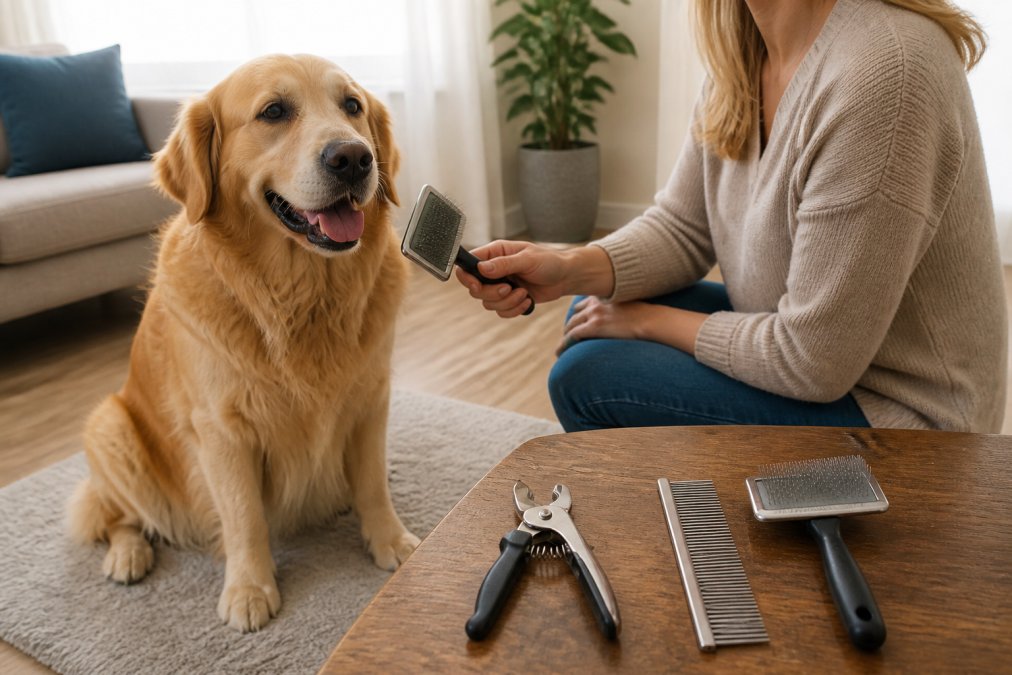
The essential dog grooming tools for beginners include:
- Slicker brush for removing loose hair, tangles, and dander
- Stainless steel comb for checking work and detangling finer areas
- Nail clippers designed for dogs, never human clippers
- Deshedding tool for double-coated and heavy-shedding breeds
- Gentle shampoo formulated for canine skin pH
Our Slicker Grooming Brush for Dogs & Cats at $14.99 handles both short and long coats effectively, making it the ideal first purchase. For a complete starter setup, the Pet Grooming & Flea Removal Tool Set at $27.99 includes 30 pieces covering everything from coat care to debris removal.
Dog Grooming Schedule by Breed and Coat Type
A dog grooming schedule by breed and coat type prevents the guesswork that leads to matting or over-brushing. Coat type determines how often you brush, how frequently you bathe, and which tools work best. Getting this right also reduces what you spend on professional services, which average four visits per year according to research published by the National Institutes of Health.
Short-Haired and Smooth-Coated Breeds
Short-haired breeds like Beagles, Boxers, and Dalmatians need brushing once or twice weekly with a rubber curry brush or soft slicker. They rarely mat but shed year-round, so consistent brushing keeps dander manageable. Bathe every 4 to 8 weeks with a moisturizing shampoo.
Double-Coated and Long-Haired Breeds
Double-coated breeds like Golden Retrievers, Huskies, and German Shepherds need brushing three to four times weekly, and daily during heavy shedding seasons. Long-haired breeds such as Poodles, Shih Tzus, and Yorkies require near-daily brushing to prevent matting around the ears, legs, and tail.
Professional grooming intervals of 4 to 6 weeks are recommended for these breeds, but the success of that schedule depends heavily on home maintenance quality, as noted by professional groomers online. Our Dog & Cat Deshedding Grooming Brush at $60.75 reaches the undercoat without damaging the topcoat, making weekly sessions faster and more effective.
| Coat Type | Brushing Frequency | Bathing Frequency | Key Tools |
|---|---|---|---|
| Short-haired | 1-2 times weekly | Every 4-8 weeks | Rubber curry, soft slicker |
| Double-coated | 3-4 times weekly | Every 6-8 weeks | Deshedding tool, undercoat rake |
| Long-haired | Daily or near-daily | Every 4-6 weeks | Slicker brush, metal comb |
| Curly or wiry | 3-4 times weekly | Every 3-4 weeks | Slicker brush, de-matting comb |
Seasonal Adjustments: The Missing Piece
Your dog's coat changes with the seasons. In spring and fall, double-coated breeds "blow" their undercoat over 2 to 3 weeks, making daily brushing with an undercoat rake non-negotiable. Skipping this leads to painful mats that trap moisture and breed hot spots.
In winter, indoor heating dries out skin and coat, increasing dander and static. Reduce bathing to every 8-10 weeks and add a veterinarian-approved omega-3 supplement. In summer, rinse dogs that swim or spend time in humid environments with plain water to remove chlorine, salt, and pollen before they dry on the skin.
Breed-Specific Deep Dives
Poodles and Doodles: These breeds have continuously growing hair that mats at the root within 48 hours of skipping a brush. The standard is full brushing every other day, focusing on high-friction zones: behind the ears, under the collar, and in the armpits. A metal greyhound comb should follow every slicker pass to catch tangles the brush missed.
Huskies and Malamutes: These Arctic breeds have a dense undercoat that insulates them from both cold and heat. Never shave them; their coat regulates temperature year-round. Instead, use a high-velocity blower or an undercoat rake during shedding season to lift dead fur without cutting the guard hairs.
Corgis and Dachshunds: These short-legged breeds are prone to developing calluses on their elbows and chests from lying on hard floors. Regular brushing with a firm rubber curry stimulates blood flow to these areas and distributes natural oils, preventing dry, cracked skin.
Bathing Schedule and Skin Health
Bathing frequency depends on coat type, activity level, and skin condition. Over-bathing strips natural oils, while under-bathing allows dirt and odor to accumulate. Most dogs need a bath every 4 to 8 weeks, though active dogs may need more frequent washing.
Dogs with allergies or skin sensitivities often benefit from veterinarian-recommended medicated or oatmeal-based shampoos. Always brush thoroughly before bathing, since mats become tighter when wet. Rinse completely to avoid residue that irritates skin and dulls the coat.
Dog Nail Trimming Frequency: A Step-by-Step Guide
Dog nail trimming frequency varies by lifestyle, but most dogs need trims every 3 to 4 weeks. Dogs who walk on concrete may wear nails down naturally; those on grass or carpet typically need monthly trims.
Here's a step-by-step approach to safe nail trimming at home:
- Gather supplies including dog-specific nail clippers and styptic powder for accidental bleeding
- Hold the paw firmly but gently, spreading toes to expose each nail
- Identify the quick by looking at the nail's center; in light nails it appears pink, in dark nails trim small increments
- Cut at a 45-degree angle below the quick, taking thin slices rather than one large cut
- Reward generously after each paw to build positive associations
The Dog & Cat Nail Clipper from Pets R Smarter features stainless steel blades that stay sharp through repeated use, reducing the crushing sensation that makes dogs resist trimming. For anxious dogs, trim one or two nails daily rather than all at once.
The Real Problem: Dogs Who Hate Nail Trims
The hard part is the dog who yanks their paw away or bolts at the sight of clippers. This is a fear response, not a discipline problem: most dogs have had a nail cut too short at least once, and one bad clip creates a lasting negative association.
A Desensitization Protocol That Works
A gradual counter-conditioning approach yields the best results over 1 to 2 weeks:
Days 1-3: Tool Introduction. Leave the clippers on the floor near your dog's food bowl. Let them sniff and investigate. Touch the clippers to their shoulder while feeding a high-value treat. Do not attempt any cutting.
Days 4-6: Paw Handling. Practice holding each paw for 5 seconds while offering treats. Touch the clipper to one nail without squeezing. If your dog pulls away, stop and try again later. The goal is 10 successful touches per session.
Days 7-9: Single Snip. Trim one nail on one paw per session. Cut a tiny sliver, then immediately reward. Stop after that single nail, even if the rest are long. This teaches your dog that the clipper sound leads to a treat, not pain.
Days 10-14: Full Session. Gradually increase to two or three nails per session. Always end on a positive note before your dog shows stress signals like lip licking, yawning, or whale eye.
The Grinder Alternative
A nail grinder (Dremel) is a viable alternative for dogs who hate the squeezing sensation of clippers. Grinders file gradually, eliminating the risk of cutting the quick, though the noise and vibration frighten some dogs. Introduce it by turning it on near your dog during meals for several days, then use the lowest speed and keep the tip moving to avoid heat buildup.
How to Manage Dog Grooming Anxiety at Home
Many dogs find grooming stressful due to restraint, unfamiliar tools, and sensitive areas. How to manage dog grooming anxiety starts with changing the emotional association before you pick up a brush: introduce tools gradually, letting your dog sniff them while offering treats.
Begin sessions when your dog is calm, such as after exercise or a meal. Keep the first several sessions under five minutes, focusing on tolerated areas before moving to paws, ears, and tail. Use high-value treats and stop on a positive note before your dog becomes overwhelmed.
For severely anxious dogs, use desensitization training, pairing each grooming action with a reward in tiny increments. A dog who panics at clippers might first accept them nearby, then touching, then the sound, then a trim. This prevents grooming from escalating into a traumatic event.
Signs Your Dog Needs Grooming Sooner
Even with a set schedule, your dog may need grooming sooner. Visible matting behind the ears, under the legs, or around the collar signals that brushing frequency needs to increase. Excessive shedding, dander on bedding, or noticeable odor all indicate it's time for a session.
Behavioral signs matter too. A dog who suddenly resists touch, scratches excessively, or rubs against furniture may have irritated skin, parasites, or overgrown nails. Check ears for redness or a yeasty smell, which indicates infection requiring veterinary attention.
Professional grooming frequency correlates with household income, with higher-income households averaging 4.6 visits per year compared to 3.2 for lower-income households, according to NIH grooming-related concerns research. But regardless of budget, the quality of at-home maintenance determines coat health between professional visits.
Final Thoughts on Your Home Grooming Routine
The right answer to how often to groom dog at home balances breed needs, your dog's tolerance, and your schedule. Start with the coat-type guidelines above, then adjust: a dog who mats quickly needs more frequent brushing; a short-haired dog who rarely sheds may need only weekly sessions.
The upfront investment for DIY grooming tools runs $50 to $200, with ongoing supplies costing $50 to $100 annually, according to Bark's cost breakdown. That's a fraction of professional-only care, and the bond you build during grooming sessions strengthens your relationship with your dog.
At Pets R Smarter, every tool is selected with input from industry professionals to prioritize your pet's health, safety, and comfort. Our Tail Satisfaction Guarantee lets you try grooming tools risk-free. Start with a slicker brush and nail clippers, build a consistent routine, and you'll see the difference within weeks.
Frequently Asked Questions
How often should I brush my dog at home?
Brush short-haired breeds 2-3 times per week to remove loose hair and distribute natural oils. Long-haired and double-coated dogs need daily brushing to prevent matting and tangles, especially during seasonal shedding periods. Regular brushing also lets you spot skin issues, bumps, or parasites early. If your dog has a thick undercoat, a deshedding tool used 2-3 times weekly during heavy shed seasons will cut loose hair dramatically.
How often should I bathe my dog to keep their skin healthy?
Most dogs need a bath every 4-6 weeks, but this varies by coat type and lifestyle. Double-coated breeds like Huskies need less frequent bathing, typically every 6-8 weeks, to avoid stripping natural oils. Short-haired active dogs may need monthly baths. Over-bathing causes dry, itchy skin, so stick to a schedule unless your dog rolls in something messy. Always use a dog-specific shampoo that matches your pet's skin sensitivity.
How can I tell if my dog needs professional grooming versus home care?
Home care handles routine maintenance: brushing, bathing, nail trims, and ear cleaning. Seek a professional groomer when you notice severe matting close to the skin, overgrown nails that click on floors, or a sanitary trim is needed for hygiene. Dogs with heavy undercoats that shed excessively may benefit from professional deshedding treatments 3-4 times yearly. If your dog shows signs of skin irritation or you cannot safely trim nails, professional help is the right call.
What are the most common pet grooming mistakes to avoid at home?
The biggest mistakes include bathing too often, which dries out skin, and skipping brushing before baths, which makes mats tighter. Never use human shampoo; its pH balance damages dog skin. When trimming nails, avoid cutting into the quick, the pink area containing blood vessels. Start with small trims and use treats to build positive associations. Also, don't ignore ear cleaning, especially for floppy-eared breeds prone to infections.
Building a grooming routine that works for both you and your dog takes consistency, patience, and the right tools. Pets R Smarter makes that easier with expert-approved grooming tools designed for comfort and durability, backed by our Tail Satisfaction Guarantee. Get started with Pets R Smarter and give your dog the comfortable, stress-free grooming experience they deserve.