

How to Choose a Gentle Dog Shampoo for Allergies
Table of Contents
- What Makes a Dog Shampoo Gentle for Allergies?
- Hypoallergenic Dog Shampoo Benefits: Why These Formulas Matter
- Ingredients to Avoid in Dog Shampoo for Sensitive Pups
- Step-by-Step Guide to Choosing a Gentle Formula
- How Often to Bathe a Dog with Allergies for Best Results
- Bathing Techniques That Protect an Itchy Skin Barrier
- When to See a Vet About Your Dog's Allergic Reaction
- Final Checklist for Choosing the Right Shampoo
- Frequently Asked Questions
Last Updated: September 4, 2026
When your dog won't stop scratching, choosing the right wash becomes more than a routine purchase. A gentle dog shampoo for allergies is a hypoallergenic, fragrance-free formula designed to soothe irritated skin and remove allergens without stripping natural oils.
Most dogs with allergies don't need harsh medicine. They need a cleanser that supports the skin barrier while washing away pollen, dust, and dander that trigger flare-ups. Industry guidance for 2026 emphasizes selecting shampoos containing soothing, non-medicated ingredients such as oatmeal, aloe, and coconut oil to calm and comfort the skin, according to Vetified's 2026 grooming guidance. Below, we'll walk through the exact criteria for evaluating formulas, the ingredients to avoid, and a step-by-step process for making the right call. We'll also cover bathing frequency and techniques that protect an already-sensitive skin barrier.
What Makes a Dog Shampoo Gentle for Allergies?
A gentle formula balances effective cleansing with skin-soothing ingredients while omitting known irritants like sulfates, artificial dyes, and harsh fragrances. The goal is allergen removal rather than chemical treatment. Shampoos are used to clean allergens attached to fur and skin to provide relief, notes Vetster's guidance on allergy bathing.
For dogs experiencing itchiness without a secondary infection, look for oatmeal, aloe vera, and coconut oil as primary ingredients. These provide moisturizing relief without disrupting the skin's natural pH balance. A truly gentle shampoo should also be pH-balanced for canines, since human shampoo is too acidic for their skin.
Hypoallergenic Dog Shampoo Benefits: Why These Formulas Matter
Hypoallergenic dog shampoo benefits extend beyond simple itch relief. These formulas support the skin barrier, your dog's first line of defense against environmental irritants.
- Reduces exposure to harsh sulfates that strip natural oils
- Minimizes allergic reactions from artificial dyes and parabens
- Supports frequent bathing without drying out the coat
- Provides soothing relief from plant-based ingredients like oatmeal and vitamin E
"Hypoallergenic, gentle formulas can help prevent additional skin issues, especially for dogs with sensitive skin," explains Guilfoyle in [Chewy's educational resource on dog skin care(https://petsrsmarter.com/products/pet-skin-care-liquid-gentle-nourishing-soothing-pet-grooming-supplies-for-dogs-cats-all-breeds-daily-pet-skin-care-moisturizing) | chewy.com]. This matters because a dog with allergies often needs more frequent baths, and a harsh formula will do more harm than good over time.
Ingredients to Avoid in Dog Shampoo for Sensitive Pups
Some ingredients commonly found in dog shampoos can actually worsen allergy symptoms or trigger new reactions.
Sulfates (SLS/SLES): These harsh detergents strip the skin of natural oils, leaving it dry, flaky, and more vulnerable to allergens. Industry trends in 2026 strongly favor sulfate-free formulations.
Artificial Fragrances and Dyes: These are among the most common culprits for contact allergies. Even "light" scents can contain dozens of undisclosed chemical compounds. Look for fragrance-free or naturally scented options using essential oils only if your dog tolerates them.
Parabens and Phthalates: Used as preservatives, these can disrupt the skin's microbiome and cause irritation over time.
Tea Tree Oil: While natural, tea tree oil is potent and can be toxic to dogs in high concentrations. It's best avoided unless specifically recommended by your vet for a particular condition.
d'limonene: A citrus-derived compound that can be irritating to sensitive skin.
Some industry voices argue that medicated shampoos are not intended for general allergy management and advocate for natural, organic alternatives instead, as noted by 4-Legger's position on natural formulations. This perspective is worth considering if your dog's allergies are mild and environmental rather than bacterial or fungal.
Step-by-Step Guide to Choosing a Gentle Formula
Choosing the right product requires label literacy and an understanding of your dog's specific allergy type. The front of the bottle is marketing; the back is science.
Step 1: Identify the Root Cause, Environmental vs. Food Allergy
Environmental Allergies (Atopy): Triggered by pollen, dust mites, mold, or grass. These allergens land on the skin and coat, so regular bathing with a gentle shampoo is directly therapeutic, it physically removes the trigger before it penetrates the skin. Dogs with environmental allergies typically benefit from bathing every 1-2 weeks during peak season.
Food Allergies: Triggered by specific proteins or carbohydrates in the diet. Shampoo cannot fix a food allergy. If your dog is reacting to chicken or beef, no topical product will resolve the itching. The only effective approach is a dietary elimination trial under veterinary supervision. Bathing still helps manage secondary symptoms, but it's a band-aid, not a cure.
How to tell the difference: Environmental allergies usually cause seasonal itching, paw licking, and face rubbing. Food allergies often cause year-round itching, recurrent ear infections, and gastrointestinal issues. If you're unsure, ask your vet about an elimination diet.
Step 2: Decode the Ingredient List, Not the Front Label
Marketing terms like "natural," "gentle," and "hypoallergenic" are not regulated by the FDA or USDA. The ingredient list is the only reliable source of truth.
Look for the cleansing agent. The first ingredient is usually water. The second or third ingredient is the surfactant, the actual cleansing agent. Avoid anything ending in "-sulfate" (sodium lauryl sulfate, sodium laureth sulfate). Look instead for plant-derived cleansers like decyl glucoside, cocamidopropyl betaine, lauryl glucoside, or sodium cocoamphoacetate, mild, non-stripping surfactants derived from coconut or corn.
Check the pH claim. Canine skin sits around pH 6.5-7.5, slightly alkaline compared to human skin at 4.5-5.5. A shampoo formulated for humans will disrupt your dog's acid mantle. Look for explicit "pH balanced for dogs" language on the label. If it doesn't say it, assume it's not.
Verify the soothing agents are in the middle of the list, not the bottom. Oatmeal, aloe vera, and coconut oil should appear in the first half of the ingredient list to be present in meaningful concentrations. If they're listed near the end, they're likely added in trace amounts for marketing purposes only.
Step 3: Perform a Patch Test Before the Full Bath
A patch test takes 24 hours and can save your dog from a miserable weekend of hives.
Patch Test Protocol:
- Choose a small, easy-to-reach area, behind the ear or on the inner thigh works well.
- Apply a dime-sized amount of the diluted shampoo to the area.
- Gently massage it in and leave it for 5 minutes.
- Rinse thoroughly with lukewarm water.
- Do not wash that area again for 24 hours.
- Monitor for redness, swelling, hives, or increased scratching.
- If no reaction appears within 24 hours, proceed with the full bath.
Step 4: Match the Formula to the Allergy Severity
Match the formula to your dog's condition:
| Condition | Formula Type | Key Ingredients | Bathing Frequency |
|---|---|---|---|
| Mild seasonal itching | Maintenance hypoallergenic | Oatmeal, aloe, coconut oil | Every 2-4 weeks |
| Moderate environmental allergies | Oatmeal-based therapeutic | Colloidal oatmeal, ceramides | Every 1-2 weeks during season |
| Severe itching with hotspots | Vet-recommended medicated | Chlorhexidine, ketoconazole | As directed by vet |
| Dry, flaky skin | Moisture-replenishing | Omega-3, shea butter, glycerin | Every 1-2 weeks |
Step 5: Consider the Wash-Off Requirement
Gentle, non-medicated shampoos typically rinse quickly, which is easier for anxious dogs. Some medicated shampoos need to sit for 10-15 minutes to be effective. If your dog hates baths, a long-contact shampoo will be a battle. A formula you can apply and rinse in 5 minutes is better than a theoretically superior one that causes stress-related flare-ups.
For a ready-made option that meets these criteria, the Gentle Pet Skin Care Liquid from Pets R Smarter offers a natural, soothing blend designed for daily use on sensitive skin. At $19.99, it's a practical addition to your grooming routine.
How Often to Bathe a Dog with Allergies for Best Results
For environmental allergies, bathing every 1 to 2 weeks during peak allergy season is generally recommended to remove pollen and dander before they trigger a reaction.
With a gentle, hypoallergenic formula, more frequent bathing is safe because the cleanser isn't stripping essential oils. Some dogs with severe seasonal allergies benefit from baths every 3-4 days during flare-ups, provided the shampoo is moisturizing and pH-balanced.
Watch for signs of over-bathing, including flaky skin, a dull coat, or increased scratching after a bath. If these appear, extend the interval between baths and consider a leave-on conditioner or wipe-downs between washes. Products like Earth Rated Dog Wipes are excellent for quick allergen removal on paws and coat between full baths, especially after walks.
Bathing Techniques That Protect an Itchy Skin Barrier
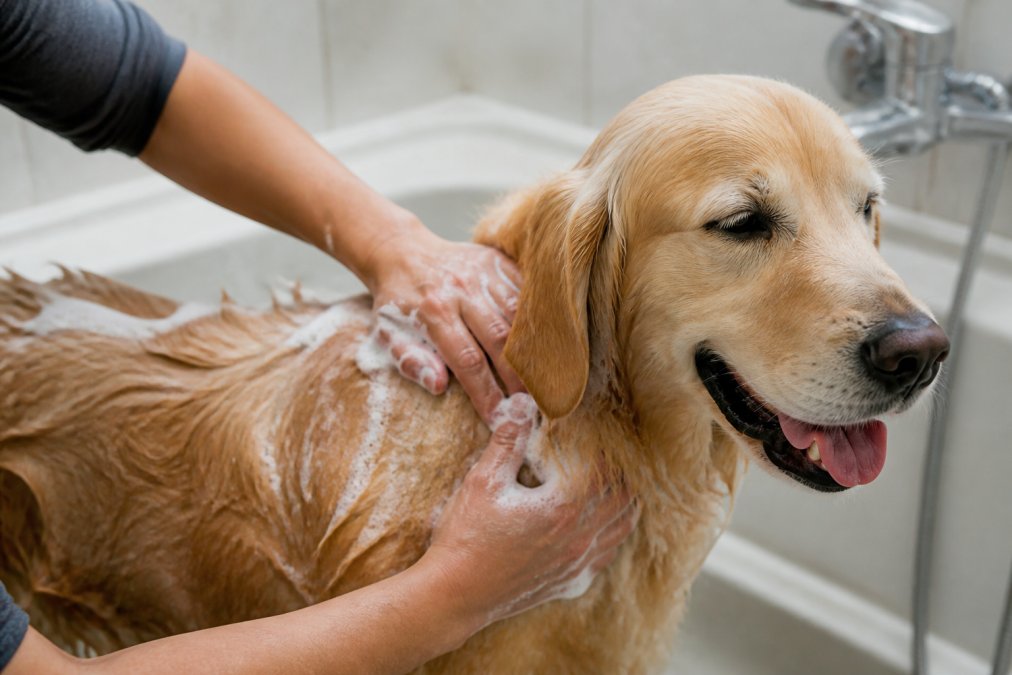
How you bathe your dog matters as much as what you use. Rough handling, hot water, and incomplete drying can undo the benefits of even the best gentle formula.
The Water Temperature Trap
Hot water strips the already fragile lipid layer, increases blood flow to the surface, and worsens inflammation and itching. The ideal temperature is lukewarm, roughly 90-95°F, which should feel neutral, not warm, on your inner wrist.
The combination of dry indoor air and hot water creates a double-dehydration effect on the skin. Stick to lukewarm water year-round and keep the bath under 10 minutes.
The Drying Phase: Where Most Owners Fail
A damp coat creates a warm, moist microenvironment that encourages yeast and bacterial overgrowth. Many owners let their dogs air-dry, thinking it's gentler, but air-drying allows moisture to sit against the skin and can trigger a flare-up.
Instead, follow this two-step drying protocol:
- Initial Towel Press: Use a clean, dry microfiber towel. Press it against the coat to absorb water, then lift and move to a new spot. Do not rub. Rubbing creates friction that irritates already-sensitive skin and can cause micro-tears in the hair follicles. Repeat until the coat is damp, not dripping.
- Low-Heat Blow Dry (If Tolerated): If your dog accepts a hair dryer, use the cool or lowest heat setting and hold it at least 12 inches from the skin. Keep the nozzle moving constantly to avoid concentrating heat on one spot. The goal is to fully dry the coat, especially the undercoat and skin folds, where moisture lingers longest.
For dogs that are terrified of dryers, use a second dry towel after the first, and then allow supervised time in a warm, draft-free room until fully dry. Never let a dog with skin allergies outside while damp, as damp fur attracts pollen and grass allergens like a magnet.
The Rinse-Off Rule: Double Rinse Always
Even gentle, hypoallergenic shampoos contain surfactants that, if left behind, can irritate the skin. A single rinse is rarely sufficient, especially on double-coated breeds.
Implement a mandatory double-rinse protocol. After you think you've rinsed thoroughly, rinse again. Run your fingers through the coat to check for any slippery feeling, that's residual shampoo. Continue until the water runs completely clear and the coat feels slightly squeaky but not stripped.
Transitioning Between Shampoos Safely
Switching from one shampoo to another is a common trigger for flare-ups, even when the new product is objectively better. The skin microbiome needs time to adjust to new ingredients.
Use this gradual transition protocol over three baths:
- Bath 1: Use 75% old shampoo, 25% new shampoo
- Bath 2: Use 50% old, 50% new
- Bath 3: Use 25% old, 75% new
- Bath 4: Use 100% new shampoo
Mix the two shampoos in your hand or a small cup before applying. This gradual change gives the skin barrier time to adapt and allows you to isolate whether the new formula is genuinely better or worse. If you see increased redness or itching, pause and extend the current ratio for another bath before progressing.
Use a Bodhi Dog Shampoo Brush to work the lather into the coat. The soft silicone bristles massage the skin, improve circulation, and help lift allergens without scratching. Work in gentle, circular motions, avoiding vigorous scrubbing.
When to See a Vet About Your Dog's Allergic Reaction
Not every skin issue can be resolved with a better shampoo.
See your veterinarian if you notice any of these signs:
- Open sores, bleeding, or crusty lesions
- Hair loss in patches
- Strong odor from the skin or ears
- Lethargy or loss of appetite
- Scratching that disrupts sleep or daily behavior
These symptoms may indicate a secondary bacterial or yeast infection requiring treatment. For cases where secondary skin infections are present, shampoos containing therapeutic agents like chlorhexidine or ketoconazole are the most effective options, according to Vetified's veterinary-focused advice. These medicated options are different from gentle maintenance shampoos, and they require a vet's guidance to use correctly.
If the itching persists despite regular bathing with a gentle formula, ask about allergy testing or prescription options.
Final Checklist for Choosing the Right Shampoo
Before you add a new shampoo to your cart, run through this checklist to confirm you've made the right choice:
- Sulfate-free formula confirmed on the ingredient list
- No synthetic fragrances or artificial dyes
- pH-balanced specifically for dogs
- Contains soothing ingredients like oatmeal, aloe, or coconut oil
- Patch-tested on a small area of skin
- Appropriate for your dog's specific allergy type
- Vet consulted if symptoms are severe or persistent
A gentle dog shampoo for allergies is one part of a broader skin-care strategy. Regular brushing removes dander and distributes natural oils, while tools like a deshedding brush can reduce the allergen load in your home.
Choosing the right wash for an allergic dog takes patience and label literacy, but the payoff is a happier, more comfortable companion. At Pets R Smarter, we curate our grooming products with input from industry professionals so you can shop with confidence. Our Tail Satisfaction Guarantee means you can try our recommended formulas knowing we stand behind their quality. Get started with Pets R Smarter and give your dog the relief they deserve.
Frequently Asked Questions
What is the difference between hypoallergenic and medicated dog shampoo?
Hypoallergenic shampoos rely on gentle, soothing ingredients like oatmeal and aloe vera to calm irritation and are made without harsh sulfates or artificial fragrances. Medicated shampoos contain active therapeutic agents, such as chlorhexidine or ketoconazole, that treat secondary skin infections or specific conditions like dermatitis. If your dog is itchy without signs of infection, a hypoallergenic formula is a safer first choice. Medicated options require a vet's guidance. Choosing a gentle dog shampoo for allergies supports the skin barrier without causing further irritation.
What ingredients should I avoid in dog shampoo for allergies?
Avoid shampoos containing artificial dyes, parabens, sulfates, and d'limonene, which can strip natural oils and worsen skin irritation. Essential oils like tea tree oil can be problematic for some dogs, even in small amounts. Fragrance is a common allergen, so look for fragrance-free or unscented labels. Harsh detergents and alcohol-based ingredients are also red flags. Reading the label for these irritants is a critical step when learning how to choose a gentle dog shampoo for allergies.
How often should I bathe a dog with skin allergies?
Veterinary guidance often suggests bathing an allergic dog every one to two weeks during flare-ups. Frequent bathing with a gentle, hypoallergenic formula helps remove environmental allergens like pollen and dander from the fur and skin, providing itch relief. Over-bathing with a harsh shampoo can dry out the skin and damage the barrier. Always use lukewarm water and follow with a moisturizing conditioner if needed. Adjust frequency based on your vet's advice and your dog's specific skin response.
Can human shampoo be used on dogs with sensitive skin?
No. Human shampoo is formulated for human hair and skin, which have a different pH balance than a dog's skin. Using it can disrupt the canine skin barrier, leading to dryness, flaking, and increased irritation. A gentle dog shampoo is pH-balanced specifically for a dog's coat and skin, ensuring it cleans without stripping essential oils. For dogs with allergies, this distinction is crucial to prevent an allergic reaction and maintain overall coat health.
This article was written using GrandRanker