

How to Clean Grooming Tools: Step-by-Step Guide
Table of Contents
- Why Cleaning Grooming Tools Matters for Pet Health
- What You'll Need Before You Start
- How to Clean Clipper Blades: Daily Maintenance
- Sanitizing Grooming Tools Between Pets
- Cleaning Scissors and Shears
- Weekly Deep Clean and Storage
- Common Mistakes to Avoid
- Conclusion
Last Updated: August 13, 2026
Why Cleaning Grooming Tools Matters for Pet Health
Your pet's grooming tools come into direct contact with skin, hair, and sometimes open wounds. A single blade can harbor bacteria, fungi, and viruses that transfer from one animal to the next. Clean grooming tools prevent infections, reduce inflammation, and keep your pet's skin healthy. Dirty blades pull rather than cut, causing discomfort and stress during grooming sessions. Sharp, sanitized tools make grooming faster, gentler, and less traumatic for your animal.
Professional groomers clean and disinfect between every pet. Home groomers often skip this step, but bacteria accumulate on blades over weeks of use even for a single animal. Regular cleaning extends tool life, prevents rust, and keeps your pet safer. At Pets R Smarter, we recommend treating grooming tool maintenance as seriously as brushing your pet's teeth.
What You'll Need Before You Start
Essential Supplies for Daily Cleaning
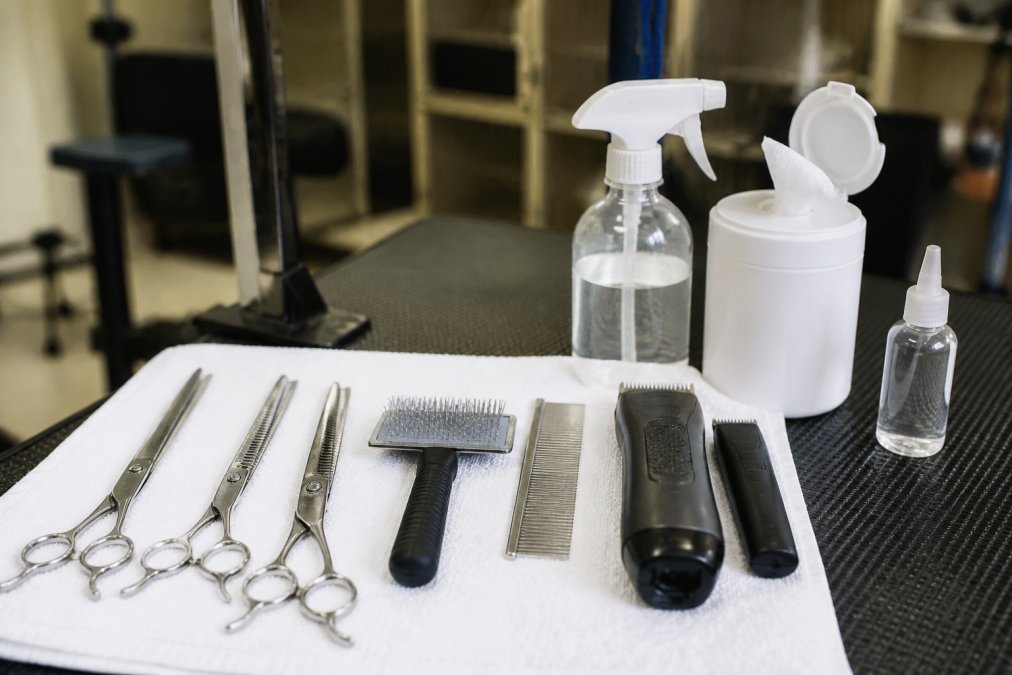
Start with a soft-bristled toothbrush or small cleaning brush to remove hair and debris trapped between blade teeth without damaging the edges. You'll need a clean cloth or soft towel, microfiber works best because it doesn't shed lint onto wet blades.
Keep a small container for soaking (a bowl or cup works fine) and a small bottle of clipper oil nearby. This is essential for preventing rust and reducing friction during use. Never substitute with household oils like coconut or olive oil; they gum up and attract dirt.
Best Disinfectant for Grooming Tools
For daily maintenance between uses on a single pet, Clippercide Disinfectant Spray is EPA-registered and specifically formulated for clipper blades. It disinfects, lubricates, and prevents rust in one application.
For between-pet sanitizing or weekly deep cleaning, Barbicide Concentrate offers hospital-grade disinfection through soaking. Concentrate is more economical if you clean tools frequently.
If you prefer non-toxic alternatives, Force of Nature Multi-Purpose Cleaner is EPA-registered and made from salt, water, and vinegar. It kills 99.9% of bacteria and viruses without harsh chemicals.
UV sterilizers like the Tool Klean UV Sanitizer use ultraviolet light to kill bacteria without liquids or fumes. Tools must be physically clean first, but they provide reliable disinfection after cleaning.
How to Clean Clipper Blades: Daily Maintenance
Removing Hair and Debris
Turn off your clippers and let them cool for a minute. Use a soft-bristled toothbrush to brush out loose hair trapped between the blade teeth, brushing in the direction of the blade with gentle pressure. Tap the clipper head gently against a trash can to dislodge loosened hair. Never pick at stubborn hair with your fingernails or metal tools; soak the blade first instead.
Soaking and Scrubbing Technique
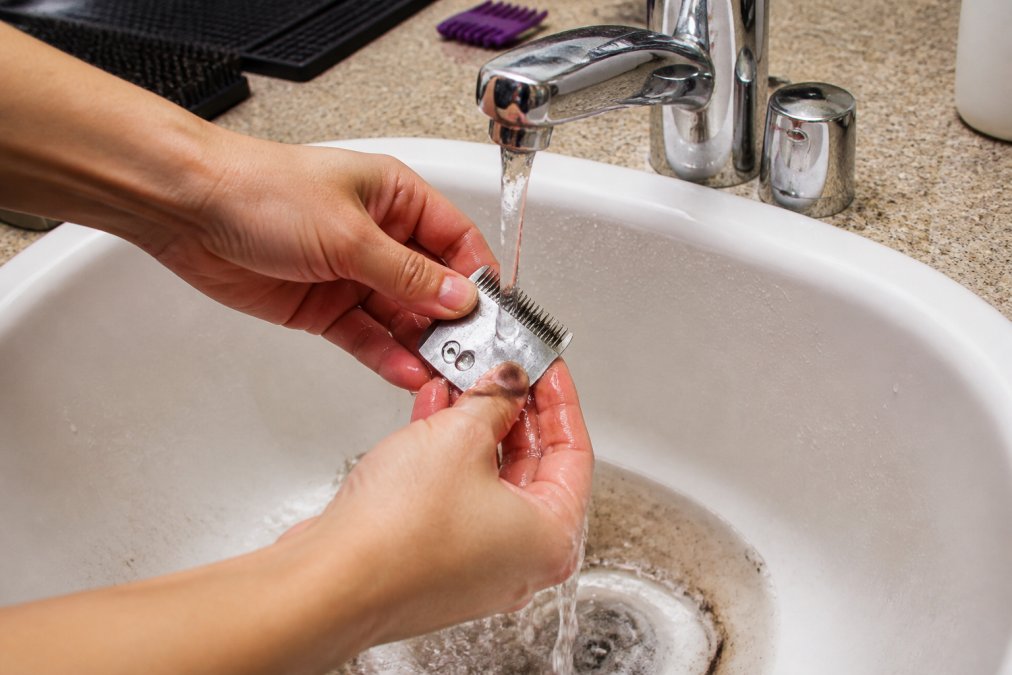
Fill a small bowl with warm water and a few drops of dish soap. Submerge the clipper blade completely for 2-3 minutes to loosen dried hair, skin cells, and debris. Use your soft-bristled brush again; the bristles will move more easily through the blade teeth because the debris has softened. Rinse the blade under warm running water until the water runs clear. For stubborn buildup, soak for another 2-3 minutes and repeat.
Drying and Oiling Your Blades
Pat the blade dry immediately with a clean, lint-free cloth. Don't air-dry; moisture leads to rust. Once completely dry, apply a thin layer of clipper oil to the blade. Spread it evenly and wipe away excess. Test the clipper briefly; it should move freely without grinding sounds. Store in a clean, dry location away from damp towels.
Sanitizing Grooming Tools Between Pets
Contact Time and Proper Disinfection
If you groom multiple pets, you must disinfect between animals to prevent cross-contamination. The most important concept is contact time, disinfectants need time to kill microorganisms.
For spray disinfectants like Clippercide, contact time is typically 30 seconds to 1 minute. Spray the blade generously, wait the full contact time, then wipe dry. For soaking disinfectants like Barbicide Concentrate, contact time is usually 10 minutes. Submerge the blade completely and leave it undisturbed. For UV sterilizers, place clean blades on the shelf and set the timer (typically 10-15 minutes).
Never skip the contact time. Bacteria and viruses survive if the disinfectant doesn't stay wet long enough.
Eco-Friendly and Non-Toxic Alternatives
Force of Nature creates an EPA-registered disinfectant from salt, water, and vinegar using an electrolyzer device. The solution kills 99.9% of bacteria and viruses without toxic fumes. The downside is that you must make fresh solution every two weeks.
UV sterilizers eliminate chemicals entirely. Tools must be physically clean before UV sterilization, but light kills germs on all grooming tools. The trade-off is higher upfront cost.
Rubbing alcohol (isopropyl alcohol, 70% concentration) disinfects and dries quickly without damaging metal, but it's not as broad-spectrum as EPA-registered disinfectants. Use it as a supplement, not a replacement.
Cleaning Scissors and Shears
Wipe away loose hair with a cloth and brush gently around the hinge and blades. Soak the entire scissor in warm soapy water for 2-3 minutes to loosen hair and debris around the hinge. After soaking, use a soft brush to gently clean the hinge area, allowing water and soap to flush out trapped material.
Rinse thoroughly under warm running water, holding the scissor so water flows through the hinge. Open and close gently while rinsing to work water into the joint. Dry immediately with a cloth, paying special attention to the hinge where moisture causes rust.
Once dry, apply a tiny drop of clipper oil to the hinge only, not the blades themselves. Work the oil in by gently opening and closing the scissor a few times. For disinfection between pets, use the same spray or soak method as clipper blades, ensuring the disinfectant reaches the hinge. After disinfection, dry and oil again.
Weekly Deep Clean and Storage
Maintenance Schedule for Long Tool Life
Every week, soak all grooming tools in warm soapy solution for 5-10 minutes to remove accumulated oils, skin cells, and stubborn debris. After soaking, scrub each tool thoroughly with a soft brush, paying special attention to hinges, pins, and blade teeth.
Rinse everything under warm running water until water runs clear. Dry each tool immediately and completely. Inspect for any signs of rust, corrosion, or damage. Apply clipper oil to all moving parts.
Store tools in a clean, dry location away from moisture and humidity. Never store damp tools or tools in a grooming bag with wet towels. Monthly, inspect your tools more carefully and address problems immediately.
Troubleshooting Rust and Corrosion
For light surface rust, soak the affected tool in a solution of equal parts white vinegar and water for 30 minutes. The acidity dissolves light rust without damaging the underlying metal. After soaking, scrub gently with a soft-bristled brush, rinse, dry completely, and oil immediately.
For heavier rust, use a rust removal product from hardware stores. Follow instructions carefully, then dry thoroughly and oil to prevent rust from returning. Prevention is far easier than removal, consistent cleaning and oiling is the best rust prevention.
If rust or corrosion is severe, a professional groomer or tool service can refinish or re-plate the blade, restoring it to like-new condition.
Common Mistakes to Avoid
The most common mistake is skipping daily cleaning and only doing a deep clean occasionally. Hair and debris dry onto blades, making them harder to remove later and trapping moisture that promotes rust. Daily cleaning takes just a few minutes and prevents these problems.
Another mistake is using the wrong disinfectant. Household cleaners like Lysol or Windex can damage the blade surface. Use disinfectants specifically formulated for grooming tools or EPA-registered alternatives.
Many people air-dry tools after cleaning, leaving moisture trapped in hinges and blade teeth. Always dry tools immediately with a cloth. Forgetting to oil tools is another common error, oil protects metal from rust and keeps moving parts smooth.
Some groomers skip the contact time when disinfecting, spraying a blade and immediately wiping it. This doesn't kill microorganisms effectively. Always follow the contact time on the disinfectant label. Finally, storing tools in grooming bags with damp towels is a recipe for rust and mold. Store tools separately in a clean, dry location.
Keeping grooming tools clean is one of the easiest ways to protect your pet's health and extend the life of your equipment. A few minutes of daily maintenance prevents infections, rust, and costly tool replacement. If you're looking for premium grooming tools that perform better and last longer, Pets R Smarter offers expert-approved products designed for durability and pet safety. Our Tail Satisfaction Guarantee ensures you can shop with confidence, knowing every tool prioritizes your pet's comfort and wellbeing.
Frequently Asked Questions
What's the difference between cleaning and sanitizing grooming tools?
Cleaning removes visible hair, dirt, and debris from your grooming tools using water and soap. Sanitizing goes further by using disinfectants to kill bacteria, viruses, and fungi that your eyes can't see. Both steps are essential. Clean first to remove debris, then sanitize to eliminate pathogens. For tools used on multiple pets, sanitizing between each pet prevents cross-contamination and protects your pets' health.
How long should I soak grooming tools in disinfectant?
Contact time depends on the disinfectant you use. Most professional disinfectants require 3 to 10 minutes of contact time to kill pathogens effectively. Always check your disinfectant's label for the exact time needed. After soaking, rinse thoroughly with clean water to remove any disinfectant residue before using the tools on your pet. Never skip the rinse step, as leftover chemicals can irritate your pet's skin.
Can I use rubbing alcohol to clean grooming tools?
Rubbing alcohol can work as a quick disinfectant between uses, but it's not ideal as your only cleaning method. Alcohol evaporates quickly and doesn't remove debris effectively. For best results, use rubbing alcohol as a secondary step after you've already cleaned and rinsed your tools with soap and water. EPA-registered disinfectants like Barbicide or Clippercide are more reliable choices for professional-level sanitation of your grooming tools.
How often should I oil my grooming clipper blades?
Oil your clipper blades daily, especially after cleaning and disinfecting them. A light coat of blade oil reduces friction, keeps your blades sharp, and prevents rust and corrosion. Apply just a few drops to the blade teeth and wipe away excess with a soft cloth. If you use your clippers frequently throughout the day, apply oil between each pet to maintain optimal blade performance and extend the life of your tools.
This article was written using GrandRanker