

How to Desensitize Your Dog to Grooming: Step-by-Step
Table of Contents
- Understanding Dog Grooming Anxiety and Why Desensitization Works
- Building a Grooming Desensitization Schedule That Works
- Step-by-Step Desensitization Protocol for Grooming Tools
- Positive Reinforcement Training for Grooming Success
- Best Grooming Tools for Anxious Dogs and Sensitive Areas
- Common Mistakes to Avoid During Desensitization
- Post-Grooming Care and Recovery
- Conclusion
Last Updated: August 10, 2026
Understanding Dog Grooming Anxiety and Why Desensitization Works
Dog grooming anxiety is highly manageable with the right approach. Desensitization fundamentally changes how your dog's nervous system responds to grooming tools, sounds, and sensations. Counter-conditioning, pairing the scary stimulus with something positive, rewires the emotional response at a neurological level. Your dog doesn't learn to tolerate grooming; instead, grooming becomes associated with treats, calm handling, and positive outcomes.
At Pets R Smarter, we understand that many pet owners struggle with grooming-anxious dogs. The difference between a dog that tolerates grooming and one that actively cooperates comes down to how you introduce the experience.
Recognizing stress signals and body language
Before desensitizing your dog, you must understand what anxiety looks like. Dogs communicate stress through body language: tucked tail, pinned-back ears, lip licking, yawning when not tired, and body stiffness. Some dogs freeze entirely, which many owners mistake for calm behavior. Others pant heavily, whine, or try to escape.
Learn to read these signals early. If your dog's ears pin back during clipper introduction, you've hit their threshold, the point where anxiety spikes. Back off before full panic sets in. Work just below the threshold, where your dog notices the stimulus but remains calm enough to take treats and show cooperative behavior.
A relaxed dog has soft eyes, loose posture, and ears in natural position. They may lean into your hand or seek treats without hesitation. The goal is genuine calm, not just compliance.
How counter-conditioning changes your dog's response
Counter-conditioning rewires your dog's brain by creating new neural pathways. When your dog encounters nail clippers, their current association might be: clippers = scary sound + restraint + discomfort. Through counter-conditioning, you replace it with: clippers = treats + praise + good things happen.
This process takes time because you're rewiring emotional response, not just distracting your dog. Repetition across multiple sessions creates lasting change. Reward timing matters enormously: reward your dog's calm behavior during exposure to the grooming tool, not after you've put it away. This teaches your dog that calmness in the presence of the tool earns the reward.
Building a Grooming Desensitization Schedule That Works
A desensitization schedule isn't rushed. Timeline depends on your dog's age, current anxiety level, and practice frequency. Some dogs show significant progress in three to four weeks; others need eight to twelve weeks.
Age-specific timelines and starting points
Puppies under four months old typically haven't developed strong fear responses yet, so prevention is easier than rehabilitation. Introduce grooming tools and gentle handling immediately.
Adolescent dogs (four months to two years) are in a critical window. If your adolescent shows early grooming anxiety signs, address it now to prevent the behavior from becoming deeply ingrained. Desensitization typically progresses faster because the anxiety is newer.
Adult dogs (two to seven years) with established grooming anxiety need longer timelines. If your dog has had multiple negative grooming experiences, you're overwriting previous negative associations. Plan for eight to twelve weeks of consistent practice.
Senior dogs (seven years and older) often have deeper anxiety but tend to be more food-motivated. Timeline is similar to adult dogs, but they may respond well to high-value treats and shorter sessions.
Duration and frequency for maximum progress
Short, frequent sessions work far better than long, infrequent ones. A ten-minute session three times per week produces better results than a thirty-minute session once weekly. Short sessions keep your dog engaged without fatigue or frustration, and allow you to end on a positive note.
During early desensitization phases, aim for three to five sessions per week, lasting five to fifteen minutes. If your dog shows stress before fifteen minutes, end early. As your dog progresses, gradually increase session length and reduce frequency. By the extended grooming simulation phase, two to three sessions per week for twenty to thirty minutes is appropriate. Consistency is key; sporadic practice won't create lasting change.
Step-by-Step Desensitization Protocol for Grooming Tools
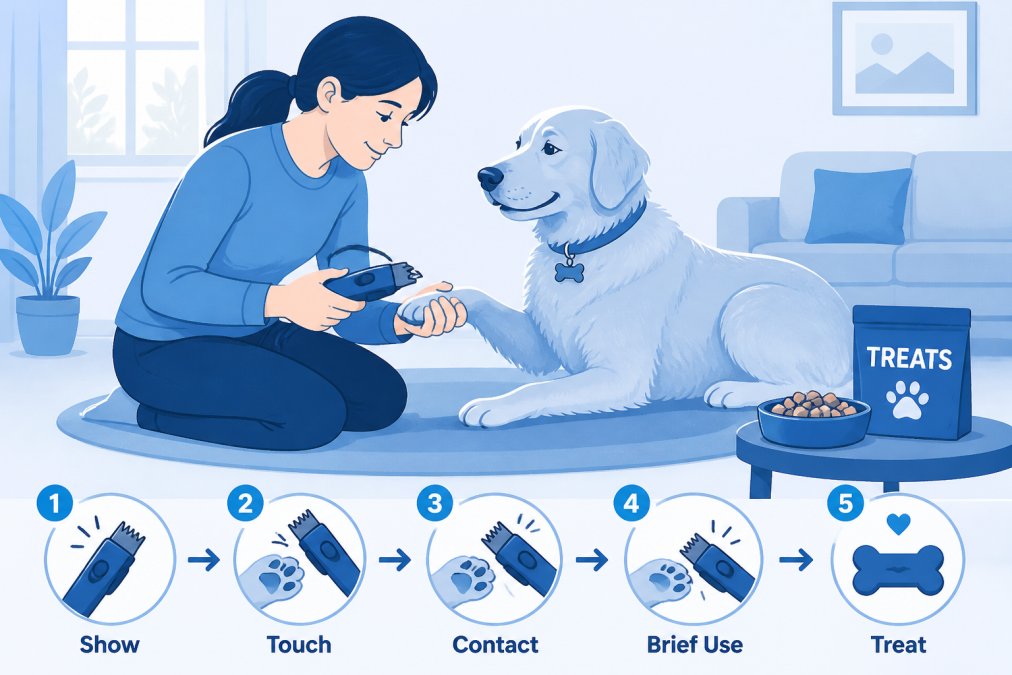
This protocol moves through four distinct phases. Each builds on the previous one. Don't advance until your dog shows calm, cooperative behavior throughout the current phase for at least three to five consecutive sessions.
Phase 1: Sensory exposure without contact
Your dog encounters grooming tools with zero physical contact. Place the tool on a table in your dog's space and let your dog discover it at their own pace. When your dog shows curiosity or calm behavior near the tool, reward immediately with high-value treats.
Pick up the tool while your dog is nearby without using it, then reward. Make the tool's sound, turn on clippers for one to two seconds while your dog is several feet away. The moment the sound stops, reward with treats. Gradually decrease distance over multiple sessions until your dog can be right next to running clippers without anxiety. This phase typically takes one to two weeks.
Phase 2: Gentle handling and touching
Once your dog is comfortable with the tool's presence and sound, introduce physical contact. Gently touch your dog's paws, ears, and face, areas that will eventually need grooming, and reward calm behavior heavily. Practice holding your dog's paw still for a few seconds, then release and reward.
Introduce the grooming tool to your dog's body without using it. Let your dog feel the clippers' weight resting on their paw for a second, then reward. Place the brush gently against their coat, then reward. This phase typically takes one to two weeks.
Phase 3: Tool introduction and brief contact
Now introduce the actual function of the tool in very brief bursts. Use clippers for just one second on a non-sensitive area, perhaps the outer edge of the paw. Reward immediately. Gradually increase duration: two seconds, then three, then five. Work on one small area for several sessions before moving to another.
For brushing, start with one or two brush strokes, reward, and gradually increase. For nail trimming, spend extra time letting your dog feel the clipper gently close around the nail without cutting. This phase usually takes two to four weeks.
Phase 4: Extended grooming simulation
Once your dog tolerates brief tool contact calmly, simulate a full grooming session. Start with a five-minute session including brushing, gentle paw handling, and maybe a few nail trims. Reward frequently throughout. Gradually extend session length and reduce reward frequency. By the end of this phase, your dog should tolerate a fifteen to twenty-minute grooming session with calm, cooperative behavior. This phase typically takes two to four weeks.
Positive Reinforcement Training for Grooming Success
Positive reinforcement is the foundation of successful desensitization. Your dog learns fastest when calm behavior and cooperation are rewarded immediately and generously. The reward must be something your dog genuinely values more than they fear the grooming tool.
Choosing high-value treats and reward timing
High-value treats are foods your dog loves so much they'll work for them even when mildly anxious. For most dogs, this means meat-based treats: small pieces of chicken, beef, or cheese. Reserve these treats specifically for grooming practice.
Reward timing is critical. Reward your dog's calm behavior while the grooming tool is present or during handling, not after you've stopped. During early phases, reward after every calm behavior or every few seconds of calm behavior. As your dog progresses, gradually space out rewards. By the final phase, reward after a short grooming session rather than continuously.
Using lick mats and long-lasting rewards
Lick mats are highly effective for grooming desensitization because they provide sustained engagement and reward throughout a session. Spread peanut butter, wet food, or plain yogurt on a lick mat and freeze it for thirty minutes to an hour. Position the lick mat at your dog's level so they can access it while you work on grooming. As your dog becomes more comfortable, gradually remove the lick mat and rely on periodic treats instead.
Best Grooming Tools for Anxious Dogs and Sensitive Areas
The tools you choose directly impact your dog's experience. Sharp, poorly-designed tools cause discomfort or pull hair, creating negative associations. Quality tools designed with anxious dogs in mind make the process smoother and safer.
Handling paws, ears, and face with care
Paws are among the most sensitive areas for most dogs. Start by simply touching the paw without doing anything to it. Reward calm behavior. Progress to gently spreading the toes and looking between them. Introduce the nail clipper sound near the paw. Only after multiple sessions should you attempt to actually trim a nail.
Ears are equally sensitive, and many dogs have experienced ear infections or cleaning, creating negative associations. Approach ear desensitization by first touching the outer ear flap, rewarding, then gradually progressing to gentle handling of the inner ear.
The face and muzzle area are particularly important because they're involved in many grooming tasks. Start by gently touching your dog's muzzle and rewarding. Progress to gently holding the muzzle for a few seconds. Only after your dog is comfortable with handling should you introduce tools like grooming scissors near the face.
Tool-specific desensitization protocols
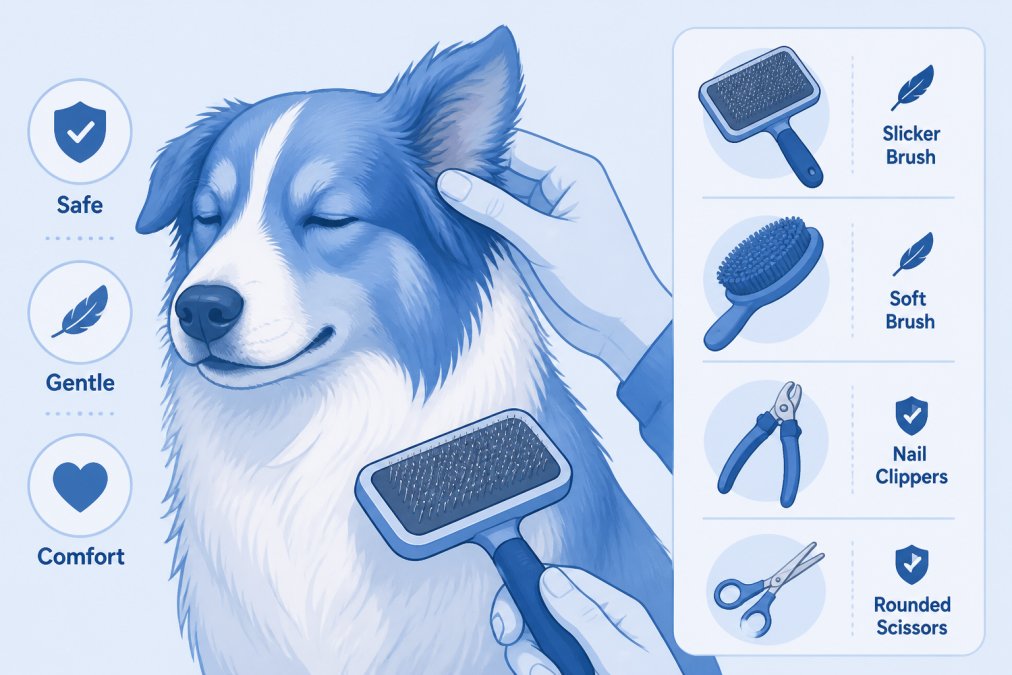
Different grooming tools require slightly different desensitization approaches. For clippers, the vibration is often more frightening than the sound. Let your dog feel the vibration against their own hand or your hand before introducing it to their body. Then progress to letting clippers vibrate gently against their leg or paw for just one second.
For scissors, practice opening and closing them near your dog's body without actually cutting. Let your dog hear the sound and see the motion repeatedly before attempting any actual trimming.
For brushes, the main variable is bristle type and firmness. Slicker brushes with fine wires can feel scratchy if your dog has sensitive skin. Softer, wider-spaced brushes are often better for anxious dogs.
Pets R Smarter offers a curated selection of grooming tools, chosen with attention to design features that minimize discomfort and maximize safety.
Common Mistakes to Avoid During Desensitization
The most common mistake is moving too fast. Pet owners often skip phases or rush through them because they're eager to complete grooming. This invariably backfires. A dog pushed too quickly develops stronger anxiety. Taking four to eight weeks to properly desensitize prevents months of struggle later.
A second major mistake is rewarding the wrong behavior. Some owners reward their dog after they've stopped being anxious, meaning after the grooming tool is put away. This teaches your dog that the reward comes when the scary thing ends, which reinforces fear. Reward must happen during calm behavior around the grooming tool.
Inconsistency is another killer. Desensitization requires regular practice. If you practice once a week and then don't practice for two weeks, your dog's progress stalls. Aim for at least three sessions per week during active desensitization.
Many owners also fail to recognize their dog's actual threshold. They see their dog taking treats and assume the dog is calm, when the dog may be showing mild stress signals. Watch your dog's entire body, not just whether they're eating treats.
Finally, some owners skip earlier phases and jump straight to tool introduction. Each phase serves a specific purpose. Skipping phases is the fastest way to create a negative association.
Post-Grooming Care and Recovery
Desensitization doesn't end when the grooming session ends. How you treat your dog after grooming influences their long-term association with the process. After a grooming session, give your dog calm, positive attention. A gentle petting session, a walk, or low-key playtime helps your dog process the experience positively.
Monitor your dog for any physical discomfort in the days following grooming. If your dog is licking a particular area excessively or showing signs of irritation, address this in your next desensitization session by spending extra time on that area with gentle handling before reintroducing the tool.
Some dogs benefit from a calm recovery period after grooming. A quiet space, access to their lick mat or favorite toy, and minimal interaction for an hour or two allows them to decompress.
Desensitizing your dog to grooming is one of the most valuable investments you can make in your dog's wellbeing. Dogs that cooperate with grooming experience less stress, require less physical restraint, and develop better relationships with their owners around care routines. The process takes patience and consistency, but the payoff is a dog that tolerates, or even enjoys, grooming.
When selecting grooming tools for your desensitization work, quality matters. Tools that pull, scratch, or create unnecessary discomfort sabotage your efforts. Pets R Smarter has curated a selection of premium grooming tools, each chosen for safety, comfort, and effectiveness. Our Tail Satisfaction Guarantee means you can invest in quality tools with confidence; if they don't support your dog's grooming journey, we'll make it right. Start your desensitization practice today with tools you can trust.
Frequently Asked Questions
At what age should I start desensitizing my puppy to grooming?
Start desensitization between 8 to 12 weeks of age, when puppies are most adaptable. Early exposure to handling, grooming tools, and the sounds of clippers creates positive associations before fear develops. If you have an adult dog, begin immediately, it's never too late. Older dogs may progress more slowly, but consistent, patient training yields results at any age.
How long does it take to desensitize a dog to grooming?
Most dogs show noticeable improvement within 2 to 4 weeks of consistent daily practice, though complete comfort may take 8 to 12 weeks. Progress depends on your dog's baseline anxiety level, age, and how frequently you practice. Short, daily 5 to 10-minute sessions outperform sporadic longer sessions. Track body language improvements, reduced stress signals indicate progress even before your dog fully cooperates.
What if my dog shows extreme fear or aggression during grooming desensitization?
Extreme reactions warrant a consultation with a veterinary behaviorist or certified professional dog trainer. They can assess whether muzzle training, medication, or specialized handling techniques are necessary. Never force a fearful dog through grooming, this worsens anxiety and damages trust. A professional can design a slower, individualized protocol and rule out pain or medical issues causing the response.
Can I use treats and lick mats effectively if my dog refuses food during grooming sessions?
Refusal to eat indicates high stress. If your dog won't take high-value treats, you're progressing too quickly. Return to an earlier phase where your dog feels calm enough to accept rewards. Use extremely high-value treats like freeze-dried liver or cheese. Introduce lick mats during calm moments before grooming practice, so your dog associates them with safety and relaxation, not just grooming stress.
This article was written using GrandRanker