

How to Groom Anxious Dogs at Home: A Step-by-Step Guide
Table of Contents
- Understanding Canine Grooming Anxiety and Stress Signals
- How to Desensitize Your Dog to Grooming Tools
- Creating a Calm Grooming Environment at Home
- Positive Reinforcement Grooming Techniques That Work
- Best Calming Aids for Dog Grooming
- Handling Sensitive Areas: Paws, Ears, and Tail
- Post-Grooming Recovery and When to Call a Professional
- Conclusion
Last Updated: August 9, 2026
Understanding Canine Grooming Anxiety and Stress Signals
Grooming anxiety in dogs is a real behavioral challenge, and recognizing early warning signs is the first step toward creating a calmer experience. Dogs experiencing grooming stress display physical and behavioral cues that tell you exactly what they're feeling. At Pets R Smarter, we work with pet owners who understand that addressing anxiety before it escalates makes grooming sessions infinitely more manageable.
Grooming anxiety doesn't appear suddenly, it builds gradually through trigger stacking, each negative experience layering on top of the last until your dog associates the grooming space with fear. Understanding this progression helps you intervene early.
Recognizing Signs of Fear and Anxiety
Stress signals in dogs come in recognizable patterns. Common indicators include whale eye (white showing in the corners of the eyes), pinned-back ears, lip licking, panting, trembling, and avoidance behavior. Tail position matters too: a tucked or lowered tail signals anxiety, whereas a relaxed tail hangs naturally.
Body tension is another critical indicator. Run your hand along your dog's shoulders during a calm moment, then again during grooming prep. A tense dog will have tight, rigid muscles; a calm dog feels loose and flexible.
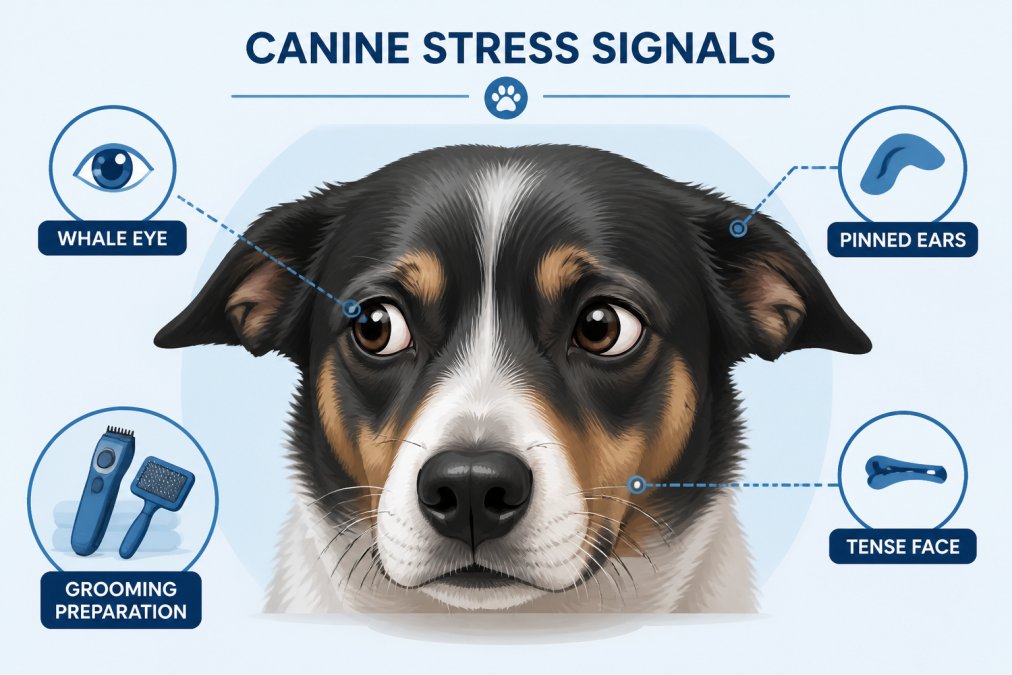
Panting and lip licking are often dismissed as normal, but they're actually early anxiety markers. A dog panting in a cool room or constantly licking their lips when grooming tools appear is communicating discomfort before it becomes a full behavioral problem.
What Triggers Grooming Fear in Dogs
Understanding what specifically frightens your dog is essential for designing an effective desensitization plan. The most common culprits are the sound and vibration of clippers, the sensation of being restrained or handled in sensitive areas, water temperature, and overall sensory overload.
Some dogs fear the sound of clippers far more than the actual clipping sensation. Others panic when their paws are handled. Certain breeds have breed-specific triggers: many terriers and herding dogs are sensitive to ear handling, while small breeds often struggle with grooming table height.
The grooming environment itself can trigger anxiety. A bathroom with hard surfaces and echoing sounds creates sensory overload. Unfamiliar spaces, bright lighting, and strong-smelling grooming products all contribute to stress.
How to Desensitize Your Dog to Grooming Tools
Desensitization is the most effective behavioral modification strategy for grooming anxiety. Expose your dog to grooming tools in low-pressure situations repeatedly until the tools become neutral, then gradually pair them with positive experiences.
Introducing Tools Without Pressure
Start by having grooming tools visible in your home during normal activities. Leave quiet clippers on the coffee table or set a brush beside your dog's bed. The goal is familiarity without any expectation of use.
Next, pick up the tool while your dog is relaxed and immediately reward them with a high-value treat. Do this repeatedly over several days. You're building the association: tool appears, good things happen.
Only after your dog shows neutral or positive interest should you introduce the tool's sound or sensation. For clippers, turn them on for one second in another room while your dog is elsewhere, then reward. Gradually move closer and extend the duration.
This entire phase should take at least 2-3 weeks. Rushing creates the opposite effect by reinforcing anxiety instead of eliminating it.
Gradual Exposure Timeline
A realistic desensitization timeline spans 4-8 weeks for moderate anxiety.
Weeks 1-2: Tool visibility and handling. Your dog sees grooming tools in neutral contexts and learns they're safe objects.
Weeks 3-4: Sound desensitization. Clippers turn on briefly in your dog's presence, paired with treats. Brush strokes become more frequent and longer.
Weeks 5-6: Partial grooming tasks. Clip a small section of fur, brush longer sessions, or trim nails one at a time with breaks between.
Weeks 7-8: Full grooming sessions in short increments. A complete grooming session might be broken into three 10-minute sessions across different days.
This progression prevents trigger stacking by ensuring your dog never experiences multiple stressors simultaneously.
Creating a Calm Grooming Environment at Home
Your grooming space sets the emotional tone for the entire session. A calm environment reduces baseline stress, making your dog more receptive to desensitization and actual grooming work.
Setting Up Your Space
Choose a quiet room away from household activity. If you groom in a bathroom, add soft rugs or towels to reduce hard-surface echoes. Bathrooms are common grooming spaces because of water access, but they're often the worst environments for anxious dogs due to acoustics.
Lighting matters more than most people realize. Bright overhead lights create tension. Use soft, natural light when possible, or add a warm-toned lamp. Set up your grooming space before your dog enters so they don't watch you gather items, which creates anticipatory anxiety.
Aim for a comfortable room temperature around 70-72°F, which promotes relaxation.
Minimizing Sensory Overload
Reduce background noise by closing windows, turning off fans, and silencing your phone. If you play music, choose calming instrumental tracks at low volume.
Limit visual stimulation by closing curtains if outside movement is visible. Keep the grooming area clean and organized to reduce visual noise.
Avoid strong-smelling grooming products if your dog shows anxiety. Unscented or lightly scented options are better.
Positive Reinforcement Grooming Techniques That Work
Positive reinforcement is the foundation of counter-conditioning anxiety. Every positive interaction during grooming rewires your dog's brain to associate the experience with good outcomes.
High-Value Treats and Reward Timing
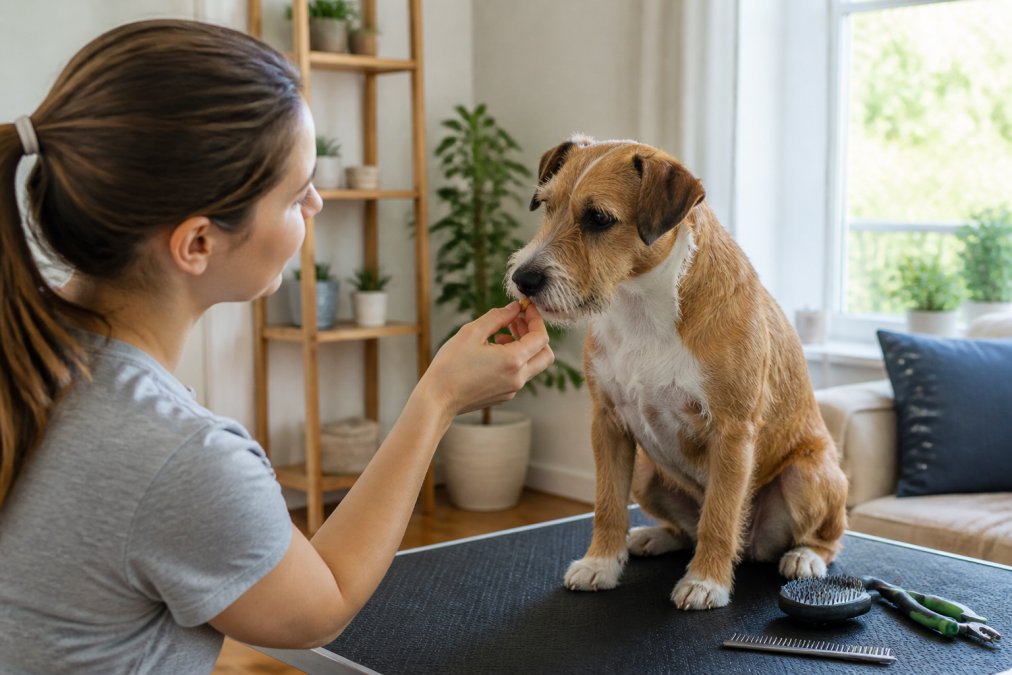
High-value treats are rewards your dog would work hard to earn: soft, smelly, protein-rich treats like small pieces of chicken or cheese.
Reward your dog during grooming, not just after. If you're brushing and your dog holds still for 10 seconds, mark that moment with "yes" and immediately deliver a treat. Break grooming into tiny chunks and reward between each chunk. Groom one ear, reward. Brush the back, reward. Trim nails on one paw, reward.
Counter-Conditioning Fearful Responses
Counter-conditioning pairs the feared stimulus with something positive, changing your dog's emotional response. If your dog fears clippers, pair clipper sounds with treats until the sound predicts good things.
Start with the clipper sound at a distance where your dog notices it but doesn't show stress. Turn them on for one second, then immediately give a high-value treat. Repeat this 5-10 times in a session. Over several days, gradually increase the duration and move closer.
Never force the issue. If your dog shows stress signals, you've moved too fast. Back up a step and progress more slowly.
Best Calming Aids for Dog Grooming
Beyond behavioral techniques, certain tools and aids can reduce baseline anxiety, making your dog more receptive to grooming.
Quiet, Low-Vibration Clippers and Tools
Clipper noise is one of the primary grooming triggers. Investing in quiet clippers makes an enormous difference for anxious dogs. High-quality clippers run at lower decibel levels and vibrate less, reducing sensory assault.
Look for clippers specifically marketed as quiet or low-vibration. Many professional-grade clippers are quieter than consumer models. Scissors and thinning shears are silent alternatives for certain grooming tasks.
DIY Calming Aids vs. Supplements
Before investing in supplements, try simple environmental calming aids. A snug-fitting anxiety wrap applies gentle pressure that many dogs find soothing. Weighted blankets in the grooming space can also promote relaxation.
Some pet owners find success with pheromone diffusers designed to calm dogs, though results vary. Supplements like L-theanine or magnesium may help some dogs, but they're not substitutes for desensitization. Talk with your veterinarian before starting any supplement regimen.
Many pet owners find that combining a quiet grooming tool with consistent positive reinforcement produces better results than relying on supplements alone.
Handling Sensitive Areas: Paws, Ears, and Tail
Certain body areas trigger disproportionate anxiety in many dogs and require extra patience.
Body Handling and Gentle Touch Techniques
Paws are notoriously sensitive because they're packed with nerve endings. Start paw desensitization weeks before actual grooming by simply handling your dog's paws during calm moments, holding them, touching between toes, and applying gentle pressure.
When you trim nails or shave pads, work on one paw at a time with long breaks between. Ears are equally sensitive, especially for breeds prone to ear issues. Gentle ear handling during non-grooming moments creates familiarity. When grooming ears, use soft touches and avoid inserting tools deep into the ear canal.
Tails present a unique challenge because dogs use them for balance and communication. Support the tail base with one hand while working with the other, giving your dog a sense of security.
Building Trust Around Problem Areas
The most effective strategy for sensitive areas is building trust through repeated positive interactions in low-pressure contexts. Handle the sensitive area briefly, reward, and stop. Do this daily for weeks before attempting actual grooming.
Never restrain your dog aggressively to groom sensitive areas. Restraint increases panic and reinforces fear. Instead, use positive reinforcement to encourage cooperation.
Post-Grooming Recovery and When to Call a Professional
Grooming is emotionally taxing for anxious dogs, even when you've done everything right. Recovery time matters.
Decompression After Grooming Sessions
After grooming, your dog needs quiet time to decompress. Create a calm space, maybe a quiet room with their bed and access to water, where they can rest and process the experience.
Decompression typically takes 30 minutes to several hours, depending on how intense the grooming session was. During this time, your dog's nervous system is returning to baseline. Some dogs benefit from a light snack or a lick mat with frozen treats during decompression.
Signs You Need Professional Help
If your dog shows extreme fear responses, lunging, snapping, or complete freezing, professional help is warranted. A certified professional dog trainer or veterinary behaviorist can assess whether your dog's anxiety is behavioral or rooted in past trauma.
If your dog has medical issues making grooming painful, a professional groomer experienced with anxious dogs can work around these challenges. Some dogs genuinely cannot be groomed at home safely. This isn't failure, it's recognizing your dog's needs and getting appropriate help.
Grooming an anxious dog requires patience, consistency, and a genuine commitment to your dog's emotional wellbeing. Desensitization, counter-conditioning, environmental management, and positive reinforcement work because they address the root cause of anxiety rather than just managing symptoms.
At Pets R Smarter, we believe anxious dogs deserve grooming tools and care approaches that prioritize their comfort. Our curated selection of quiet, low-vibration clippers and premium grooming supplies is designed specifically for dogs who need extra care and consideration. With our Tail Satisfaction Guarantee backing every purchase, you can invest in the right tools knowing we stand behind your pet's comfort. Start with the right equipment and a solid behavioral foundation, and you'll transform grooming from a source of stress into a manageable routine your dog can tolerate, and eventually, even enjoy.
Frequently Asked Questions
What are the signs my dog is experiencing grooming anxiety?
Common stress signals include panting, lip licking, whale eye (showing the whites of their eyes), pinned-back ears, trembling, and avoidance behavior. Some dogs may also yawn excessively, drool, or try to escape. Recognizing these early warning signs lets you pause and give your dog a break before anxiety escalates. Each dog shows anxiety differently, so watch for changes in your dog's normal behavior during grooming sessions.
How long does it take to desensitize a dog to grooming tools?
Desensitization timelines vary by individual dog, but most dogs show improvement within 2-4 weeks of consistent, short daily sessions. Some anxious dogs may need 6-8 weeks or longer. The key is patience and consistency, never rush the process. Start by letting your dog see and smell tools without using them, then progress to brief contact and finally short practice sessions. Celebrate small wins and always end on a positive note.
Can I use CBD or natural supplements to calm my dog during grooming?
Many pet owners explore calming supplements like CBD, L-theanine, or melatonin, but effectiveness varies by dog. Before trying any supplement, consult your veterinarian to ensure safety and appropriate dosing for your dog's size and health status. Supplements work best alongside behavioral training, not as a replacement. Some dogs respond better to environmental changes and positive reinforcement than to supplements, so focus on building confidence first and discuss supplement options with your vet.
When should I stop grooming my anxious dog at home and hire a professional?
If your dog shows severe panic, aggression, or refuses to cooperate after consistent training efforts, professional help is warranted. A certified fear-free groomer has specialized training in handling anxious dogs and may use techniques or equipment you don't have access to at home. Additionally, if grooming sessions cause extreme distress that affects your dog's overall behavior or health, a professional assessment can determine whether your dog needs additional behavioral support or medical evaluation.
This article was written using GrandRanker