

How to Groom Matted Dog Hair Safely
Table of Contents
- Why Matted Fur Is a Health Risk, Not Just a Cosmetic Issue
- Best Dematting Tools for Dogs
- Step-by-Step Process for How to Groom Matted Dog Hair Safely
- Safety Precautions: Protecting Your Dog's Skin
- When to See a Professional Groomer for Matting
- How to Prevent Dog Hair Mats: Breed-Specific Strategies
- Post-Dematting Care and Behavioral Support
- Conclusion
Last Updated: August 25, 2026
Why Matted Fur Is a Health Risk, Not Just a Cosmetic Issue
Matted dog hair isn't a vanity problem, it's a serious health concern. According to ASPCA research on grooming-related concerns, 13% of cruelty cases involved hair matting and strangulating mat wounds, with 93% occurring in long-haired dog breeds. Nearly 30% of skin infections in dogs are related to poor coat maintenance.
Mats pull on the skin continuously, trapping moisture, heat, and debris underneath. This creates an ideal environment for bacterial and fungal infections. In severe cases, strangulating hair mats can restrict blood flow so completely that they cause bone remodeling, tissue atrophy, and even self-amputation if left untreated.
Matted coats also cause chronic pain that manifests as behavioral changes, anxiety, aggression, and fear during grooming sessions. Once a dog associates grooming with pain, reversing that fear becomes exponentially harder. Learning how to groom matted dog hair safely isn't just about appearance; it's about your dog's physical health, emotional wellbeing, and your relationship with them.
Best Dematting Tools for Dogs
Removing mats requires the right equipment. The wrong tools can damage skin, cause pain, and make your dog fear grooming forever.
Slicker Brushes and Matbreakers
A slicker brush is your first line of defense for most mats. These brushes have short, fine wires close together on a flat or slightly curved surface, designed to penetrate dense tangles without pulling the entire coat. Use gentle, deliberate strokes rather than aggressive scrubbing.
For tighter knots, a matbreaker (also called a mat splitter or dematting comb) becomes essential. Matbreakers have short, sharp teeth designed to cut through the interior of a mat without cutting skin. Gently work the matbreaker's teeth into the mat from the outside, gradually working inward to break the knot apart.
The Slicker Grooming Brush for Dogs & Cats from Pets R Smarter ($14.99) combines a durable plastic handle with fine wire bristles that won't rust or corrode.
Clippers and Blade Guards
Electric clippers are the most efficient tool for severe mats, but they're also the most dangerous if misused. A blade guard is a plastic or metal attachment that prevents the clipper blade from cutting closer than a specific length. For matted coats, a #10 or #15 blade is typical, short enough to remove the mat, long enough to protect the skin.
Never use clippers without understanding how they work. The blade moves side-to-side at high speed, and one misplaced stroke can slice skin in a fraction of a second.
Detangling Sprays and Conditioners
Detangling products soften the mat's structure, making it easier to work through without causing pain. Always apply detangler before attempting any dematting. Spray generously into the mat, then let it sit for 5-10 minutes. Work from the outer edge of the mat inward, holding the hair between your fingers and the mat to prevent pulling on the skin.
The Pet Grooming & Flea Removal Tool Set ($27.99) includes essential grooming tools, while the Dog & Cat Deshedding Grooming Brush ($60.75) provides bristles for post-dematting coat maintenance.
Step-by-Step Process for How to Groom Matted Dog Hair Safely
Learning how to groom matted dog hair safely requires patience, the right technique, and knowing when to stop.
Step 1: Assess the Mat Severity and Location
Before touching a mat with any tool, evaluate its density and location. Gently press your finger into the mat. If your finger sinks in easily, it's a loose tangle. If it's solid and impenetrable, it's a dense mat requiring different techniques.
Location matters enormously. Mats over bony areas (spine, hip bones, ribs) are riskier because there's less tissue between the mat and bone. Mats around sensitive areas like the ears, armpits, groin, and paw pads require extreme caution. If the mat is severely matted, covering large areas, or located over sensitive zones, professional grooming is the safer choice.
Step 2: Prepare Your Dog and Workspace
Set up a grooming table at a comfortable height. The Height-Adjustable Pet Grooming Table ($170.75) provides a stable, adjustable surface that keeps your dog still and your tools accessible.
Have all your tools within arm's reach before you start: slicker brush, matbreaker, detangling spray, clippers with blade guards, and treats. Never leave your dog unattended on a grooming table.
Calm your dog before starting. Spend 5-10 minutes with gentle petting and treats. If your dog is extremely anxious, consider scheduling a professional groomer instead.
Step 3: Work Through Loose Tangles First
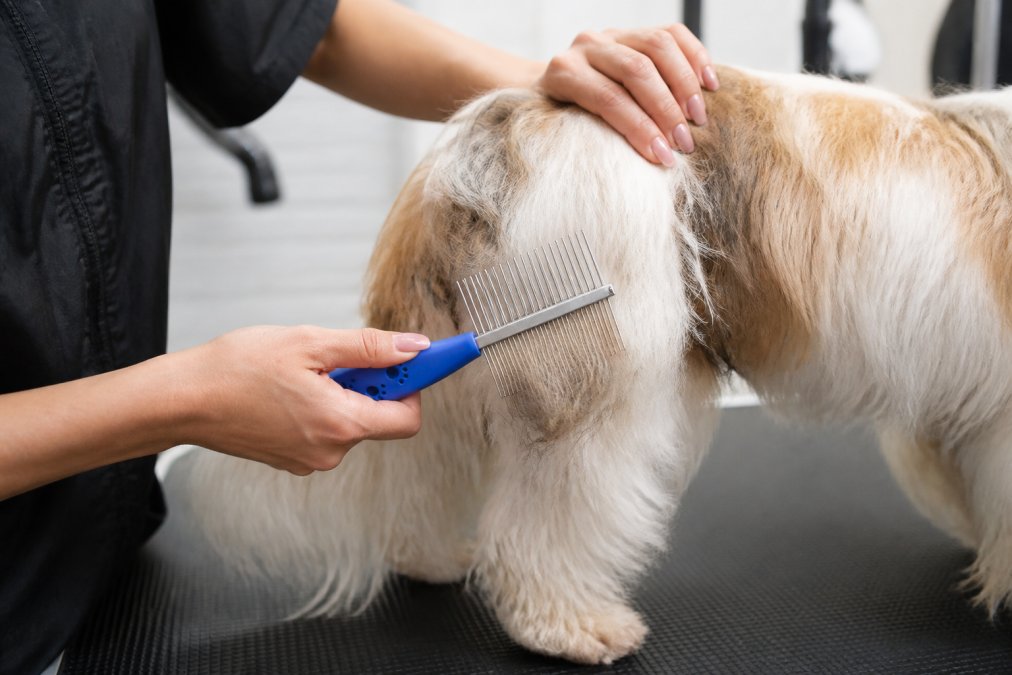
Start with the loosest tangles and work toward denser mats. Use a slicker brush with gentle, deliberate strokes. Hold the coat between your fingers and the brush to prevent pulling on the skin. Work from the outer edge of the tangle inward. Never force the brush through; if you meet resistance, stop and reassess.
For tangles that resist the slicker brush, spray with detangler and wait 5-10 minutes.
Step 4: Tackle Dense Mats with the Right Technique
Dense mats require a matbreaker or clippers. If using a matbreaker, insert it gently at the mat's edge and work the teeth into the interior. Make small cuts through the mat's structure rather than trying to comb it out.
For severely matted areas, clippers are faster and often more humane. Use a blade guard appropriate to your dog's skin sensitivity. Work slowly, keeping the clipper flat against the skin.
"If a pet is severely matted he may require sedation and full body clipping. NEVER cut mats out with scissors. Your pet can unexpectedly move or jerk resulting in a severe laceration or puncture." -- Dr. Julie Horton, Veterinarian at ASPCA
Step 5: Finish with De-Shedding and Prevention
After removing mats, bathe your dog in warm water with a gentle, conditioning shampoo. Use a high-velocity dryer to remove moisture quickly; damp coats re-mat easily. While the coat is still damp, use a deshedding brush or rake to remove loose undercoat.
Safety Precautions: Protecting Your Dog's Skin
Skin damage during dematting is common and often preventable.
Why Scissors Are Dangerous
Scissors are the worst tool for mat removal. Skin folds into mats, and when you cut a mat with scissors, you can't reliably distinguish where the mat ends and skin begins. One slip creates a laceration that bleeds, scars, and causes infection.
"Oftentimes, when removed with scissors, the skin will be sliced." -- Dr. Liff, Veterinarian at PetMD
Clippers with a blade guard are always safer than scissors.
Recognizing Skin Damage and When to Stop
Watch for these signs of skin damage during dematting: redness or inflammation, bleeding or oozing, swelling, odor, or your dog yelping or trying to escape. If you see any of these, stop immediately and contact your veterinarian the same day.
When to See a Professional Groomer for Matting
Knowing when to call a professional is as important as knowing how to groom matted dog hair safely yourself.
Consider professional help if: the mat covers more than 10-15% of the body, multiple mats are densely packed together, the mat is over sensitive areas, your dog shows signs of pain or fear during grooming, the mat is strangulating, or you're uncertain about your technique.
Professional groomers typically charge for mat removal, depending on severity and coat size.
How to Prevent Dog Hair Mats: Breed-Specific Strategies
Prevention is infinitely easier than treatment. Most mats form because grooming is infrequent or incorrect.
Daily and Weekly Brushing Routines
Long-haired breeds (Shih Tzus, Maltese, Poodles, Golden Retrievers) need daily brushing. Short-haired breeds typically need weekly brushing. The frequency matters more than duration. Five minutes daily prevents mats better than one hour weekly. Brush the entire coat, not just the visible surface, since mats form in the undercoat first.
Always brush before bathing. Water tightens tangles and makes mats worse.
High-Risk Areas and Friction Zones
Certain areas mat more easily due to constant movement and moisture: behind the ears, under the armpits, along the collar line, base of the tail, between the paw pads, and inside the back legs. Pay extra attention to these areas during brushing.
Bathing and Drying Best Practices
Always brush completely before bathing. Use warm water and a conditioning shampoo. During the bath, don't scrub aggressively. Rinse thoroughly to remove all product residue.
Drying is critical. Towel-dry gently, then use a high-velocity dryer if possible. Never let your dog air-dry with a wet coat; moisture trapped in the undercoat creates ideal conditions for matting.
Post-Dematting Care and Behavioral Support
After removing mats, your dog needs physical and emotional recovery. For the first week, avoid bathing and minimize brushing. Your dog's skin needs time to recover.
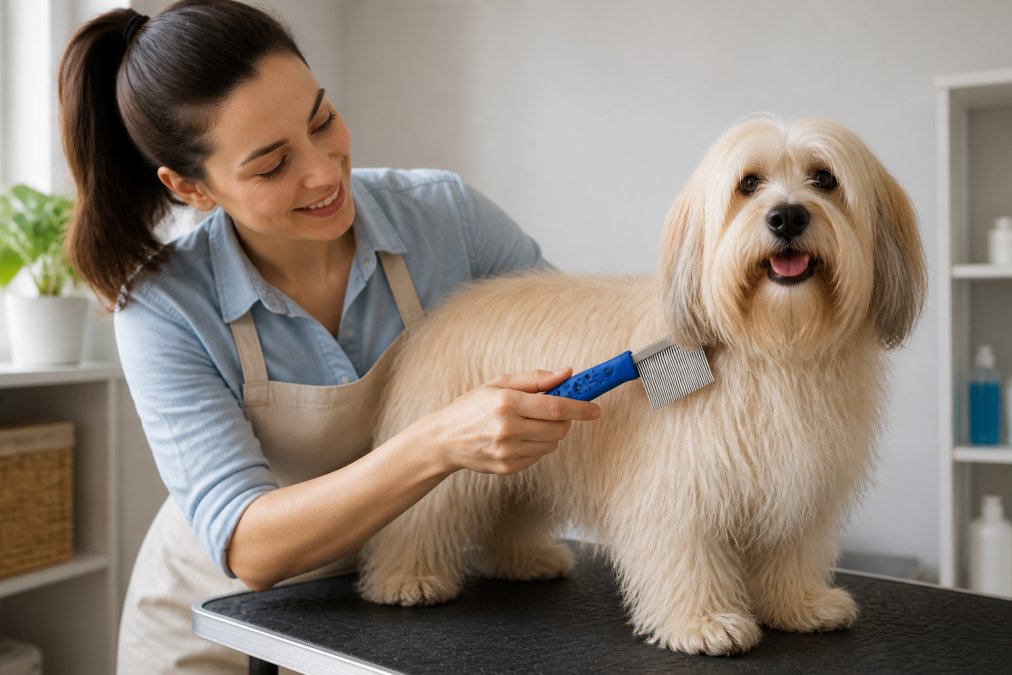
Behaviorally, your dog may have developed grooming anxiety. Reverse this by starting grooming sessions with treats and praise, keeping sessions short (5-10 minutes maximum), stopping before your dog shows stress, rewarding calm behavior, and never forcing your dog into grooming. It takes weeks or months to rebuild positive associations with grooming.
Matted coats don't resolve themselves; they worsen until they cause serious injury. With the right tools and technique, you can safely remove mats at home and prevent them from returning. Pets R Smarter offers professional-grade grooming tools like the Slicker Grooming Brush for Dogs & Cats and Dog & Cat Deshedding Grooming Brush, all backed by our Tail Satisfaction Guarantee. Start with a consistent brushing routine today, and you'll spend less time dematting and more time enjoying your dog.
Frequently Asked Questions
Is it safe to cut out dog mats with scissors?
No. Using scissors to cut mats is dangerous and can cause serious skin lacerations. Skin often folds into mats, and it's nearly impossible to distinguish where the mat ends and skin begins. According to veterinary experts, when scissors are used, the skin will frequently be sliced. Electric clippers with a short blade are the only safe tool for removing dense mats. If you're unsure whether a mat is too tight to dematting safely, consult a professional groomer.
How do I groom a severely matted dog without causing pain?
Severely matted coats often require professional intervention. If you attempt dematting at home, work slowly from the outer edge of the mat inward, holding the coat between the tangle and the skin to avoid pulling. Use detangling spray and work in short sessions to prevent stress. However, if mats are pelted flat against the skin or covering large areas, shaving is often more humane than forcing a comb through, which can cause bruising, tears, and skin infections. A professional groomer can assess severity and recommend the best approach.
What's the best way to prevent my dog's hair from matting?
Regular brushing is the most effective prevention. Long, thick, or curly-haired dogs need daily brushing, while short-haired breeds require less frequent attention. Always brush thoroughly before bathing, since water tightens tangles. Pay special attention to friction areas: behind the ears, under armpits, along the collar line, and at the base of the tail. These spots are where mats commonly form. A high-quality slicker brush like the Slicker Grooming Brush for Dogs & Cats ($14.99) makes routine maintenance simpler and helps catch tangles early.
When should I take my dog to a professional groomer instead of dematting at home?
Seek professional help if mats are severely pelted, cover large body areas, are strangulating the skin, or if your dog shows signs of pain or skin damage. Professional groomers assess mat density and location to determine whether dematting or shaving is more humane. They also have advanced tools and experience handling anxious or aggressive dogs. If your dog becomes defensive during grooming or you're unsure about mat severity, a professional can prevent injury and ensure your pet's comfort and safety.
This article was written using GrandRanker