

How to Remove Stubborn Pet Hair From Furniture (2026 Guide)
Table of Contents
- Why Stubborn Pet Hair Clings to Furniture (And Why Regular Cleaning Fails)
- What You'll Need: Supplies for Removing Pet Hair at Home
- Step-by-Step: How to Remove Stubborn Pet Hair From Furniture
- Best Tools for Pet Hair Removal on Upholstery and Fabric
- How to Get Dog Hair Out of Couch Fabric and Cushions
- Preventing Pet Hair Buildup on Furniture: Daily and Weekly Habits
- Common Mistakes That Make Pet Hair Removal Harder
- Frequently Asked Questions
Last Updated: September 19, 2026
Why Stubborn Pet Hair Clings to Furniture (And Why Regular Cleaning Fails)
Stubborn pet hair is the fine, barbed fur that digs into fabric weave instead of sitting on top of it.
Here's the part most guides get wrong: it isn't a cleaning problem.
The Role of Static, Fabric Weave, and Pet Coat Type
Static electricity holds loose hair against fabric like a magnet. Dry winter air makes it worse. So does synthetic upholstery, which builds a stronger charge than cotton or linen.
What You'll Need: Supplies for Removing Pet Hair at Home
You don't need a closet full of specialty gear, but the tools you choose should be matched to the fabric and the coat, not picked at random. Here's what actually earns its place in the kit, and why each item works.
- Rubber gloves or a reusable pet hair remover, the rubber creates friction that grabs hair the way a magnet grabs filings. Dry rubber slides; slightly damp rubber grips.
- A squeegee or rubber-edged tool, the straight edge pulls hair into piles instead of pushing it around. Best on short-pile upholstery where the weave is tight.
- A slicker brush or deshedding brush, used on the pet, not the couch. Catching hair at the source is cheaper than removing it from fabric later.
- A vacuum with a brush attachment, the rotating bristles agitate the pile so trapped hair releases. A bare floor nozzle just skims the surface.
- A spray bottle with water, cuts static so hair stops clinging to fabric and starts clinging to your tool.
- Lint roller or damp sponge, for touch-ups on clothing, car seats, and the armrest your pet leans on.
Safety First: What Beginners Get Wrong
Most home guides skip this, and it's the reason a lot of people quit after one attempt. Two rules prevent almost every injury and fabric-damage problem:
- Test every tool on a hidden spot first. A stiff rubber rake can snag a loose weave, and a slicker brush can pull a loop in chenille. Test on the underside of a cushion or the back of the frame before you touch the seat.
- Never press hard to "dig out" hair. Pressure pushes the barbs deeper and can crush the pile. Let the tool do the work with light, repeated strokes.
Step-by-Step: How to Remove Stubborn Pet Hair From Furniture
Removing stubborn pet hair from furniture works best in three passes: loosen it, lift it, then vacuum it out. Skipping the loosening step is why most people give up and assume the hair is permanent.
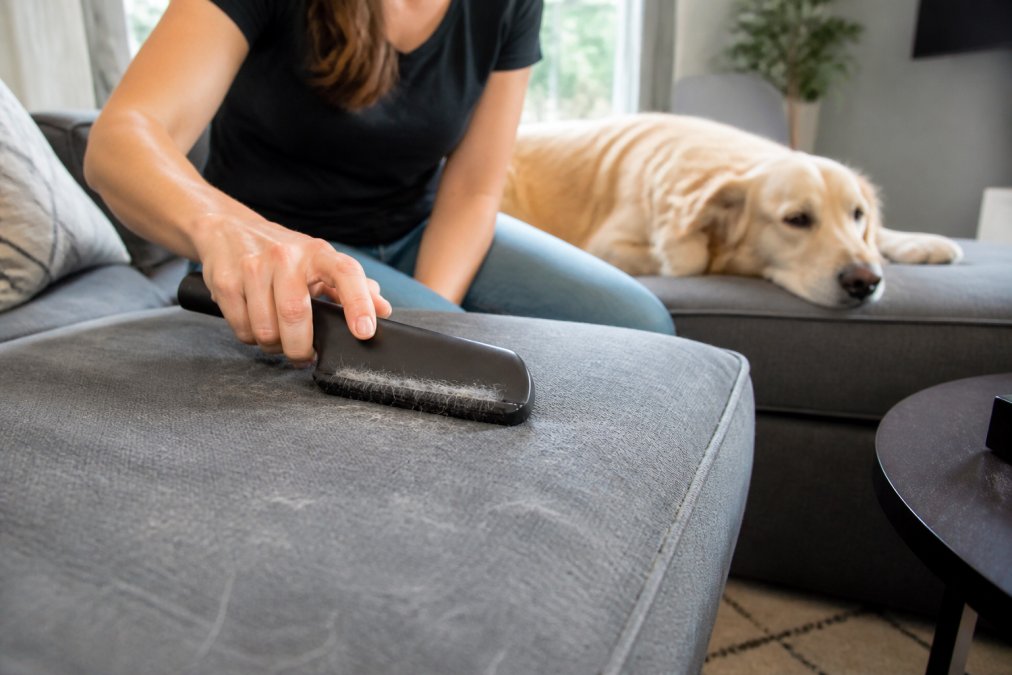
Step 1: Prep the Surface and Loosen the Hair
Start dry. A wet surface locks hair deeper into the weave.
- Remove cushions and vacuum both sides with a brush attachment.
- Mist the fabric lightly with water to kill static.
- Drag a rubber glove or squeegee in short strokes, pulling hair into piles.
Step 2: Work the Fabric With the Right Tool
Match the tool to the fabric. Short pile takes a squeegee or rubber brush. Thick pile needs a stiff rubber rake that reaches the base of the fibers.
- Microfiber: rubber glove, light pressure
- Woven fabric: squeegee in straight lines
- Velvet or chenille: slicker brush, gentle strokes
- Canvas or denim: damp sponge, then vacuum
Step 3: Vacuum, Lift, and Repeat
Vacuum slowly with a brush attachment. Fast passes skip the hair trapped at the base of the pile.
Best Tools for Pet Hair Removal on Upholstery and Fabric
The best tools for pet hair removal are the ones that match your fabric and your pet's coat, not the ones with the highest price tag. A 2026 market report valued the global pet hair removal products market at $4.8 billion in 2025, with projected growth of 6.7% through 2034, based on DataIntelo's market research. Plenty of options, and plenty of duds.
| Tool | Best For | Fabric Type | Reusable |
|---|---|---|---|
| Reusable pet hair remover | Quick touch-ups, clothing | Most fabrics | Yes |
| Rubber glove or squeegee | Short-pile upholstery | Microfiber, woven | Yes |
| Slicker brush | Velvet, chenille, delicate | Thick pile | Yes |
| Deshedding brush | Grooming before shedding | All coat types | Yes |
| Vacuum brush attachment | Final lift pass | All fabrics | Yes |
How to Get Dog Hair Out of Couch Fabric and Cushions
Getting dog hair out of couch fabric starts with the cushions, because that's where most of it hides. Cushion seams and the gap behind the backrest collect hair that never touches the surface.
Preventing Pet Hair Buildup on Furniture: Daily and Weekly Habits
Preventing pet hair buildup on furniture comes down to catching hair before it settles. Ten seconds of daily effort beats an hour of deep cleaning. But the routine has to match the coat, or you'll spend the same time and get half the result.
Match the Routine to the Coat Type
A double-coated breed, think huskies, shepherds, and most retrievers, drops soft undercoat that mats into the weave and stays there. For these coats, a deshedding brush used two to three times a week during shedding season removes far more hair than daily surface wiping. The undercoat is the problem; the topcoat is a decoy.
The Weekly and Monthly Layer
- Daily: Run a reusable remover over the seat your pet claims most
- Every other day: Brush your pet with a slicker or deshedding brush matched to coat type
- Weekly: Vacuum seams, under cushions, and the frame, not just the seat tops
- Monthly: Wash pet bedding and any throw blankets your pet uses
- Seasonally: Increase brushing during spring and fall shedding peaks, when undercoat release roughly doubles
Grooming is the highest-use habit here. Hair on the brush is hair that never reaches your couch. The Slicker Grooming Brush for Dogs & Cats at $14.99 works on short and long coats, and the Bodhi Dog Shampoo Brush at $16.55 lifts loose fur during bath time with flexible rubber bristles.
When the Routine Isn't Enough: Troubleshooting and Escalation
Most guides stop at the checklist. Here's what to do when the checklist stops working.
When to Pay a Professional
A mobile groomer or a furniture-cleaning service typically costs more per visit than a good reusable tool, but the math changes if you have multiple heavy-shedding pets, a large home, or a fabric you're afraid to damage. The rule of thumb: if you've spent more than a few hours on the same couch and the hair is still winning, the cost of a professional pass is usually less than the cost of replacing ruined upholstery.
Common Mistakes That Make Pet Hair Removal Harder
The biggest mistake is vacuuming first. Vacuuming a hairy couch before loosening the hair just presses it deeper into the weave.
Other errors that cost you time:
- Using a dry tool on dry fabric, which lets static fight back
- Brushing against the weave instead of with it
- Skipping the seams and the space behind the backrest
- Washing covers before removing loose hair
- Relying on one tool for every fabric type
Frequently Asked Questions
What is the most effective tool for removing pet hair from fabric?
Rubber-based tools consistently outperform adhesive lint rollers on upholstery because they grip hair instead of just skimming the surface. A reusable pet hair remover, like the one from Pets R Smarter ($9.99), lifts embedded hair from clothing and fabric surfaces with a simple pass. For deeper jobs, follow with a vacuum and a deshedding brush on your pet to reduce how much hair lands on furniture in the first place.
How do you get dog hair out of couch cushions?
Remove the cushion covers if they are machine washable and check the care tag first. For non-removable cushions, work in one direction with a rubber glove or reusable hair removal tool, then vacuum with an upholstery attachment. Embedded hair in the seams often needs a second pass with a damp rubber squeegee. A repeat pass is normal, not a sign your method failed.
Does a rubber glove really remove pet hair?
Yes, rubber creates friction that pulls hair off fabric rather than pushing it around. Dampen the glove slightly and sweep in short strokes across the couch. The hair balls up and lifts off. Rubber gloves work well as a quick fix, but a dedicated reusable tool gives you more surface contact and holds up better over repeated use. Test any tool on a small, inconspicuous area first when using it on delicate materials.
Is it better to vacuum or use a lint roller for pet hair?
Use both, in the right order. A lint roller or rubber tool loosens and collects surface hair fast, while a vacuum with an upholstery attachment pulls out what is woven into the fabric. Vacuuming alone often misses hair pressed deep into couch cushions.
Pet hair wins when it stays hooked in the weave. Break that grip with the right tool and a simple routine, and your furniture stops being a fur magnet. At Pets R Smarter, every tool is chosen with your pet's comfort and safety in mind, from reusable removers to grooming brushes built for daily use, all backed by the Tail Satisfaction Guarantee. Get started with Pets R Smarter and make grooming easier for you and your pet.