

Is Aromatherapy Worth It for Dog Grooming Anxiety
Table of Contents
- Does Aromatherapy Actually Work for Dog Grooming Anxiety
- Signs of Grooming Anxiety in Dogs
- Safe Essential Oils for Dogs During Grooming
- Natural Calming Aids for Dog Grooming Sessions
- How to Safely Apply Aromatherapy for Grooming
- Combining Aromatherapy With Positive Reinforcement Training
- The Verdict: Is It Worth the Investment
Last Updated: August 30, 2026
Does Aromatherapy Actually Work for Dog Grooming Anxiety
Is aromatherapy worth it for dog grooming anxiety? According to research from the Dog Aging Project, 91% of dogs experience at least mild to moderate fear or anxiety in everyday situations, with 33% showing specific anxiety toward grooming tasks like nail trims and baths. Aromatherapy has emerged as a drug-free option some pet owners use to address this widespread problem. At Pets R Smarter, we've researched what the science actually says about essential oils and canine anxiety.
The evidence suggests aromatherapy can help, but with important caveats. Multiple studies show that certain scents reduce stress indicators in dogs, yet safety concerns around essential oils remain valid. Dogs have up to 220 million scent receptors compared to approximately five million in humans, making their olfactory system extraordinarily sensitive. This heightened sense means what feels like a gentle aroma to us can be overwhelming or even harmful to them.
Below, we'll break down which essential oils are genuinely safe, how to apply them correctly, and whether combining aromatherapy with behavioral training actually reduces grooming anxiety.
Signs of Grooming Anxiety in Dogs
Your dog's behavior during grooming tells you everything. A dog experiencing grooming anxiety might resist getting into the bathtub, pull away during nail trims, or shake and whine when they hear clippers. Some dogs freeze entirely, while others become aggressive as a fear response.
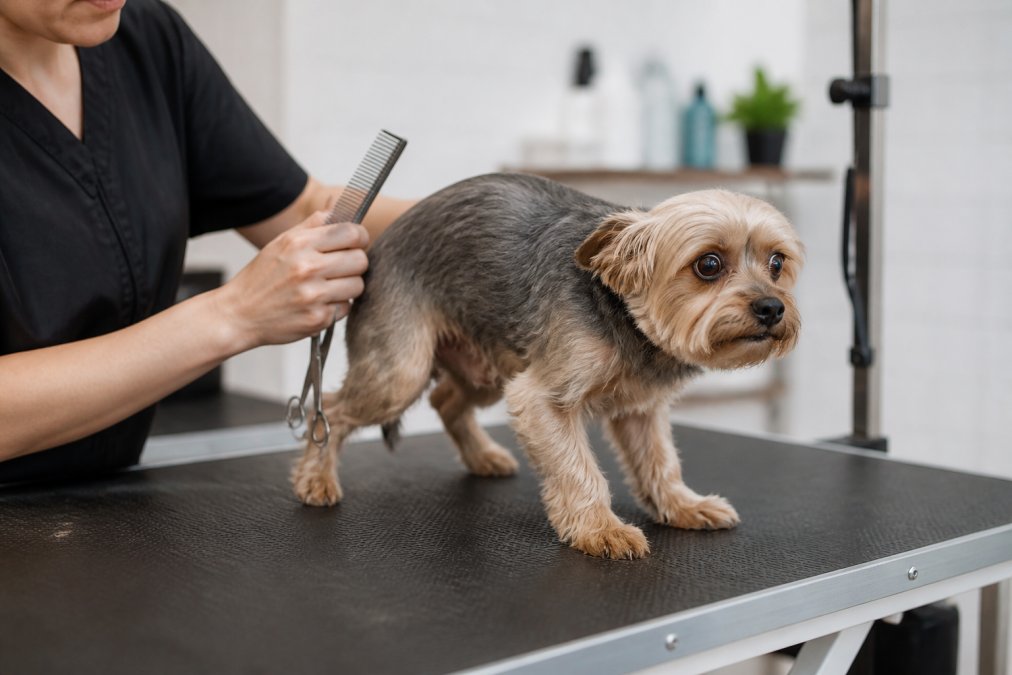
The most common anxiety triggers include water temperature, the sound of clippers, restraint on a table, and paw handling. According to the Dog Aging Project study, 35.2% of dogs showed at least mild to moderate fear of nail trims, while 22.3% exhibited anxiety about baths.
Physical signs include trembling, excessive panting, dilated pupils, and loss of appetite before appointments. Some dogs attempt to escape or hide when they see grooming supplies. Others display displacement behaviors like excessive licking or yawning. Understanding these signs matters because they indicate whether your dog needs behavioral intervention, medical support, calming aids like aromatherapy, or a combination of all three.
Safe Essential Oils for Dogs During Grooming
Not all essential oils are safe for dogs. The general rule: consult your veterinarian before using any essential oil for your dog. That said, certain oils have research backing their calming effects when properly diluted.
Lavender is the most studied calming scent for dogs. Research from the University of Louisiana at Monroe found that dogs exposed to lavender aromatherapy in a veterinary setting displayed significantly lower alert and tense statuses. A separate study from Queen's University Belfast showed that dogs spent more time resting and less time vocalizing when exposed to lavender scent.
Chamomile, bergamot, sandalwood, and frankincense also show promise. British researchers published findings in Applied Animal Behaviour Science showing that exposure to vanilla, coconut, valerian, and ginger reduced stress indicators in shelter dogs, with coconut and ginger increasing sleeping time.
The critical distinction: using these oils safely requires proper dilution. Most commercial pet aromatherapy products use heavily diluted versions or diffuse oils into the air rather than applying them topically. Direct application of undiluted essential oils to a dog's skin causes dermal irritation and can lead to systemic toxicity.
Oils to Avoid: The Toxic List
Certain essential oils are genuinely toxic to dogs and should never be used, regardless of dilution. Oils to avoid completely include tea tree, eucalyptus, peppermint, citrus oils like lemon and orange, pine, ylang-ylang, and cinnamon. According to the American Kennel Club, dogs are highly sensitive to essential oils due to their powerful sense of smell. Inhaling or ingesting concentrated oils can cause respiratory issues, central nervous system depression, dermal irritation, and internal organ damage. Limonene in citrus oils and phenols in tea tree oil are known to be toxic to canine livers. Eucalyptus can trigger respiratory distress. Dr. Ogg, a veterinarian at the American Kennel Club, states: "Although there may be very specific circumstances in which a dog might benefit from a very limited exposure to certain types of essential oils, it is best to avoid them completely, unless otherwise advised by a veterinarian." The safest strategy is skepticism: if you're unsure whether an oil is safe, don't use it.
Natural Calming Aids for Dog Grooming Sessions
Aromatherapy isn't your only option for reducing grooming anxiety. A multi-pronged approach combining several calming strategies tends to work better than relying on any single method.
Pheromone-based products like Adaptil (which mimics the natural calming pheromones mother dogs produce) have strong clinical backing. These products work through a different mechanism than essential oils, triggering innate calming responses in dogs.
Interactive toys and puzzle feeders also help. A dog focused on a treat-dispensing toy is less anxious about grooming. Pets R Smarter offers the Plush Interactive Puzzle Toy for Pets at $14.99 and the Silicone Slow-Feeding Lick Mat at $14.75, which is specifically designed for bathing distraction.
Hydrotherapy and professional grooming environments matter too. A grooming space with soft lighting, gentle handling, and calm music reduces anxiety more effectively than any single product. Temperature control and soft handling eliminate major anxiety triggers.
How to Safely Apply Aromatherapy for Grooming
If you decide to try aromatherapy for your dog's grooming anxiety, application method matters enormously. There are three primary approaches: diffusion, topical application with proper dilution, and aromatherapy shampoos formulated for pets.
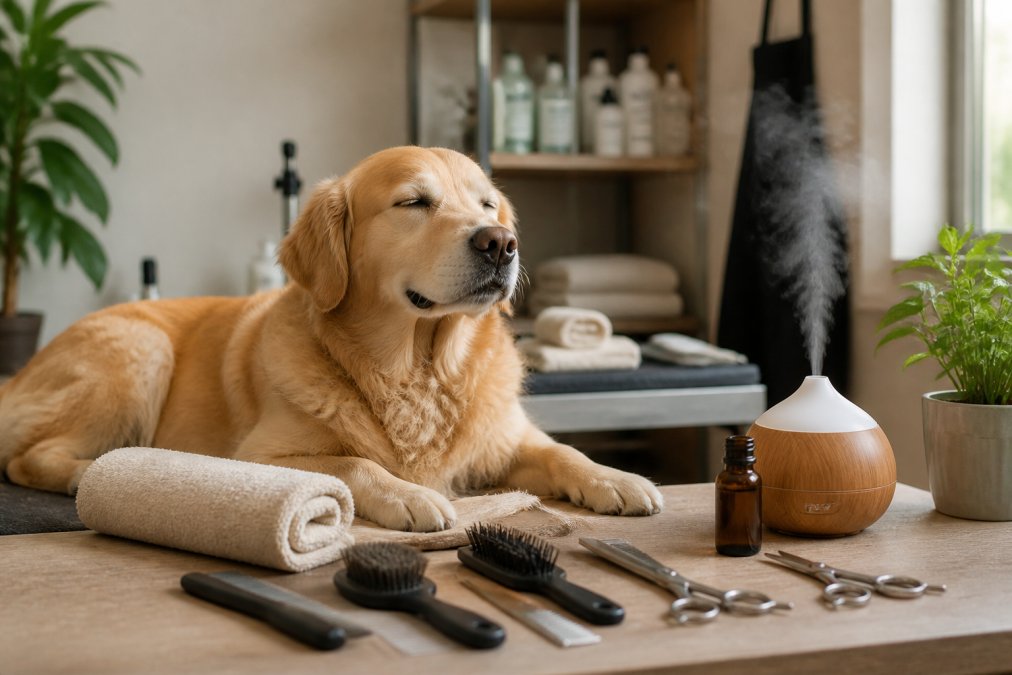
Diffusion is the safest method. A quality ultrasonic diffuser disperses essential oil particles into the air at low concentrations. Run the diffuser for 15-30 minutes before grooming to build a calming atmosphere. Ensure adequate ventilation and never run a diffuser continuously in a small, sealed space. Your dog should always have the option to leave the room if the scent becomes overwhelming.
Topical application requires extreme caution. Dilute essential oils at a ratio of 1-2 drops per teaspoon of carrier oil. Apply only to the back of your dog's neck where they can't lick it, or to their collar. Never apply to paws, face, or sensitive areas. Start with a tiny amount and observe for adverse reactions like excessive drooling, vomiting, lethargy, or skin irritation.
Aromatherapy shampoos formulated specifically for dogs offer a middle ground. These contain heavily diluted essential oils integrated into the shampoo formula, minimizing direct skin contact while providing olfactory benefits.
Diffuser Safety and Proper Dilution
Diffuser safety hinges on ventilation, duration, and concentration. Never use a diffuser in a bathroom during a bath, as the enclosed space amplifies scent concentration. Instead, run the diffuser in the grooming area 15-30 minutes before your dog enters, then switch it off.
Proper dilution for any topical application follows the 1-2 drops per teaspoon rule. This conservative ratio prioritizes safety over maximum scent intensity. Carrier oils like fractionated coconut oil, jojoba oil, and sweet almond oil are safe. Avoid mineral oil, which can interfere with skin health.
Never apply diluted oils to grooming tools or directly into your dog's coat without a carrier oil. If you're using aromatherapy shampoos, follow the product instructions exactly.
Combining Aromatherapy With Positive Reinforcement Training
Aromatherapy becomes genuinely effective when paired with behavioral training. Aromatherapy alone doesn't retrain your dog's anxiety response. It creates a calmer emotional state that makes learning possible. Positive reinforcement training then builds new associations with grooming.
Use aromatherapy to lower your dog's baseline anxiety, then immediately practice grooming-related activities with high-value rewards. Start small: let your dog smell the clippers while you offer treats. Run water over their paw while dispensing rewards. Gradually increase exposure to grooming stimuli while maintaining the calming aromatherapy environment and consistent positive reinforcement.
The combination works because you're addressing anxiety on multiple levels: chemically (through the calming scent), behaviorally (through positive reinforcement), and environmentally (through grooming station setup and handling technique).
The Verdict: Is It Worth the Investment
Is aromatherapy worth it for dog grooming anxiety? The honest answer: it depends on your dog's severity of anxiety, your commitment to behavioral training, and your willingness to follow safety protocols.
For mild anxiety, aromatherapy can be a worthwhile, low-risk addition to your grooming routine. A quality diffuser runs $30-50, and essential oils designed for pet use cost $15-25 per bottle. Compared to veterinary sedation or hiring a professional groomer every time, it's affordable. The research shows that certain scents like lavender genuinely reduce stress indicators in dogs.
For moderate to severe anxiety, aromatherapy alone won't solve the problem. You'll need to combine it with behavioral training, possibly professional grooming, and potentially veterinary intervention. The investment becomes worthwhile only if you're using it as part of a comprehensive strategy.
Safety considerations matter most. Never use aromatherapy as an excuse to skip veterinary consultation if your dog shows severe anxiety. Some anxiety stems from pain, previous trauma, or medical conditions that essential oils won't address. The American Kennel Club's guidance is clear: consult a veterinarian before using any essential oils, even diluted ones.
The practical reality: Aromatherapy is worth trying if you approach it as a complementary tool, not a cure. It costs little, carries minimal risk when done correctly, and has enough research backing to justify the experiment. The real work comes from pairing it with positive reinforcement training and creating a grooming environment your dog finds less threatening.
At Pets R Smarter, we recommend starting with environmental changes and positive reinforcement toys before investing in aromatherapy. Tools like our Plush Interactive Puzzle Toy for Pets ($14.99) and Silicone Slow-Feeding Lick Mat ($14.75) address anxiety through distraction and positive association. If your dog still struggles after establishing these fundamentals, then aromatherapy becomes a logical next step.
| Anxiety Level | Aromatherapy Alone Effective? | Recommended Approach | Estimated Cost |
|---|---|---|---|
| Mild (minor resistance) | Yes, often sufficient | Diffusion + positive reinforcement toys | $50-100 |
| Moderate (visible stress) | Partial; needs supplementation | Aromatherapy + behavioral training + professional grooming | $200-500+ |
| Severe (panic response) | No; insufficient alone | Veterinary consultation + aromatherapy + training + possible medication | $500-1500+ |
The bottom line: aromatherapy is worth trying for dog grooming anxiety if you understand its limitations and use it as part of a broader strategy. It's not a magic fix, but it's a low-cost, low-risk tool that works for many dogs when combined with behavioral training and environmental optimization. Start with proper dilution, veterinary clearance, and realistic expectations. With patience and the right combination of tools, grooming can become significantly less stressful for both of you.
=== FAQ ANSWERS (audit these too, same rules) ===
[1] Q: Can aromatherapy help dogs with anxiety during grooming? A: Yes, research supports aromatherapy's effectiveness for grooming anxiety. Studies show that dogs exposed to calming scents like lavender spend significantly more time resting and less time vocalizing. A 2024 University of Louisiana study found that dogs exposed to lavender aromatherapy in veterinary settings displayed lower stress levels and more ground-level head positions, indicating a calmer state. However, results vary by individual dog, and aromatherapy works best when combined with positive reinforcement training and proper safety protocols.
[2] Q: What safe essential oils for dogs can I use during grooming? A: The most researched and safest options are lavender, chamomile, bergamot, and frankincense. Research from Queen's University Belfast (2006) documented that lavender reduced vocalizing and pacing in dogs. Vanilla, coconut, valerian, and ginger have also shown stress-reduction benefits in studies. Always use oils properly diluted in a carrier oil or through a diffuser, never apply concentrated oils directly to your dog's skin or let them ingest oils. Consult your veterinarian before introducing any essential oil, as individual dogs may have sensitivities.
[3] Q: How do I know if my dog is experiencing grooming anxiety? A: Watch for stress-induced behaviors like excessive panting, trembling, whining, or attempts to escape. Some dogs become rigid or freeze, while others show increased salivation or loss of appetite before grooming. Approximately 33% of dogs show fear or anxiety toward grooming according to research from the Dog Aging Project. If your dog displays any of these signs, aromatherapy combined with desensitization training and positive reinforcement can help reduce their anxiety over time.
[4] Q: Are essential oils safe for dogs to inhale? A: Diffused essential oils in well-ventilated spaces are generally safe for dogs when used correctly. However, dogs have up to 220 million scent receptors compared to five million in humans, making them extremely sensitive. Never use concentrated oils, ensure good ventilation, and limit diffuser sessions to 15-30 minutes. Avoid oils toxic to dogs like tea tree, eucalyptus, and peppermint. The American Kennel Club advises: 'Although there may be very specific circumstances in which a dog might benefit from a very limited exposure to certain types of essential oils, it is best to avoid them completely, unless otherwise advised by a veterinarian.'
Frequently Asked Questions
Q: Can aromatherapy help dogs with anxiety during grooming?
A: Yes, research supports aromatherapy's effectiveness for grooming anxiety. Studies show that dogs exposed to calming scents like lavender spend significantly more time resting and less time vocalizing. A 2024 University of Louisiana study found that dogs exposed to lavender aromatherapy in veterinary settings displayed lower stress levels and more ground-level head positions, indicating a calmer state. However, results vary by individual dog, and aromatherapy works best when combined with positive reinforcement training and proper safety protocols.
Q: What safe essential oils for dogs can I use during grooming?
A: The most researched and safest options are lavender, chamomile, bergamot, and frankincense. Research from Queen's University Belfast (2006) documented that lavender reduced vocalizing and pacing in dogs. Vanilla, coconut, valerian, and ginger have also shown stress-reduction benefits in studies. Always use oils properly diluted in a carrier oil or through a diffuser, never apply concentrated oils directly to your dog's skin or let them ingest oils. Consult your veterinarian before introducing any essential oil, as individual dogs may have sensitivities.
Q: How do I know if my dog is experiencing grooming anxiety?
A: Watch for stress-induced behaviors like excessive panting, trembling, whining, or attempts to escape. Some dogs become rigid or freeze, while others show increased salivation or loss of appetite before grooming. Approximately 33% of dogs show fear or anxiety toward grooming according to research from the Dog Aging Project. If your dog displays any of these signs, aromatherapy combined with desensitization training and positive reinforcement can help reduce their anxiety over time.
Q: Are essential oils safe for dogs to inhale?
A: Diffused essential oils in well-ventilated spaces are generally safe for dogs when used correctly. However, dogs have up to 220 million scent receptors compared to five million in humans, making them extremely sensitive. Never use concentrated oils, ensure good ventilation, and limit diffuser sessions to 15-30 minutes. Avoid oils toxic to dogs like tea tree, eucalyptus, and peppermint. The American Kennel Club advises: 'Although there may be very specific circumstances in which a dog might benefit from a very limited exposure to certain types of essential oils, it is best to avoid them completely, unless otherwise advised by a veterinarian.'
This article was written using GrandRanker