

Is Professional Grooming Really Necessary?
Table of Contents
- Why Professional Grooming Matters for Your Dog
- How Often Should a Dog Be Groomed
- Signs Your Dog Needs Professional Grooming
- Benefits of Professional Dog Grooming Beyond the Bath
- DIY Grooming vs. Professional Care: What You Should Know
- Breed-Specific Grooming Requirements
- The Real Cost of Skipping Professional Grooming
- Conclusion
Last Updated: August 15, 2026
Why Professional Grooming Matters for Your Dog
Professional grooming isn't optional, it's essential preventative care. Skipping grooming leads to matting, skin infections, and behavioral issues that cost far more to fix than regular maintenance would have prevented.
Professional grooming goes beyond aesthetics. A groomer's hands-on assessment catches early signs of skin conditions, parasites, ear infections, and other health issues long before they become serious. They know how to handle anxious dogs, trim nails safely without hitting the quick, and express anal glands, tasks most pet owners either skip or perform incorrectly. The difference between DIY maintenance and professional care is about your dog's comfort, health, and quality of life.
How Often Should a Dog Be Groomed
Grooming frequency depends on breed, coat type, and lifestyle. Dogs with double coats (Golden Retrievers, German Shepherds, Huskies) need professional grooming every 6-8 weeks to manage shedding and prevent undercoat matting. Single-coated breeds with longer hair (Poodles, Doodles) require grooming every 4-6 weeks or they'll develop painful mats. Short-coated breeds like Labs or Beagles can go 8-12 weeks between professional sessions.
Between appointments, brush 2-3 times per week to prevent matting and reduce shedding. Dogs that swim or play outdoors need weekly baths. Trim nails every 4-6 weeks, or when you hear clicking on hardwood floors. Floppy-eared dogs (Cocker Spaniels, Basset Hounds) need weekly ear checks; upright ears need less attention.
Many pet owners find a hybrid approach works best: professional grooming every 6-8 weeks for heavy lifting (deshedding, sanitary trim, full bath and dry), with home maintenance in between to keep the coat manageable.
Signs Your Dog Needs Professional Grooming
Your dog signals when professional grooming is overdue. Matting is the clearest sign. Run your fingers through your dog's coat; if you feel tight knots that don't separate easily, matting has started. Once matting sets in, it pulls on the skin, causes irritation, and creates pockets where bacteria and parasites thrive.
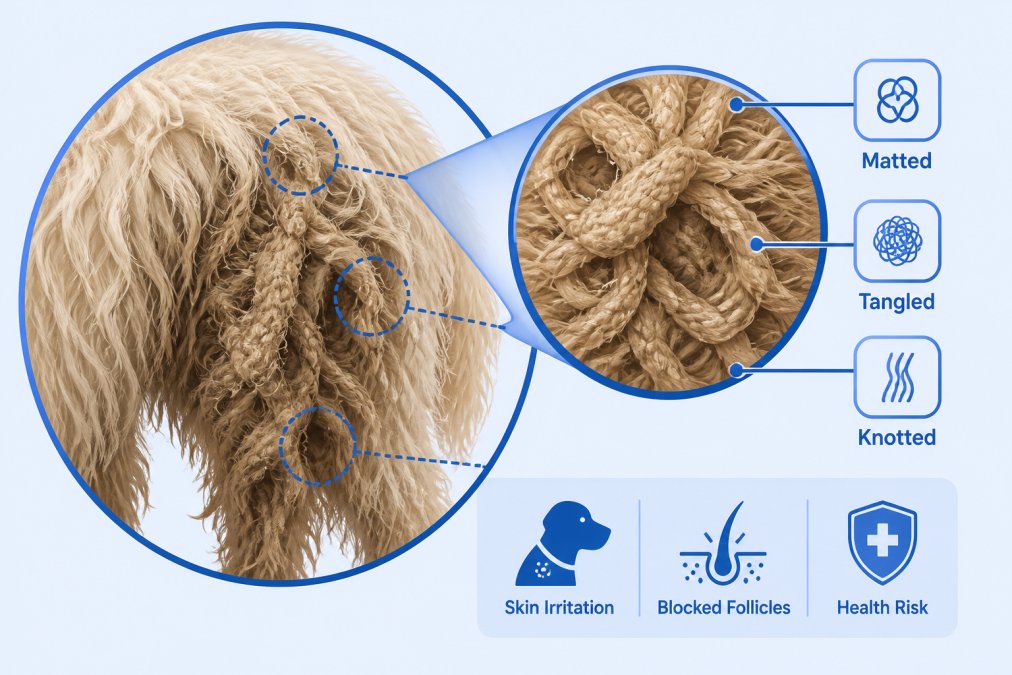
Excessive shedding despite regular brushing indicates the undercoat isn't being properly managed. Professional deshedding treatments remove loose undercoat that brushing alone can't reach, reducing shedding by 50-70% for several weeks. Skin flaking, dander in patches, foul odor that doesn't improve with bathing, or visible skin irritation all warrant professional assessment.
Behavioral changes during grooming are significant. If your dog resists nail trimming, ear cleaning, or baths, something hurts. Overgrown nails cause pain and alter gait. A professional groomer will notice these issues and can often resolve them; continuing to force grooming at home teaches your dog to fear the process.
Benefits of Professional Dog Grooming Beyond the Bath
Professional grooming delivers far more than a clean dog. Groomers spend 1-2 hours handling your dog's entire body and notice things you won't see. Lumps, bumps, skin lesions, ear infections, anal gland issues, and parasitic signs are caught during appointments. Many pet owners have discovered serious health problems because a groomer flagged something unusual.
Nail trimming is a skill most pet owners underestimate. Overgrown nails alter your dog's gait, put pressure on joints, and cause pain. Groomers trim nails to the appropriate length while maintaining proper paw pad health and trimming hair between pads to prevent dirt accumulation and improve traction.
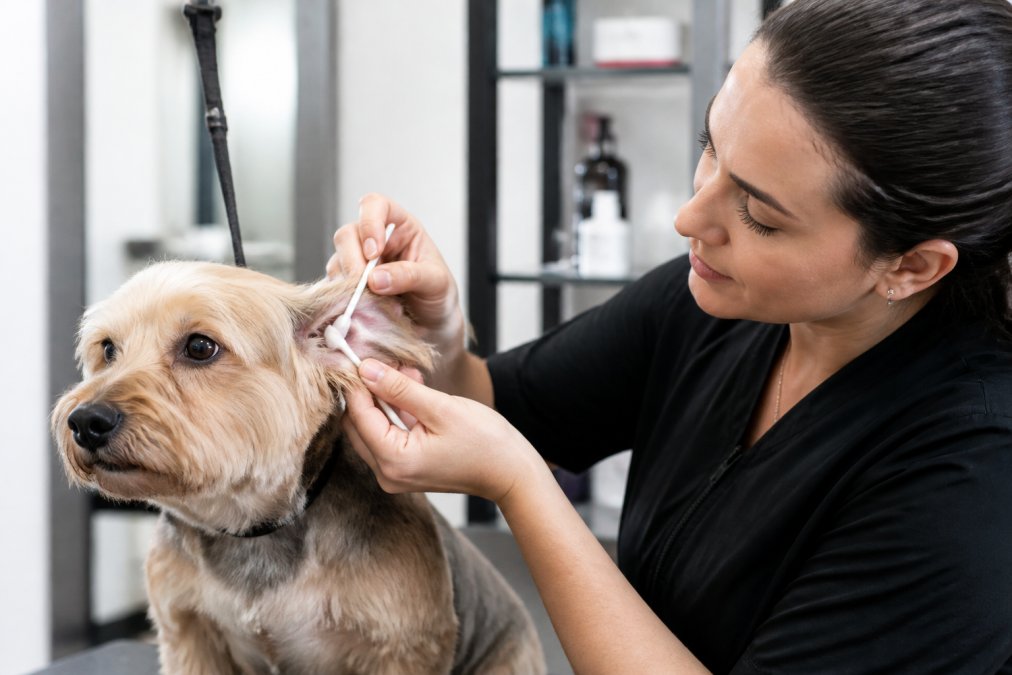
Ear cleaning prevents infections that are costly to treat. Dogs with floppy ears or hair-covered ear canals are prone to yeast and bacterial infections if ears aren't cleaned regularly and properly dried. Anal gland expression, a task most pet owners skip entirely, prevents impaction and infection.
Regular grooming normalizes handling and reduces grooming anxiety over time. Dogs groomed regularly from puppyhood are calmer during vet visits and medical procedures because they're accustomed to professional handling.
DIY Grooming vs. Professional Care: What You Should Know
DIY grooming and professional care are complementary, not competing. Most pet owners can handle grooming at home until anxiety enters the picture.
What you can realistically do at home: Brush your dog's coat 2-3 times per week, bathe them with appropriate shampoo, clean ears with vet-approved solution, and brush teeth. Nail trimming at home is possible if your dog is calm and cooperative; forcing the issue teaches your dog to fear the process.
What requires professional skill: Deep deshedding with high-velocity dryers, removing established mats without damaging skin, precise nail trimming on anxious dogs, anal gland expression, professional ear cleaning, breed-specific styling, and identifying health issues. Attempting these without training risks injury or incomplete care.
The anxiety factor: Professional groomers are trained to handle nervous, fearful, and aggressive dogs using desensitization and calm handling techniques. A dog that panics during home nail trims may remain calm with a groomer because the environment is controlled and the handler is experienced. Over time, regular professional grooming can reduce grooming anxiety. Dogs handled consistently by professionals from puppyhood develop tolerance and positive associations with grooming, which matters for vet visits and medical procedures.
If your dog shows grooming anxiety, trembling, hiding, snapping, or refusing to cooperate, attempting DIY grooming reinforces the fear and makes professional grooming harder later. A professional groomer can break that cycle through gentle, predictable handling. This is especially valuable for rescue dogs, dogs with past trauma, or anxiety-prone breeds.
The cost and time trade-off: Professional grooming costs $80-200 per appointment but saves 2-4 hours of your time and eliminates the stress of wrestling a reluctant dog. For anxious dogs, professional care is a behavioral investment that prevents long-term fear and improves quality of life.
The hybrid approach works best: professional grooming every 6-8 weeks for heavy lifting and anxiety management, with home maintenance in between.
Breed-Specific Grooming Requirements
Grooming needs vary dramatically by breed. Double-coated breeds (Golden Retrievers, German Shepherds, Huskies, Malamutes) shed heavily and require professional deshedding every 6-8 weeks plus weekly brushing at home. Their undercoat traps moisture and parasites if not properly maintained.
Hand-stripping breeds like Schnauzers and Terriers need professional grooming every 8-10 weeks to maintain coat texture; clipping them regularly changes coat quality and increases shedding. Curly and Doodle coats (Poodles, Labradoodles, Goldendoodles) mat easily and require professional grooming every 4-6 weeks plus daily brushing at home. Long-haired breeds like Shih Tzus and Maltese need professional grooming every 4-8 weeks.
Short-coated breeds like Labs and Beagles need less frequent professional grooming (every 8-12 weeks) but still benefit from regular bathing and nail trimming. Breeds prone to ear infections (Cocker Spaniels, Basset Hounds, Poodles) require professional ear cleaning every 4-6 weeks. Breeds with skin folds (Bulldogs, Pugs, Shar-Peis) need regular cleaning and drying of fold areas to prevent yeast and bacterial growth.
These requirements are based on how each breed's coat evolved and functions. Ignoring them means coat health deteriorates, skin conditions develop, and your dog's comfort suffers.
The Real Cost of Skipping Professional Grooming
Skipping professional grooming seems like a money-saving strategy until you calculate the actual costs. Most pet owners think in terms of immediate grooming bills ($80-200 per appointment) without accounting for the health costs that accumulate when grooming is neglected.
The reactive cost spiral: Severe matting that could have been prevented with regular grooming often requires sedation and hours of professional work, costing $200-500+ instead of $80-150 for routine grooming. Skin infections caused by poor coat maintenance require vet visits ($150-300), antibiotics, and medicated baths, totaling $300-600 per infection. Ear infections from inadequate cleaning cost $150-300 per visit; chronic problems can require surgery ($500-2,000+). Behavioral issues compound costs too. A dog that develops grooming anxiety becomes harder to groom, requires sedation for future appointments (adding $50-150 per visit), and may resist vet care entirely.
The preventative medicine model: Consider professional grooming as preventative health care, similar to vaccines or dental cleanings. A dog receiving regular professional grooming every 6-8 weeks has its entire body inspected by a trained handler every 1-2 months. Early detection of lumps, skin lesions, ear infections, and parasitic signs means these problems are caught before they become expensive. A groomer who notices a small skin lesion can recommend a vet visit for a $200 exam and treatment before that lesion becomes a $1,000 infection.
The long-term financial math is stark: spending $100-200 per month on regular professional grooming ($1,200-2,400 annually) prevents an average of $1,500-4,000 in annual preventative health costs. Pet owners who skip grooming often spend 2-3 times more on emergency vet care and infection treatment.
The quality-of-life cost: A dog with matted coat experiences constant skin irritation. A dog with overgrown nails experiences joint pain that compounds over years. A dog with chronic ear infections experiences recurring pain and hearing loss. Professional grooming prevents these costs to your dog's comfort and longevity.
The time cost: Bathing, drying, and brushing a dog properly takes 2-4 hours depending on coat type. Professional groomers do this efficiently, leaving you free to focus on what matters. The convenience factor alone justifies the expense for busy pet owners.
A Golden Retriever owner spending $120 per grooming appointment every 6 weeks ($1,040 annually) avoids an average of $2,000-3,000 in annual skin and ear infection costs. A Poodle owner spending $100 per appointment every 4 weeks ($1,300 annually) avoids $500-1,500 in matting-removal costs. In every scenario, professional grooming is the lower-cost option when you account for the health problems it prevents.
Frequently Asked Questions
Is professional grooming worth the cost?
Professional grooming prevents expensive health issues down the road. Regular professional care catches skin conditions, parasites, and matting early, which costs far less to treat than neglect-related problems. Professional groomers also have the expertise to handle anxious dogs safely, reducing stress-related behavioral issues. When you factor in the time saved and the preventative health benefits, professional grooming is an investment in your dog's long-term wellbeing and comfort.
Do all dog breeds require professional grooming?
Not all breeds require the same level of professional grooming, but most benefit from it. Double-coated breeds like Golden Retrievers and German Shepherds need regular deshedding and undercoat management that's difficult to do at home. Single-coated breeds may need less frequent professional visits, but breeds with hair that grows continuously, like Poodles and Shih Tzus, require professional grooming every 4-8 weeks. Even short-coated breeds benefit from professional nail trimming, ear cleaning, and anal gland expression.
What health risks come from skipping professional grooming?
Skipping professional grooming increases risks of matting, skin infections, ear infections, and parasite infestations. Matted coats trap moisture and parasites against the skin, creating conditions for bacterial and fungal growth. Overgrown nails affect gait and joint health. Impacted anal glands cause discomfort and infection. Unclean ears lead to yeast and bacterial infections. Professional groomers catch these issues early, preventing painful and costly veterinary treatments. Regular professional care is preventative medicine for your dog's skin, coat, and overall hygiene.
At what age should a puppy have their first professional groom?
Puppies can have their first professional groom around 8-12 weeks old, after their initial vaccinations. Early professional grooming helps puppies get comfortable with handling, bathing, and grooming tools, reducing grooming anxiety later in life. The first groom is usually a gentle introduction with basic bathing and nail trimming. Starting early establishes a positive relationship with grooming and helps prevent behavioral issues around professional handling as your puppy matures.
This article was written using GrandRanker