

Dog Grooming Clipper Maintenance: 7 Pro Tips
Table of Contents
- Why Clipper Maintenance Matters for Your Dog's Comfort
- Daily Cleaning: Removing Hair and Debris After Every Groom
- How to Oil Clipper Blades the Right Way
- Choosing the Best Clipper Blade Coolant for Dogs
- Clipper Blade Sharpening Frequency: When to Sharpen or Replace
- Troubleshooting Overheating, Noise, and Motor Issues
- Storage and Maintenance Schedules by Usage Volume
- Frequently Asked Questions
Last Updated: September 24, 2026
Why Clipper Maintenance Matters for Your Dog's Comfort
Professional dog grooming clipper maintenance tips start with one uncomfortable truth: a dull, hot, or clogged blade doesn't just cut poorly, it hurts. The pet grooming services market is projected to reach $7.7 billion in 2026, according to Grand View Research's pet grooming services market analysis, and a growing share of that spending is driven by pets who've learned to dread the clippers.
The cause is usually mechanical, not behavioral. Dirty or misaligned blade teeth pull hair instead of slicing it. Friction between metal surfaces generates heat that transfers straight to the skin. Hair packed into the clipper housing starves the motor of airflow, so it runs hotter and louder with every pass. None of that is the dog's fault, and all of it is fixable with a routine that takes minutes per week.
Below, we'll walk through the full maintenance cycle: daily debris removal, proper oiling technique, coolant selection, sharpening intervals, and the motor care that most guides skip entirely. Get this right and grooming stops being a wrestling match.
Daily Cleaning: Removing Hair and Debris After Every Groom
Daily cleaning means brushing away hair immediately after each groom, before it compacts into the blade assembly. Skip it and the debris hardens into a felt-like mat that traps heat and drags on the cutting mechanism.
Here's the routine professional groomers follow, and it takes about two minutes:
- Unplug the clipper or remove the battery, then detach the blade.
- Brush the blade teeth with a dedicated cleaning brush, working from the base of the teeth outward.
- Clear hair from the drive tip, the small fork where the blade meets the clipper's oscillating mechanism.
- Check the air intake vents on the clipper housing and clear any accumulated coat.
- Wipe the clipper body with a dry cloth. Never run water over the housing.
That fourth step matters more than most owners realize. Hair accumulation around the air intake is the leading cause of overheating in home-use clippers, and it's invisible until performance drops. A common mistake is cleaning only the blade and ignoring the housing entirely.
Once a week, or after any heavy session, step up to a deep clean. Remove the blade and soak it in a manufacturer-recommended blade wash or disinfectant, then scrub gently with a blade brush. Wag'n Tails' clipper maintenance guidance notes that skipping disinfection between dogs allows oils, dander, and bacteria to build up on the blade surface, which is a genuine skin-health concern for pets with sensitivities.
How to Oil Clipper Blades the Right Way
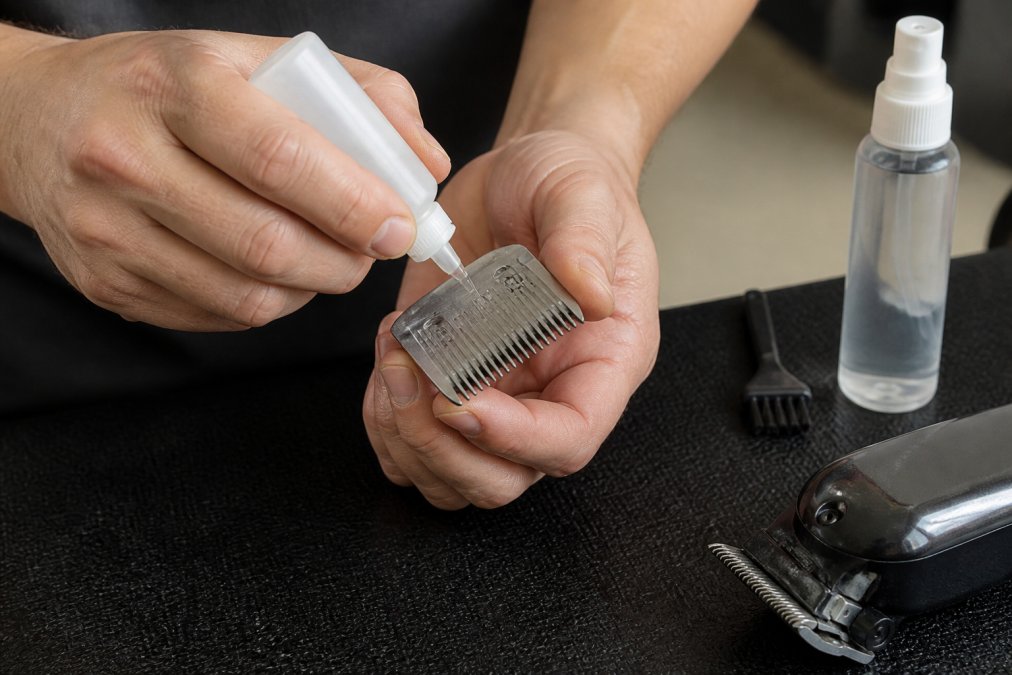
Oiling is where most home groomers go wrong, usually by doing too much or too little. The goal is a thin film of blade oil at the friction points, not a coating.
Apply one or two drops of purpose-made clipper oil along the top edge of the blade teeth while the clipper is running. Let it run for a few seconds so the oscillating action distributes the oil, then wipe away the excess with a cloth. That's the entire daily oiling procedure. It should take under a minute.
Lubrication Points Most Owners Miss
The blade teeth get all the attention, but three other points need oil:
- The tension screw area, where the blade's moving section pivots. A drop here keeps the blade tracking straight.
- The drive tip and blade drive connection, where the oscillating arm meets the blade. Dryness here produces a rattling sound and accelerates wear.
- The blade hinge or socket, on detachable blades. This is the joint that releases the blade, and it stiffens up without lubrication.
If you're using a clipper with a sealed motor, that's the limit of what you can oil. Never attempt to open a sealed housing to reach internal bearings.
Common Oiling Mistakes That Damage Blades
Over-oiling is the most frequent error. Excess oil migrates into the hair path, mixes with clipped coat, and forms a gritty paste that clogs the blade faster than dry debris would. If you see oil on your dog's coat after grooming, you used too much.
Height-Adjustable Pet Grooming Table →
The second mistake is using the wrong lubricant.
Choosing the Best Clipper Blade Coolant for Dogs
The best clipper blade coolant for dogs is a purpose-formulated spray or dip designed to dissipate heat, not a household substitute. Coolant is a maintenance tool, not a repair: it buys you working time on a warm blade and protects the cutting edge while it cools.
Blade Wash vs. Coolant: What's the Difference?
These two products get confused constantly, and using one in place of the other causes problems.
| Product | Purpose | When to Use | Key Caution |
|---|---|---|---|
| Blade wash | Dissolves oil, dander, and hair residue | Weekly deep clean or between dogs | Requires full drying before reattaching |
| Coolant | Rapidly dissipates blade heat | Mid-groom, when the blade feels warm | Never a substitute for cleaning |
| Blade oil | Reduces friction at contact points | Daily, after cleaning | One to two drops only |
| Disinfectant | Kills bacteria and pathogens | After heavy use or shared tools | Must be manufacturer-approved for blades |
Clipper Blade Sharpening Frequency: When to Sharpen or Replace
Clipper blade sharpening frequency depends on usage volume and coat type, not on a fixed calendar. A home groomer clipping one short-coated dog monthly might go a year or more between sharpenings. A professional running detachable blades through thick double coats daily may need sharpening every few weeks.
- The clipper requires multiple passes over the same area to cut cleanly
- Hair snags or pulls instead of slicing
- The blade leaves a ragged or uneven finish
- The motor strains audibly under light load
- Visible nicks, chips, or a rounded edge under close inspection
Troubleshooting Overheating, Noise, and Motor Issues
Overheating almost always traces back to three causes: hair blocking the air intake, insufficient lubrication, or a dull blade forcing the motor to work harder. Address them in that order before assuming the motor is failing.
Long-Term Motor Care for Corded and Cordless Clippers
Motor longevity comes down to heat management and, for cordless units, battery discipline.
Storage and Maintenance Schedules by Usage Volume
Storage protects everything you've done. A blade left dirty in a damp drawer will rust, and a clipper stored with hair packed in the housing will run hot on its next use.
| Usage Level | Clean Blade | Oil Blade | Deep Clean | Sharpen Check |
|---|---|---|---|---|
| Occasional (monthly) | After each use | After each use | Every 3 months | Every 6-12 months |
| Regular (weekly) | After each use | After each use | Monthly | Every 3-6 months |
| Heavy (daily) | After each use | After each use | Weekly | Every 4-6 weeks |
Frequently Asked Questions
How often should you oil dog grooming clipper blades?
Oil your clipper blades before every grooming session and again after cleaning. For heavy use, add a few drops every 15 to 20 minutes during the groom to reduce friction and heat buildup. Between grooms, a light oiling keeps the blade drive and tension screw moving smoothly. If you groom multiple dogs in one day, oil more frequently. Skipping this step accelerates wear on carbon steel blades and can cause the clipper to pull hair instead of cutting cleanly.
What can I lubricate my clippers with?
Use a manufacturer-recommended blade oil designed for clippers. Standard clipper oil is lightweight and won't gum up the blade drive or attract excess debris. Some groomers use a drop of sewing machine oil in a pinch, but it's not ideal for long-term use. Avoid cooking oil, WD-40, or thick greases, as these can damage the blade alignment and clog the drive tip. Always check your clipper's manual for approved lubricants and apply sparingly at the lubrication points.
How do you know when clipper blades need sharpening?
Signs it's time for sharpening include the blade pulling or snagging hair, leaving uneven cut lines, or requiring more passes to achieve the same result. You may also notice the clipper getting hotter than usual or making a louder grinding noise. For professional use, sharpen every 4 to 6 weeks. For home grooming, every 3 to 6 months is typical depending on coat type and frequency. If sharpening no longer restores performance, replace the blade.
Why do my dog clippers get hot during grooming?
Clippers heat up from friction between the blade teeth and the hair, plus motor operation. Dull blades, lack of lubrication, and hair packed into the blade drive all increase heat. To manage this, oil regularly, clean hair from the blade every few minutes, and use a blade coolant spray between passes. Take breaks every 10 to 15 minutes for the clipper to cool. If overheating persists after maintenance, the motor may need service or the blade may need sharpening or replacement.