

Professional Pet Grooming Tips 2026
Table of Contents
- Why Professional Pet Grooming Tips Matter in 2026
- Essential Pet Grooming Tools for Beginners
- How to Groom a Dog at Home Like a Pro
- Breed-Specific Grooming Requirements for 2026
- Dog Grooming Trends 2026: Wellness and Sustainability
- Professional Grooming Ergonomics and Safety
- Troubleshooting Common Behavioral Issues During Grooming
- Building Your Professional Grooming Routine
Last Updated: August 14, 2026
Why Professional Pet Grooming Tips Matter in 2026
Professional pet grooming tips have become essential knowledge for pet owners who want to deliver salon-quality care at home. Grooming is now recognized as a core component of dermatological health, stress management, and overall quality of life for dogs and cats.
What's changed is the availability of professional-grade tools and techniques once reserved for certified groomers. Pet owners now have access to high-velocity dryers, deshedding equipment, and pH-balanced formulations that prioritize coat health and skin barrier integrity. At Pets R Smarter, we've observed that informed pet owners who apply professional techniques see measurable improvements in their dogs' coat condition, behavioral response to grooming, and long-term skin health.
The 2026 grooming landscape also emphasizes sustainability and ergonomics. Pet owners increasingly seek eco-friendly products that don't compromise performance, while proper body mechanics prevent injury and burnout for anyone serious about grooming.
Essential Pet Grooming Tools for Beginners
Building a proper grooming toolkit requires understanding which tools deliver results. The right equipment transforms grooming from a frustrating chore into a manageable routine.
High-velocity dryers and deshedding equipment
A high-velocity dryer is the single most transformative tool a home groomer can own. Unlike standard hair dryers, high-velocity dryers use compressed air to force water from the coat at speed, dramatically reducing drying time and enabling effective deshedding in a single pass. For dogs with double coats like Labradors, Golden Retrievers, and German Shepherds, a high-velocity dryer can cut drying time from 45 minutes to 10 minutes while removing massive amounts of dead hair.
When selecting a high-velocity dryer, look for models with adjustable pressure settings. Lower pressure works for sensitive-skinned dogs, while higher pressure handles thick, dense coats effectively.
Deshedding equipment works best after high-velocity drying. A deshedding tool removes dead hair trapped in the undercoat, preventing matting, reducing shedding around your home, and keeping skin healthier by improving air circulation.
Pet-specific shampoos and coat sprays
The shampoo you choose matters far more than many pet owners realize. Dogs have skin pH around 6.5, while human skin averages 5.5. Using the wrong product disrupts the canine skin barrier, creating an environment where bacteria and yeast thrive.
Pet-specific shampoos are formulated to maintain proper pH balance. Look for products labeled pH-balanced or hypoallergenic, particularly if your dog has sensitive skin. Many professional groomers recommend specialty shampoos for specific coat types: whitening shampoos for light-colored coats, moisturizing formulas for dry skin, or clarifying shampoos for oily coats.
Detangling and scissoring sprays serve different purposes. Detangling sprays reduce friction between hair strands, making combing easier and less painful for matted coats. Scissoring sprays add slip to the coat, allowing clippers and shears to glide smoothly without pulling. Apply detangling spray to dry or damp hair before combing. For scissoring sprays, lightly mist the coat section just before cutting.
Nail clipping and ear cleaning tools
Nail care is non-negotiable for pet health. Overgrown nails alter gait, create joint stress, and increase injury risk. Professional nail clippers come in two primary styles: scissor-type and guillotine-type. Scissor clippers work well for most dogs and give better control and visibility.
The critical skill is identifying the quick, the blood vessel running through the center of the nail. On light-colored nails, the quick appears as a dark dot. On dark nails, trim conservatively. Many groomers use a headlamp to maximize visibility.
Ear cleaning removes debris and moisture that breed bacteria and yeast. Never use cotton swabs inside the ear canal, as they can push material deeper and risk puncturing the eardrum. Instead, fill the ear with cleaning solution, massage the base for 20-30 seconds to loosen debris, then let your dog shake out the excess and wipe away visible material with gauze.
How to Groom a Dog at Home Like a Pro
Transforming your home grooming into something that resembles professional work requires understanding the proper sequence and technique.
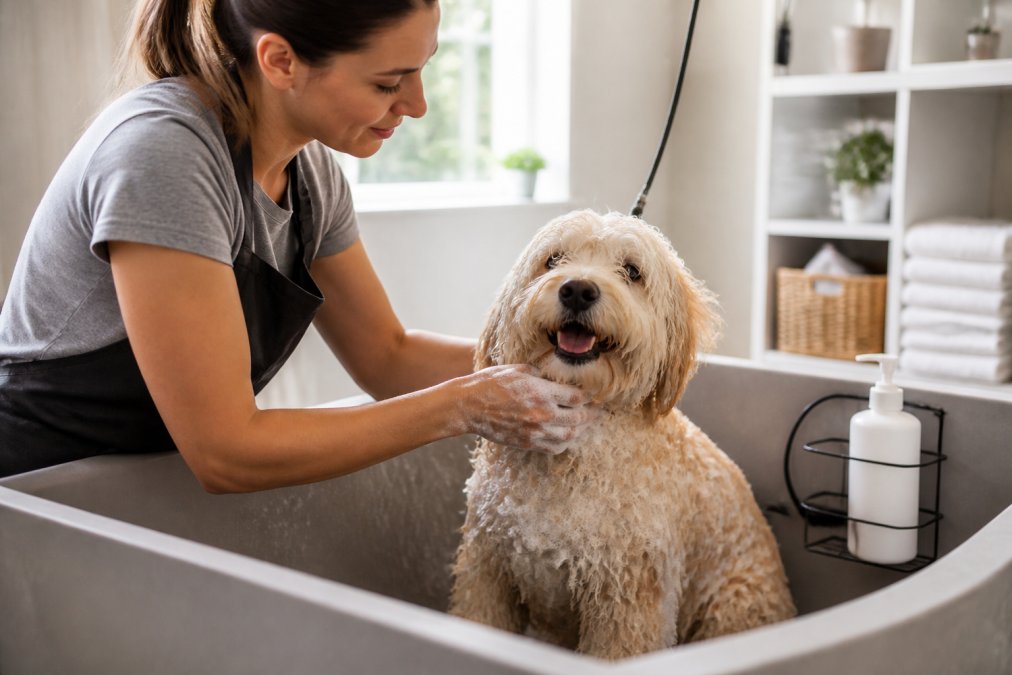
Establishing a stress-free grooming routine
The foundation of professional grooming is a dog that cooperates willingly. Stress-free grooming starts with positive reinforcement before you ever touch a grooming tool. Let your dog explore the grooming space, touch the dryer without turning it on, and associate the space with treats and praise.
Short, frequent sessions build tolerance better than marathon grooming. A 15-minute session twice a week creates less stress than a three-hour session monthly. Use gentle but confident movements. Hesitant handling makes dogs anxious. Calm, purposeful handling communicates that you're in control. If your dog shows signs of anxiety, trembling, or pulling away, take a break.
Temperature control is critical for stress reduction. Warm (not hot) water is more comfortable and less startling. Test the temperature on your inner wrist before applying it to your dog. Keep the grooming space warm during drying to prevent your dog from becoming chilled.
Detangling, bathing, and drying techniques
Begin every grooming session with thorough dry brushing before wetting the coat. This removes loose hair and surface tangles, making the bathing process faster and more effective.
When bathing, wet the coat thoroughly with warm water, then apply shampoo. Work the shampoo into a lather, paying special attention to areas that accumulate dirt and oils: the chest, legs, and rear end. Rinse completely, as residual shampoo leaves the coat dull and can irritate skin.
If you have a high-velocity dryer, use it first to remove bulk water and begin deshedding. Work in sections, starting with the head and neck, then moving to the body and legs. Keep the dryer moving, don't hold it in one spot. After high-velocity drying, use a traditional blow dryer on low heat if needed to fluff the coat. Follow with a deshedding tool to remove remaining dead hair.
Scissoring and sanitary trim basics
Scissoring requires practice and proper technique. Always cut with the direction of hair growth, not against it. Use sharp, professional-grade shears, as dull blades crush hair and create a rough appearance. Start with conservative cuts. Work in small sections and step back frequently to assess your progress.
A sanitary trim removes hair around the rear end and genital area to maintain hygiene. Use electric clippers with a short guard (typically 1/8 inch or 1/16 inch). Be careful around sensitive areas and never force the clipper against skin resistance.
Breed-Specific Grooming Requirements for 2026
Different breeds have fundamentally different grooming needs. Double-coated breeds like Golden Retrievers, German Shepherds, and Huskies require regular deshedding and high-velocity drying to prevent matting and maintain skin health. These breeds shed year-round and seasonally blow their coats.
Single-coated breeds like Poodles, Doodles, and Bichon Frises require frequent scissoring and clipping to prevent matting. These breeds' hair grows continuously and doesn't shed naturally, so regular trimming is essential for comfort and health. Many owners benefit from professional grooming every 4-8 weeks.
Wire-coated breeds like Terriers traditionally require hand-stripping to maintain proper coat texture and color, though many modern owners opt for clipper work as a practical alternative.
Small breeds often need attention to ear cleaning and dental hygiene, as these breeds are prone to ear infections and dental disease.
Dog Grooming Trends 2026: Wellness and Sustainability
The dog grooming trends 2026 reflects a fundamental shift in how pet owners think about grooming. It's no longer purely aesthetic, it's integrated into comprehensive wellness strategies that address dermatological health, stress reduction, and environmental responsibility.
Eco-friendly and sustainable grooming products
Pet owners increasingly demand sustainable grooming products that perform at professional standards without environmental compromise. Eco-friendly formulations use plant-based ingredients instead of synthetic chemicals and biodegradable packaging instead of plastic.
Modern sustainable shampoos and sprays deliver results comparable to conventional products. Many contain natural moisturizers like oat extract or coconut oil that provide superior skin conditioning. When evaluating eco-friendly products, look for certifications or transparent ingredient lists. Concentrated formulas that require dilution reduce packaging waste and transportation emissions.
Wellness-focused grooming and dermatological health
Wellness-focused grooming recognizes that skin and coat condition reflect overall health. Grooming becomes a diagnostic tool; changes in coat texture, skin condition, or shedding patterns often signal underlying health issues that warrant veterinary attention.
Omega-rich coat sprays and supplements have gained prominence as pet owners recognize the connection between nutrition and coat quality. These products support skin barrier function and reduce inflammation, which improves coat health and reduces itching.
Regular grooming allows you to monitor your dog's skin for abnormalities, catch ear infections early, and notice changes in coat quality that might indicate nutritional deficiencies or health concerns. This preventive approach reduces veterinary costs and improves long-term health outcomes.
Professional Grooming Ergonomics and Safety
Professional grooming is physically demanding, and ergonomics matter for anyone performing grooming regularly. Poor body mechanics create repetitive strain injuries, back pain, and burnout.
Proper grooming posture starts with table height. Your grooming table should position your dog at waist level, allowing you to work without bending or reaching. Use a relaxed grip on grooming tools; tension transfers to your arms and shoulders, creating fatigue and increasing injury risk. Hold clippers and shears with your wrist in a neutral position.
Take regular breaks during grooming sessions. Even 10 minutes of rest every 30-45 minutes reduces cumulative strain. Standing on a cushioned mat reduces impact on your feet and knees during long sessions.
Troubleshooting Common Behavioral Issues During Grooming
Dogs that resist grooming create safety risks and frustration. Understanding the root cause allows you to address issues systematically.
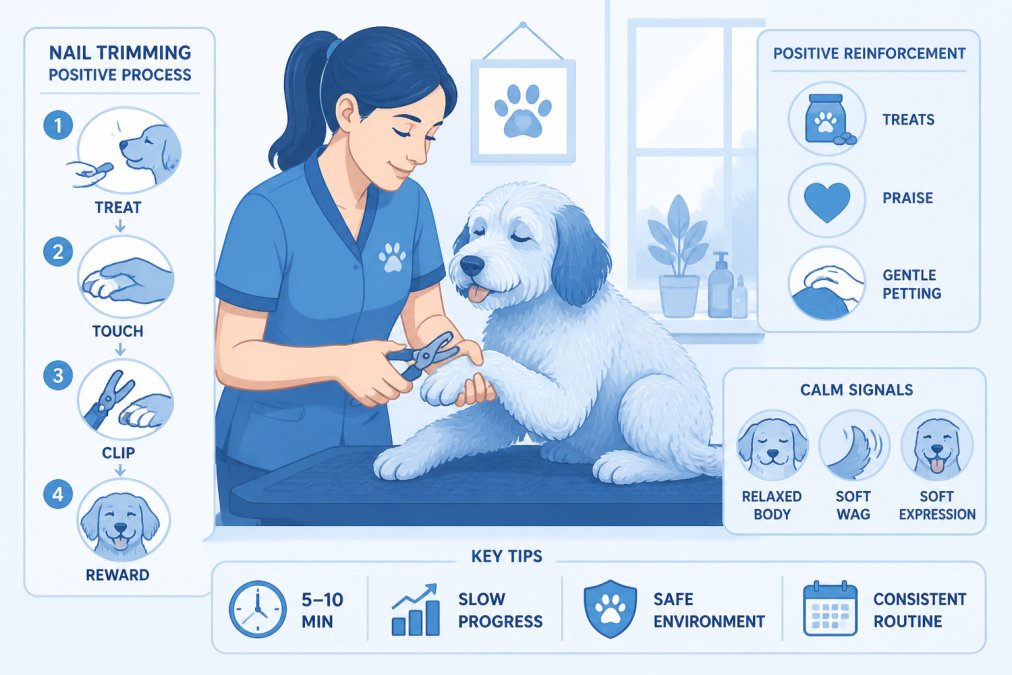
Anxiety during grooming often stems from past negative experiences, loud noises, or loss of control. If your dog shows anxiety signals, slow down and reduce stimulation. Desensitization works for noise-sensitive dogs: turn on the dryer without using it on your dog, reward calm behavior with treats and praise, and gradually move closer over weeks.
Aggression during grooming requires careful management. Never punish aggression, as this increases fear and worsens behavior. Identify the specific trigger and address it directly through desensitization or by adjusting your technique.
Some dogs resist grooming because it causes discomfort. Matted coats pull on skin during brushing. Ear cleaning solutions that are too cold or warm cause discomfort. Nails trimmed too short cause pain. Addressing the source of discomfort often resolves behavioral problems immediately.
Positive reinforcement is the most effective tool for improving grooming behavior. Reward calm, cooperative behavior with high-value treats and enthusiastic praise. Make grooming sessions short enough that your dog can succeed.
Building Your Professional Grooming Routine
Establishing a sustainable grooming routine requires realistic assessment of your dog's needs, your available time, and your skill level. Professional pet grooming tips emphasize consistency; regular maintenance prevents serious matting, reduces behavioral issues, and keeps your dog healthier.
For most dogs, a grooming routine includes weekly brushing, monthly bathing, and regular nail trimming. Double-coated breeds need more frequent deshedding, particularly during seasonal shedding periods. Long-haired breeds require more frequent brushing to prevent matting.
Create a grooming schedule and stick to it. Mark grooming dates on your calendar just as you would veterinary appointments. Consistency builds your dog's tolerance and prevents the accumulation of overwhelming grooming tasks.
Invest in quality tools that match your dog's needs. A high-velocity dryer is expensive but transformative for any dog with a double coat. Professional-grade shears and clippers cost more than consumer options but last longer and perform better. Pets R Smarter offers a curated selection of professional-grade grooming tools that prioritize durability, performance, and safety. Our Tail Satisfaction Guarantee ensures that every tool you purchase meets professional standards and performs as expected.
Track what works for your dog. Keep notes on which products, techniques, and tools produce the best results. Start with fundamentals: regular brushing, proper bathing with pH-balanced shampoo, careful nail trimming, and ear cleaning. Master these basics before attempting more advanced techniques like scissoring or hand-stripping.
Frequently Asked Questions
What are the key professional pet grooming tips for 2026?
In 2026, professional pet grooming emphasizes wellness-focused care, breed-specific techniques, and eco-friendly products. Focus on stress-free handling, proper deshedding and matting removal, pH-balanced shampoos for sensitive skin, regular dental hygiene, and using high-velocity dryers for efficient drying. Incorporate positive reinforcement throughout the grooming process and invest in professional-grade tools that prioritize pet comfort and dermatological health.
What essential pet grooming tools for beginners do I actually need?
Start with a pet-specific shampoo, detangling spray, quality nail clippers, and a slicker brush for mat and dead hair removal. Add a high-velocity dryer when ready, as it reduces grooming time and stress. Ear cleaning solution and a sanitary trim clipper complete the basics. Choose hypoallergenic, pH-balanced products designed for your dog's coat type. Quality tools last longer and make grooming safer for both you and your pet.
How can I groom my dog at home like a pro without professional training?
Follow a consistent grooming routine using professional-grade tools and techniques. Start with a thorough bath using pet-specific shampoo, followed by high-velocity drying to remove dead hair and prevent matting. Use detangling spray on problem areas, trim nails regularly, and perform sanitary trims around sensitive areas. Watch for signs of anxiety and use positive reinforcement. Practice scissoring techniques on less visible areas first. Most pet owners can master basic maintenance with patience and the right tools.
What grooming trends should I follow in 2026?
Dog grooming trends in 2026 prioritize sustainability, wellness, and pet comfort. Eco-friendly shampoos and grooming products are increasingly popular, as are omega-rich coat sprays that support skin barrier health. Wellness-focused grooming addresses dermatological concerns, and breed-specific grooming requirements are becoming more refined. Ergonomic tools that reduce groomer strain are gaining traction, and stress-free grooming methods using positive reinforcement are now standard practice among professionals.
Professional pet grooming tips 2026 reflect a matured understanding that grooming is wellness work, not cosmetic maintenance. Your dog's comfort, health, and long-term relationship with grooming depend on your commitment to proper technique, quality tools, and consistent practice. Pets R Smarter provides the professional-grade equipment and expert guidance you need to deliver salon-quality grooming at home, backed by our commitment to your pet's comfort and safety.
This article was written using GrandRanker