

Safe Grooming Tools for Nervous Pets: A 2026 Guide
Table of Contents
- Understanding Grooming Anxiety in Pets
- Low-Noise Pet Clippers and Grinders That Reduce Stress
- Desensitization Techniques for Pet Grooming Success
- Pet Grooming Safety Tips for At-Home Care
- Safe Grooming Tools for Nervous Pets: Product Categories
- Setting Up a Calm Grooming Environment
- Professional Grooming vs. At-Home Care for Anxious Pets
- Conclusion
Last Updated: August 19, 2026
Understanding Grooming Anxiety in Pets
Grooming anxiety affects a significant portion of dogs and cats. According to research from the Dog Aging Project and Texas A&M University, 33% of dogs showed fear or anxiety toward grooming, specifically around nail trims and baths. Many pets develop fear responses to specific triggers: the sound of clippers, the sensation of being handled, the vibration of electric tools, or the feeling of water on their skin.
Avoiding grooming isn't an option. Nails grow, coats mat, and skin needs attention. Ignoring these needs leads to painful overgrowth, infections, and behavioral issues that compound the anxiety. The solution is to deliberately redesign the grooming experience around your pet's sensory sensitivities.
Low-Noise Pet Clippers and Grinders That Reduce Stress
The sound of traditional clippers is one of the most common anxiety triggers. Low-noise pet clippers and grinders address this directly by reducing decibel output to levels that don't trigger the startle response.
The PETSPARX Low Noise Motor Rechargeable Dog Nail Grinder Kit operates at under 50 decibels, with multiple speed settings that let you match the tool's intensity to your pet's tolerance level. For professional-grade equipment, the Wahl Bravura Lithium-Ion Cordless Clipper operates with low vibration and has a 90+ minute battery life.
For pets with extreme noise sensitivity, the QUIET X Professional Dog Nail Grinder operates at just 20 decibels with almost no hand vibration. The 7 professional speeds (8000-16000 RPM) let you find the exact intensity your pet tolerates.
:::pro_tip Start with the lowest speed setting on any grinder, even if it takes longer. Your goal isn't efficiency on day one, it's building positive associations with the tool. Speed comes after your pet trusts it. :::
Desensitization Techniques for Pet Grooming Success
Desensitization is the systematic process of gradually exposing your pet to a feared stimulus in controlled doses until the fear response diminishes.
Creating Positive Associations with Tools
Let your pet investigate the clipper or grinder while it's off. Reward this exploration heavily with high-value treats. Once your pet shows curiosity rather than fear, turn the tool on at the lowest setting without touching your pet. Let them hear the sound from across the room and reward calm behavior immediately. Gradually decrease the distance over several sessions.
Research on dog interactions has documented that grooming and gentle massage increase alpha waves in the brain, associated with relaxed alertness. When you combine tool introduction with physical comfort, you're shifting your pet's neurological state toward relaxation.
Gradual Introduction Over Time
A common mistake is introducing multiple new tools at once. Start with one tool and spend two weeks on desensitization before moving to the next. When you introduce the tool to actual grooming, start with 2-3 minute sessions. Gradually extend duration over two weeks. If your pet shows stress signals, pulling away, trembling, attempting to escape, you've moved too fast.
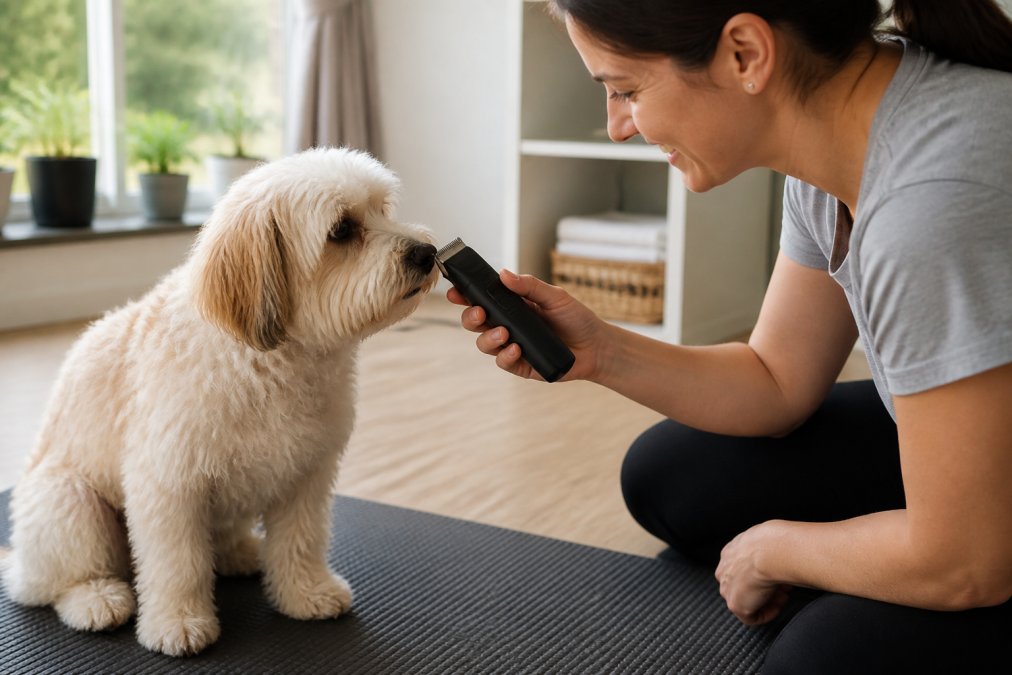
A case study from Paws and Thank You demonstrates this approach. They worked with Biggie, an anxious dog who ran away from new people and objects. Using medication in conjunction with desensitization to handling and grooming tools, they gradually acclimated him to the sensations. After consistent work, Biggie became capable of lying in a down position on a yoga mat while a clipper moved toward him.
Pet Grooming Safety Tips for At-Home Care
At-home grooming carries risks that professional groomers manage through training and experience. The most common injury is cutting the quick, the blood vessel inside the nail. On dark nails, you can't see it; on light nails, it's visible as a small dark circle in the center. Trim conservatively, remove only the curved portion of the nail that extends past the paw pad.
Clipper choice matters significantly. Grinders avoid the quick-cutting risk entirely because they file rather than cut. For nervous pets, a quiet grinder often proves safer than a clipper because the tool's design prevents accidental injury.
A Gentle Dematting Slicker Brush with longer, softer pins won't irritate skin during the dematting process. Never restrain your pet forcefully during grooming. Restraint escalates anxiety and teaches your pet that grooming means loss of control. Use positive reinforcement instead, treats, praise, and freedom to move slightly.
Safe Grooming Tools for Nervous Pets: Product Categories
The market offers dozens of grooming tools, but only specific categories address the needs of anxious pets.
Quiet Nail Grinders and Clippers
Nail care is non-negotiable; overgrown nails cause pain and behavioral problems. For nervous pets, the tool you choose determines whether grooming becomes manageable or traumatic.
| Tool | Noise Level | Best For | Key Advantage |
|---|---|---|---|
| PETSPARX Grinder | Under 50 dB | Dogs/cats with sound sensitivity | Variable speed control |
| Wahl Bravura Clipper | Very quiet | Professional-grade needs | Low vibration, long battery |
| CASFUY Cordless Kit | 50 dB | Budget-conscious owners | Affordable quiet option |
| QUIET X Grinder | 20 dB | Maximum noise sensitivity | Whisper-quiet operation |
Gentle Brushes and Dematting Tools
Brushing causes anxiety for different reasons than clipping. A harsh brush pulls hair and causes discomfort. The Gentle Dematting Slicker Brush for Dogs and Cats features longer, softer pins that provide a massage-like sensation rather than a pulling sensation.
Calming Aids and Stress-Relief Products
ALZOO Calming Wipes with Pheromones offer a non-invasive way to reduce baseline anxiety before grooming begins. SilvaPlex Waterless Pet Shampoo eliminates the most stressful part of grooming for many pets: the bath. The ProGuard Softie Muzzle serves a safety purpose during grooming when a pet might bite due to fear.
Setting Up a Calm Grooming Environment
Where you groom matters as much as what you use. Create a dedicated grooming space in your home. The key is consistency. Your pet learns that this specific space is where grooming happens, and repeated positive experiences there build confidence.
Lighting should be soft and warm. Harsh overhead lights stress anxious pets. Minimize background noise, turn off televisions, ask family members to be quiet, close windows if traffic noise is significant. Some groomers play calming music or nature sounds.
Temperature control is often overlooked. A cold grooming space increases stress. Aim for 70-75°F. If you're bathing your pet, warm water is essential; cold water triggers the same startle response as a loud noise.
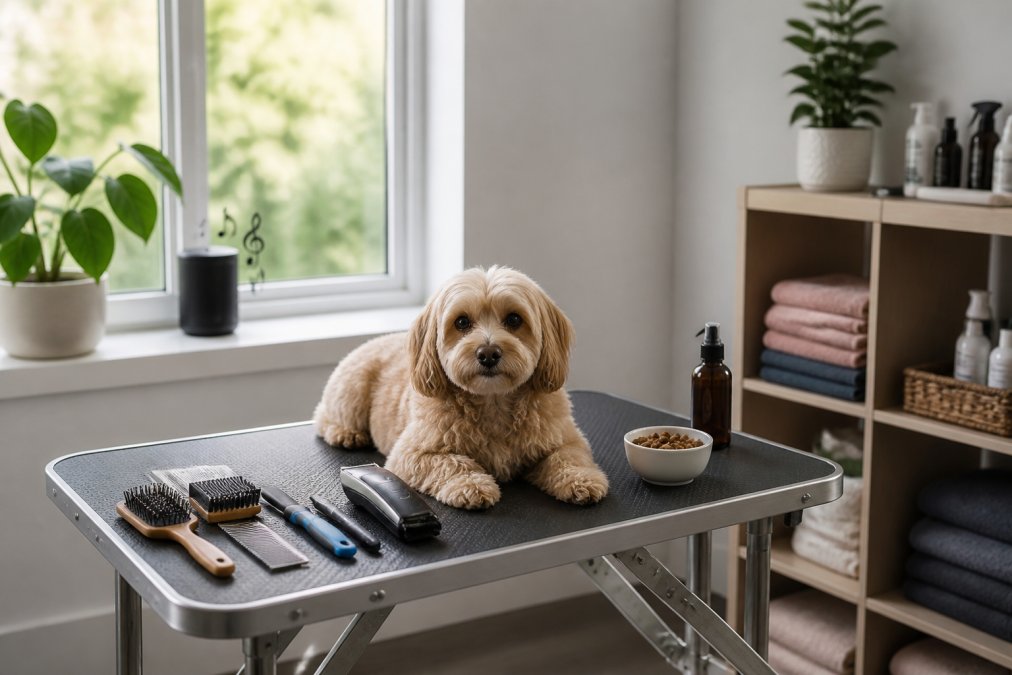
A grooming table provides stability and keeps your pet at a comfortable working height. Have high-value treats within arm's reach and reward calm behavior constantly, not just after the session but during it.
Professional Grooming vs. At-Home Care for Anxious Pets
This decision hinges on your pet's anxiety severity and your own skill level. Professional groomers trained in handling anxious pets can accomplish in one session what might take you weeks of desensitization. They understand stress signals, work quickly without rushing, and have experience with dozens of anxiety presentations.
The Puppy Loft & Faz demonstrates professional expertise. They took on an anxious dog who hadn't been groomed in seven years due to extreme stress. Rather than forcing the issue, they provided pre-groom visits to accustom the dog to the environment, smells, and sounds. The result was a successful grooming without incident.
At-home grooming offers advantages for mildly anxious pets. You control the pace, your pet stays in a familiar environment, and you build the desensitization relationship yourself. If your pet shows mild anxiety (hesitation, reluctance, but willing to tolerate grooming), at-home care with desensitization is feasible. If your pet shows severe anxiety (aggression, extreme trembling, loss of bladder control, or attempts to escape), professional help is necessary.
The demand for quieter, vibration-reduced clippers is a key driver in dog grooming trends for 2026, specifically to reduce grooming stress for nervous or anxious dogs. Groomers are increasingly focusing on creating quiet, calm spaces, minimizing distractions, using soft lighting, and playing calming music.
Conclusion
Grooming a nervous pet requires more than the right tools, it requires understanding that anxiety is a physiological response to specific triggers, and those triggers can be systematically reduced through desensitization, environmental design, and tool selection. The safe grooming tools for nervous pets market has evolved dramatically, offering quiet clippers, gentle brushes, and calming aids that previous generations of pet owners simply didn't have access to.
Start with assessment: identify your pet's specific anxiety triggers. Is it sound? Vibration? Water? Handling? Once you know the trigger, you can choose tools and techniques that address it directly. Pets R Smarter curates premium grooming solutions specifically designed for sensitive pets, with every product selected for safety, comfort, and effectiveness. Explore their collection and find the tools that match your pet's needs, backed by their Tail Satisfaction Guarantee so you can invest with confidence.
Frequently Asked Questions
How can I tell if my dog is experiencing grooming anxiety?
Signs of grooming anxiety include trembling, excessive panting, whining, attempting to escape, and resistance to handling. A 2026 study found that 33% of dogs show fear or anxiety toward grooming, particularly during nail trims and baths. Watch for these stress signals before, during, and after grooming sessions. If your pet displays these behaviors, consider using quieter tools and gradual desensitization rather than forcing the experience.
What are the best low-noise pet clippers for anxious dogs?
Low-noise clippers under 50 decibels significantly reduce anxiety triggers. The PETSPARX Low Noise Motor Rechargeable Dog Nail Grinder operates under 50 dB with adjustable speeds, while the Wahl Bravura Lithium-Ion Cordless Clipper offers quiet, low-vibration operation ideal for nervous pets. For extremely noise-sensitive dogs, the QUIET X Professional Dog Nail Grinder operates at just 20 dB with minimal vibration. Start with the quietest option available and introduce it gradually using positive reinforcement.
How do I desensitize my nervous pet to grooming tools?
Begin with short 2-3 minute sessions and gradually increase duration over two weeks. Allow your pet to sniff and investigate tools before use. Use high-value treats throughout the session to create positive associations. Never force the experience. Play calming music, maintain a relaxed tone, and reward calm behavior. Research shows that counter-conditioning combined with behavioral therapy significantly reduces grooming-related stress and improves training outcomes for anxious dogs.
Are there grooming alternatives for pets who absolutely hate water baths?
Yes. Waterless shampoos like SilvaPlex offer a no-rinse foam solution that cleans without the trauma of a traditional bath. These products are especially effective for 'water-hater' pets and provide a stress-free grooming experience. Waterless options maintain skin pH balance and are safe for dogs, cats, and other small animals. For pets with extreme water anxiety, this alternative can make grooming manageable while still maintaining proper hygiene and coat health.
This article was written using GrandRanker