

Why Your Dog Fears the Grooming Brush
Table of Contents
- Why Dogs Develop Fear of the Grooming Brush
- Signs of Dog Grooming Anxiety You Shouldn't Ignore
- How to Desensitize a Dog to Grooming Tools
- Best Grooming Brushes for Sensitive Dogs
- Consent-Based Grooming: Building Trust Without Force
- Managing Matted Fur Without Causing Pain
- Frequently Asked Questions
Last Updated: September 2, 2026
Why Dogs Develop Fear of the Grooming Brush
According to the Dog Aging Project study published in Veterinary Research Communications, 33% of dogs showed at least mild to moderate fear of grooming-related activities like nail trims and baths. When researchers expanded their analysis across all fear and anxiety questions, 91% of dogs exhibited at least one mild to moderate fear response. This research shows how common grooming anxiety truly is.
Your dog's fear of the grooming brush isn't defiance or stubbornness, it's a learned response rooted in sensory sensitivity, past experiences, or both. Understanding why your dog reacts this way is the first step toward building a grooming routine that doesn't trigger panic.
At Pets R Smarter, we work with pet parents who struggle with this exact issue. The good news: fear of grooming tools is addressable with patience, the right approach, and often, the right tools.
Past Negative Experiences and Trauma
A single bad grooming experience can shape a dog's response for years. If a puppy's first brush encounter involved pain, matted fur being yanked, or skin being pinched, that negative association sticks. The brush becomes a predictor of discomfort.
Rescue dogs often carry this burden. A dog groomed roughly in a shelter or never properly introduced to grooming tools may have internalized that brushing means something bad is about to happen. Research on fear conditioning in dogs shows these associations can persist even after the original trigger is removed. The dog's nervous system has learned to anticipate pain.
What makes this worse is that the dog can't tell you what happened. They communicate through behavior: pulling away, lip licking, yawning, or tucking their tail. When these early signals are ignored and brushing continues, the dog learns that communicating doesn't work. The fear escalates.
The fix isn't punishment or forcing the brush. It's starting over with a completely different narrative, teaching your dog that the brush is safe and that you listen when they're uncomfortable.
Sensory Sensitivity and Tool Design
Not every dog reacts the same way to the same brush. Some dogs have tactile sensitivity, making certain textures genuinely painful or overwhelming. A slicker brush with fine, tightly-spaced wires creates a different sensation than a soft boar bristle brush. Metal teeth vibrate differently than plastic.
Recent research on canine stress during grooming procedures found that dogs can appear calm while experiencing significant autonomic stress, meaning your dog might look fine while their nervous system is in overdrive. Choosing the right tool, one that matches your dog's sensory tolerance, is critical.
A dog with sensitive skin or a history of matting may have developed a pain association specifically with being brushed. The solution is to match the tool to the dog's tolerance level and rebuild trust gradually.
Signs of Dog Grooming Anxiety You Shouldn't Ignore
Your dog communicates fear through body language long before they snap or run. Learning to read these signals is essential, as ignoring them turns mild anxiety into serious behavioral problems.
Early stress signals appear subtle: your dog might turn their head away from the brush, shift their body to create distance, or lick their lips repeatedly. The ears may flatten slightly and the tail might tuck. These aren't signs of defiance, they're signs of discomfort.
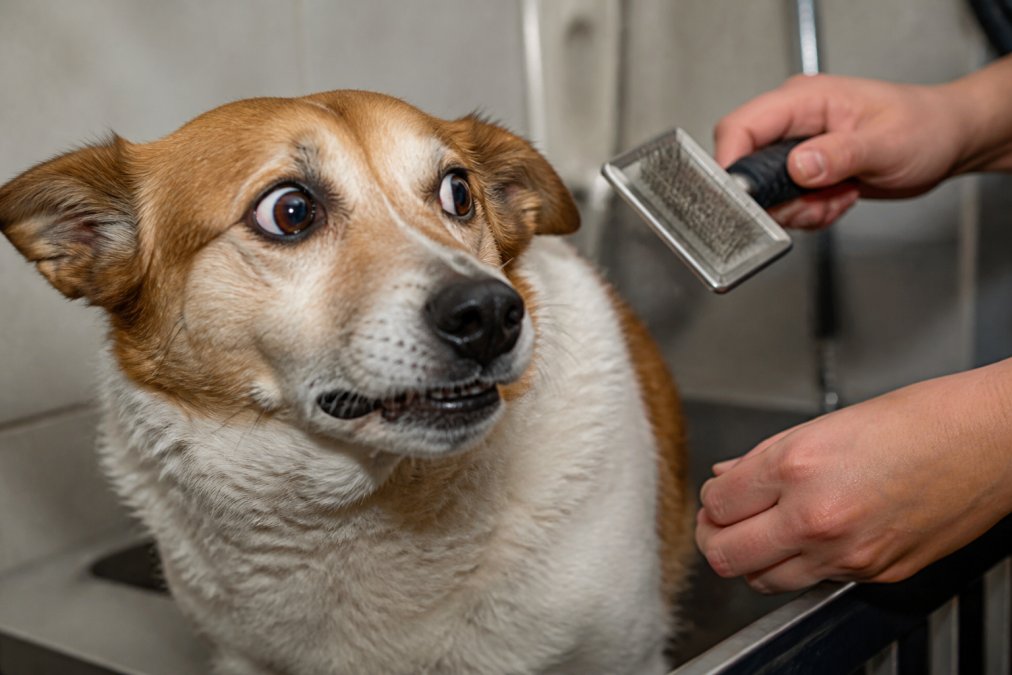
If brushing continues past these early warnings, the response escalates. Your dog might move away more forcefully, snap at the brush, or freeze in place. Some dogs will shake, pant heavily, or whine. A few will become completely still, a state called "learned helplessness," where the dog has given up trying to communicate discomfort.
The Dog Aging Project found that 35.2% of dogs showed at least mild to moderate fear of nail trims specifically, and these anxiety responses are tied to past experiences and how owners handle grooming sessions.
| Anxiety Signal | What It Means | What You Should Do |
|---|---|---|
| Head turning away, lip licking | Early discomfort | Stop and take a break |
| Ears flattened, tail tucked | Moderate anxiety | Pause the session entirely |
| Attempting to move away | Escalating fear | End grooming for the day |
| Freezing, trembling, panting | Severe stress | Seek professional help |
| Snapping, growling at the brush | Fear-based aggression | Do not continue; consult a behaviorist |
These signals are your dog asking for help. Listening to them and adjusting your strategy prevents grooming anxiety from becoming a lifelong problem.
How to Desensitize a Dog to Grooming Tools
Desensitization works by breaking the grooming process into tiny, non-threatening steps. The goal is to rebuild your dog's association with the brush from "danger" to "neutral" to eventually "positive."
This typically takes 2-4 weeks of consistent, short sessions. The payoff is enormous: a dog who tolerates grooming without stress and a routine that's enjoyable for both of you.
Phase 1: Introduction Without Contact
Start by simply having the brush present in your dog's space without using it. Leave it on the floor near where your dog rests. Let your dog investigate at their own pace.
For the first 3-5 days, the brush is just an object in the environment. Next, hold the brush in your hand during normal, positive interactions. Pet your dog gently while holding the brush nearby. Reward calm behavior with treats and praise. You're creating a new association: brush in hand equals good things happening.
A dog with grooming trauma needs proof that the brush won't hurt before you ever make contact with it.
Phase 2: Positive Association and Treats
Once your dog is calm around the brush, introduce light contact. Gently touch the brush to your dog's fur for one second, then immediately give a high-value treat. Repeat this 3-5 times, then stop.
The timing is critical. The reward must come immediately after brush contact, so your dog's brain links the two together. Over several days, gradually increase contact time from one second to five seconds, always followed by a treat.
Use high-value treats, chicken, cheese, or something your dog genuinely loves. Regular kibble won't work here.
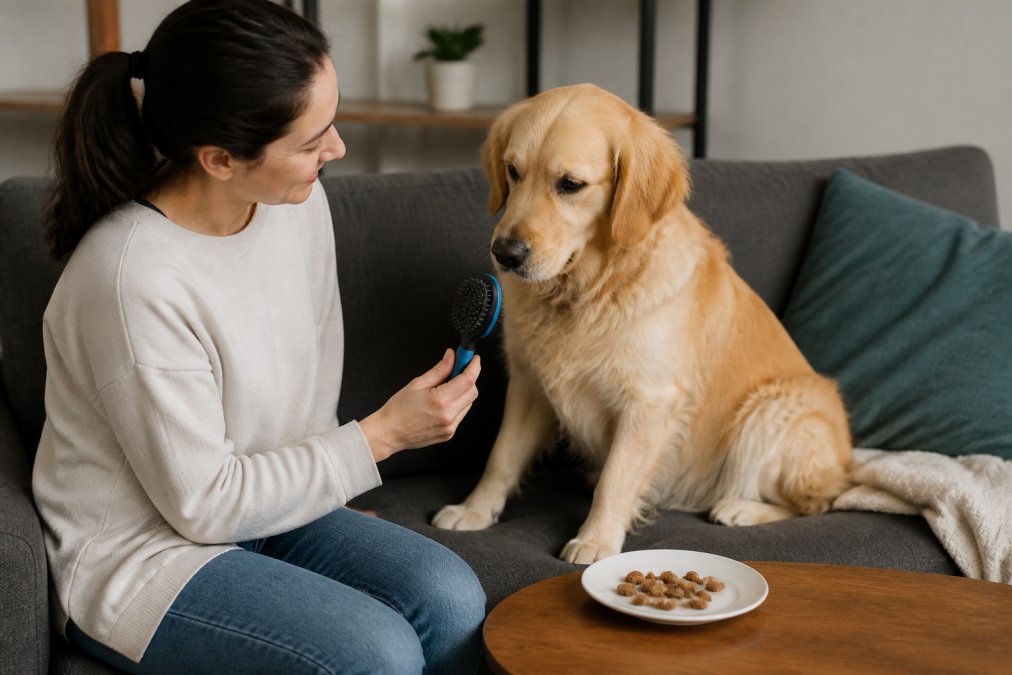
Keep sessions short, no more than 2-3 minutes. End on a positive note before your dog gets uncomfortable. Consistency matters more than duration.
Phase 3: Gradual Handling and Brief Sessions
Once your dog accepts brush contact without anxiety, begin very light brushing. Make a single gentle stroke, then treat and praise. Gradually increase to three strokes, then five, always keeping pressure light and sessions brief.
Watch your dog's body language constantly. The moment you see early stress signals, stop immediately. This teaches your dog that their communication works and that you respect their boundaries.
Introduce the actual grooming brush gradually, starting with the softest option. A boar bristle brush or soft slicker brush is gentler than a metal-toothed comb. For dogs with severe sensory sensitivity, even a soft human hairbrush might be a better starting point.
By the end of Phase 3, your dog should tolerate 5-10 minutes of gentle brushing without significant anxiety.
Best Grooming Brushes for Sensitive Dogs
Not all brushes are created equal, especially for anxious or sensitive dogs. The right tool can make the difference between a dog who tolerates grooming and one who dreads it.
For dogs with grooming anxiety, softer is better. A boar bristle brush has naturally softer bristles that are gentler on the skin and create less vibration than metal tools. The bristles distribute pressure more evenly, reducing the sensation of being pinched.
For matted or tangled coats, a mat splitter or dematting comb designed for gentle handling works better than a standard slicker brush. These tools break up mats without pulling hair from the root, reducing pain and discomfort.
The American Kennel Club recommends matching brush type to coat length and texture, which is especially important for anxious dogs.
Pets R Smarter carries grooming tools designed with sensitive dogs in mind. The Slicker Grooming Brush for Dogs & Cats ($14.99) offers a practical option for basic maintenance with a gentler design than traditional metal slickers. For dogs with heavier shedding or thicker coats, the Dog & Cat Deshedding Grooming Brush ($60.75) provides professional-grade performance without harsh sensation. Both are selected specifically for dogs needing a more comfortable grooming experience.
When choosing a brush for your anxious dog, consider bristle softness, bristle spacing, weight, and handle design. Start with the softest option available. You can always move to a firmer brush as your dog becomes more comfortable.
Consent-Based Grooming: Building Trust Without Force
The grooming industry is shifting toward "consent-based grooming," a philosophy that prioritizes the dog's comfort and agency over convenience or appearance. This approach recognizes that a dog's emotional wellbeing matters as much as their coat.
Consent-based grooming means respecting your dog's communication. If your dog indicates discomfort, you stop. You don't push through or hold the dog still. You listen, adjust, and try again when your dog is ready.
This isn't permissive, it's strategic. A dog who learns that their signals are heard develops trust, which becomes the foundation for all future grooming. Over time, many dogs become willing participants rather than reluctant subjects.
Build in breaks. If your dog shows stress signals, pause for 30 seconds and let them move away if they want. Resume only when your dog is calm. This teaches your dog that grooming is something you do with them, not to them.
Real case studies show this works. One dog named Blue had developed a strong bite response during grooming because previous handlers forced procedures despite his clear discomfort. By shifting to consent-based handling and respecting his boundaries, his owners were able to groom him without triggering defensive behavior. Another dog, Rooney, learned to cooperate with nail trims by being allowed to find a comfortable position and having the option to stop when overwhelmed.
The shift from force to consent is more effective. Dogs groom better when they're calm, their skin is less reactive, and the whole experience takes less time.
Managing Matted Fur Without Causing Pain
Matting is one of the most painful grooming experiences a dog can have. Tight knots pull on the skin and often hide skin irritation underneath. For a dog with grooming anxiety, discovering matting often justifies their fear, because matting does hurt.
For mild matting, a dematting comb or mat splitter works better than a slicker brush. These tools slide under the mat and break it apart from the base rather than pulling through from the top.
For severe matting, especially on a fearful dog, a "reset groom", a careful clip-down that removes the matted coat entirely, prevents further skin irritation and gives you a fresh start for rebuilding positive grooming experiences.
Prevention is always better than rescue. Regular brushing, even just 5-10 minutes, 3-4 times per week, prevents matting from developing in the first place. For anxious dogs, these short, frequent sessions are less stressful than longer sessions spaced further apart.
Fear of the grooming brush doesn't have to be permanent. It's a learned response, and learned responses can be unlearned. The process requires patience, the right tools, and a genuine commitment to listening to your dog's signals.
Start with desensitization. Choose a brush that matches your dog's sensory tolerance. Respect consent-based principles. A dog who tolerates grooming without anxiety is healthier, happier, and easier to care for in every way.
Pets R Smarter is committed to making grooming easier for both you and your dog. Our curated selection of grooming tools is chosen specifically for dogs that need a gentler, more comfortable experience. Backed by our Tail Satisfaction Guarantee, every product is designed to prioritize your pet's comfort and wellbeing. Start with the right tool, and watch your dog's relationship with grooming transform.
Frequently Asked Questions
Why is my dog so scared of the grooming brush?
Dogs fear grooming brushes for several reasons: past traumatic experiences, sensitivity to the sensation of wire bristles or metal teeth, fear of restraint or loss of control, or underlying pain from skin conditions or matting. According to the Dog Aging Project, 33% of dogs show at least mild to moderate fear of grooming procedures. A single negative experience during puppyhood can create lasting associations, making the brush itself a trigger for anxiety.
What are the signs of dog grooming anxiety I should watch for?
Early anxiety signals include turning the head away, lip licking, yawning, and body tension. As fear escalates, dogs may flatten their ears, tuck their tail between their legs, tremble, or attempt to escape. Some dogs suppress visible behavior while experiencing internal stress, their heart rate and cortisol levels elevate even if they appear calm. Recognizing these signs early prevents escalation and protects your dog's emotional health during grooming.
How do I desensitize my dog to grooming tools safely?
Desensitization works in phases: first, let your dog see and smell the brush without touching them. Next, pair the brush with high-value treats so positive associations form. Then, gently touch the brush to their body for one second, reward, and stop. Gradually increase contact duration over weeks. Keep sessions short (2-3 minutes) and always end on a positive note. This counter-conditioning approach rewires your dog's emotional response, turning fear into calm acceptance.
What grooming brushes work best for dogs with sensitive skin?
Soft boar bristle brushes and human hairbrushes are gentler alternatives to slicker brushes for sensitive dogs. The Slicker Grooming Brush for Dogs & Cats ($14.99) offers a practical starting point for at-home grooming, while the Dog & Cat Deshedding Grooming Brush ($60.75) provides a premium option designed for routine maintenance. Start with the softest option available, introduce it slowly during desensitization, and avoid wire-heavy tools that can irritate skin or trigger tactile sensitivity.
This article was written using GrandRanker