

Why Pet Nail Clippers for Thick Nails Are Necessary
Table of Contents
- Why Pet Nail Clippers for Thick Nails Are Necessary
- Signs of Overgrown Dog Nails and Thick Nail Problems
- Clipper Types: Scissor, Guillotine, and Grinders for Thick Nails
- How to Trim Thick Dog Nails Safely
- How Often to Trim Dog Nails
- Troubleshooting Clipper Failure and Desensitization Tips
- Frequently Asked Questions
Last Updated: September 20, 2026
Why Pet Nail Clippers for Thick Nails Are Necessary
Thick nails demand a tool built for density, not a repurposed human clipper. This guide from Pets R Smarter explains exactly why pet nail clippers for thick nails are necessary, how to choose the right one, and how to trim safely at home.
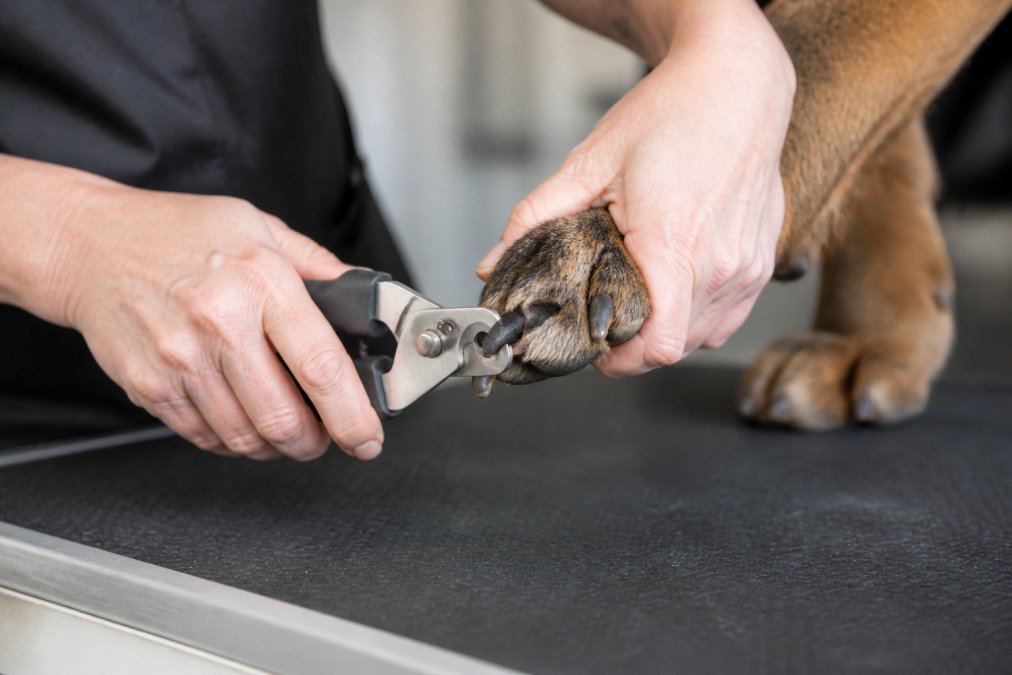
A dull or weak blade does not slice a dense nail, it crushes it. According to Pet Magasin's grooming guidance, that crushing force is the most common source of discomfort during at-home trims. The nail is made of keratin, and thick nails have far more of it packed into the same small space.
Here is the core problem most owners run into: human clippers lack the blade tension and use to cut through that density.
Signs of Overgrown Dog Nails and Thick Nail Problems
Overgrown nails are the first warning sign that thickness is becoming a problem. When a nail grows too long, it curves downward and forces the paw into an unnatural position, shifting pressure distribution across the toes.
Watch for these signs of overgrown dog nails:
- A clicking sound when your dog walks on hard floors
- Nails visibly touching the ground while standing
- Splayed or flattened toes
- Reluctance to walk or run
- The quick extending further down the nail over time
Clipper Types: Scissor, Guillotine, and Grinders for Thick Nails
Three tool types dominate at-home grooming, and each handles thick nails differently. The right choice depends on your dog's nail density, your comfort level, and how much time you want to spend per session. But before comparing them, it helps to understand what "thick" actually means at the blade.
- Blade bevel angle. A shallow bevel creates a thin, sharp edge that slices. A steep bevel creates a wedge that pushes the nail apart. Thick nails need the slicing edge.
- Lever arm length. Longer handles multiply your hand force. Scissor-style clippers use this mechanical advantage; guillotine clippers do not.
- Spring tension. Weak springs let the blade drift during the cut, which produces a jagged edge and a second, smaller split.
| Clipper Type | Best For | Key Strength | Main Drawback |
|---|---|---|---|
| Scissor-style clippers | Thick, dense nails | Maximum leverage and a slicing bevel | Requires steady hands |
| Guillotine clippers | Medium nails | Simple squeeze action | Weak on very thick nails |
| Nail grinders | Finishing, anxious pets | Smooths without crushing | Slower on dense nails |
Scissor-Style Clippers
Scissor-style clippers use two curved blades that close around the nail, giving you the mechanical advantage needed for dense material. Business Insider (2026) identifies large tension springs and stainless steel blades as the components that let these tools cut through thick nails smoothly. The ergonomic handle matters too: you are applying real force, and a comfortable grip keeps the cut controlled.
Guillotine Clippers
Guillotine clippers feed the nail through a ring and slice it with a single squeeze. They work well on medium nails and are easy to learn. Where they fall short is thickness: the small blade and limited leverage struggle once keratin density climbs, and forcing the cut risks the vertical splitting that damages the nail bed. If you already own a pair and your dog's nails have thickened, retire them rather than pushing harder.
Nail Grinders
A nail grinder files the nail down instead of cutting it. ToeGrips (2026) points out that rotary tools can cauterize while shortening, which reduces bleeding risk. Grinders suit anxious dogs who tolerate vibration better than a sudden snap, and they leave a smooth cut. The trade-off is speed, since grinding a thick nail takes longer than a clean clip. Use a coarse drum on dense nails and a fine drum to finish.
Breed-Specific Density: Why One Tool Does Not Fit All
Most guides treat "thick nails" as a single category. In practice, density varies by breed and by the individual dog's age and activity level. Breeds with heavy, compact paws, Mastiffs, Bulldogs, Rottweilers, and Great Danes, tend to grow nails with a thicker outer wall and a wider quick. Sighthounds like Greyhounds have long, curved nails that are hard in a different way. Toy breeds rarely need heavy-duty clippers at all.
How to Trim Thick Dog Nails Safely
Learning how to trim thick dog nails safely starts with one rule: never force a dull blade through the nail. Here is the sequence that keeps the quick intact, along with the reasoning behind each step.
- Locate the quick first. On light nails it appears pink; on dark nails, look for a chalky white ring near the tip. Stop there. On thick nails the quick sits deeper than it looks, so the chalky ring is your most reliable landmark.
- Take small cuts. Remove thin slices rather than one large chunk. You can always trim more. Each slice lets you re-check the nail's center before committing.
- Angle the blade correctly. Cut straight across, perpendicular to the nail's growth, not at a steep slant. A slanted cut leaves a thin edge that catches on floors and splits.
- Check after each cut. The center of the nail turns grayish-white as you approach the quick. On thick nails this transition is gradual, so check after every slice.
- Have styptic powder ready. If you nick the quick, apply pressure and powder immediately.
Why Thick Nails Split, and How to Prevent It
A clean cut is a slice. A bad cut is a split. The difference is whether the blade's edge is thin enough to separate the keratin layers cleanly or blunt enough to push them apart. When a dull or undersized blade pushes, the nail fails along its vertical grain, the same way a piece of wood splits along the grain rather than across it.
Reading a Thick, Dark Nail
Dark nails hide the quick, and thick dark nails hide it even better. Three cues help:
- The chalky ring. As you slice, the cut surface changes from solid dark to a chalky white or gray. That ring is the boundary before the quick.
- The center dot. On some nails a small dark or pink dot appears in the center of the cut surface. Stop immediately when you see it.
- The texture change. Dense outer nail feels hard and smooth; the inner nail near the quick feels softer and slightly waxy under the blade.
If You Cut the Quick
A nicked quick bleeds more than most owners expect, and on a thick nail the bleed can be persistent. Apply styptic powder or a styptic pencil with light pressure for 30 to 60 seconds. If bleeding continues past a few minutes, apply a clean compress and contact your veterinarian. Do not resume trimming that nail for at least a week.
When to Stop and Call a Professional
Some nails are beyond at-home tools. If the nail is cracked, ingrown into the pad, or surrounded by swollen tissue, stop and book a grooming or veterinary appointment. Thick nails that have not been trimmed in months often have a quick that has grown most of the way down the nail, and shortening them safely may require several sessions under professional supervision.
How Often to Trim Dog Nails
Most dogs need a trim every three to four weeks, though thick-nailed dogs often need more frequent, lighter sessions. The nail should never touch the floor when your dog stands.
Troubleshooting Clipper Failure and Desensitization Tips
Clipper failure almost always traces to one cause: the blade dulled and started crushing instead of cutting. CB Pet Market (2026) stresses that clippers do not stay sharp indefinitely, so a tool that worked last year may be damaging nails now. If your clipper stalls, twists the nail, or leaves a jagged edge, replace it.
The second failure point is the dog, not the tool. Desensitization solves most resistance:
- Leave the clippers out where your dog can sniff them
- Touch the tool to each paw without cutting, then reward
- Trim one nail per session for a week, then two
- Pair every session with a high-value treat
Frequently Asked Questions
What happens if you use the wrong nail clippers on a dog?
Using the wrong clippers can crush or split thick nails instead of cutting cleanly. Dull or weak blades apply crushing force that causes pain and may lead to vertical splitting into the nail bed. This can result in bleeding, infection, and long-term nail trauma. Always match the clipper size and strength to your dog's nail thickness; for thick nails, choose heavy-duty clippers with high-tension springs and stainless-steel blades.
How do you tell if a dog's nails are too thick for standard clippers?
If your clippers struggle to cut through the nail, leave ragged edges, or require two hands and significant force, the nails are too thick for standard clippers. Other signs include the nail cracking or splitting vertically, or the clipper blade separating during the cut. For thick nails, you need clippers with a larger blade, stronger spring, and ergonomic handle that provides better leverage.
Are heavy-duty nail clippers safer for large dog breeds?
Yes, heavy-duty clippers are safer for large breeds with thick nails because they provide the mechanical advantage needed to slice through dense keratin without crushing. Standard clippers often lack the blade tension and size to handle thick nails, leading to pain and injury. Heavy-duty models with stainless-steel blades and high-tension springs deliver a smooth cut, reducing the risk of nail splitting and hemorrhage.
Can dull clippers cause pain during a pet nail trim?
Absolutely. Dull clippers crush the nail rather than cut it, which dogs find particularly unpleasant. This crushing force can also cause micro-fractures that lead to vertical splitting and expose the quick. To prevent pain, replace or sharpen clippers regularly. A sharp clipper makes a clean cut with minimal pressure, keeping your pet comfortable and cooperative.
Trimming thick nails at home is manageable once the tool matches the job. At Pets R Smarter, we curate grooming tools chosen with professional input, from stainless steel clippers to deshedding brushes, so the cut stays clean and your dog stays comfortable. Every order is backed by our Tail Satisfaction Guarantee, and our team is here to help you pick the right size for your pet. Get started with Pets R Smarter and make nail care a calm, quick part of your routine.