

Why Premium Grooming Tools Matter for Your Pet's Health
Table of Contents
- Why Premium Grooming Tools Matter: The Real Difference
- How Quality Materials Impact Your Pet's Skin and Coat Health
- Ergonomic Grooming Tools for Pets: Comfort for Both Handler and Animal
- Safety, Precision, and Injury Prevention With Professional-Grade Equipment
- How to Choose Dog Grooming Shears That Work for Your Needs
- Dog Grooming Tool Maintenance Tips: Extending Longevity and Performance
- Budget vs. Professional-Grade Tools: Long-Term Cost-Benefit Analysis
- Conclusion: Investing in Premium Grooming Tools Pays Off
Why Premium Grooming Tools Matter for Your Pet's Health
Last Updated: August 4, 2026
Understanding why premium grooming tools matter has become essential for pet owners who want to provide genuine care rather than just maintenance. According to American Veterinary Medical Association grooming guidelines, regular grooming using quality tools directly impacts skin health, coat condition, and early detection of health issues. A dull blade doesn't just tug uncomfortably on fur; it can cause microscopic trauma to hair follicles and skin. Premium grooming tools prevent injury, reduce stress, and make the entire process faster and more effective.
Why Premium Grooming Tools Matter: The Real Difference
Premium tools are engineered with specific materials and tolerances that directly affect performance. A quality slicker brush maintains consistent bristle spacing through hundreds of sessions, while budget alternatives lose shape after a few months. A dull clipper blade forces you to apply more pressure, increasing the risk of clipper burn, a painful skin irritation that can take weeks to heal. Professional-grade clippers maintain their edge through proper metallurgy, requiring less force and delivering a clean cut.
A premium clipper costs more upfront but maintains performance for years with basic maintenance. When you calculate total cost of ownership over five years, premium tools frequently cost less per use. Animals that experience tugging during grooming develop anxiety around the process. Professional-grade tools work so smoothly that many pets actually relax during grooming, making regular maintenance sustainable and reducing accidental nicks and cuts.
How Quality Materials Impact Your Pet's Skin and Coat Health
High-carbon stainless steel holds an edge significantly longer than standard stainless because of its hardness and resistance to corrosion. When a blade stays sharp, it cuts cleanly through the hair shaft rather than crushing it, preventing split ends and maintaining coat integrity.
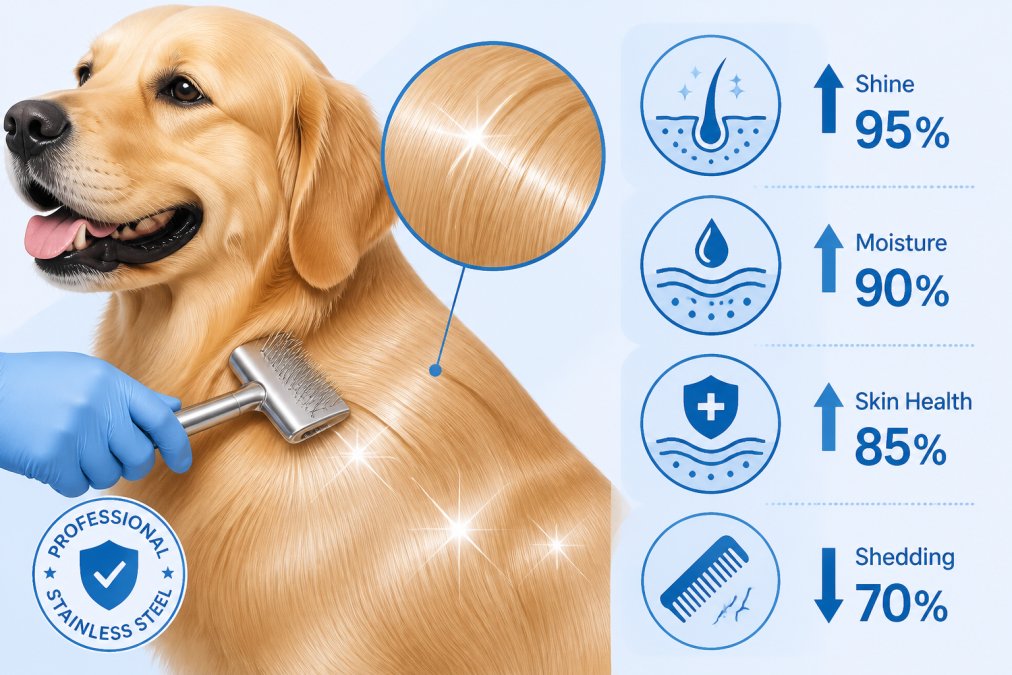
Natural bristles, particularly boar bristles, distribute natural oils through the coat while removing loose hair. Synthetic bristles can generate static electricity, creating friction and potential irritation. Premium brushes use blended bristles or high-quality synthetics that replicate these benefits without the maintenance burden.
A quality undercoat rake removes loose hair without breaking the topcoat, preventing the matted appearance that results from torn hair. Budget rakes often have blades spaced too close together or made from softer metal that bends under pressure, causing them to pull rather than cut. This distinction is critical for double-coated breeds where matting can trap moisture against the skin and create conditions for yeast or bacterial infections.
Pets groomed regularly with professional-grade tools have measurably fewer skin issues. The combination of proper mat removal, consistent brushing without trauma, and better air circulation through the coat creates an environment where skin irritation is less likely to develop.
Ergonomic Grooming Tools for Pets: Comfort for Both Handler and Animal
A poorly designed handle creates hand strain during extended grooming sessions, leading to reduced grip strength and less precise control. Premium tools distribute weight evenly and feature handles that accommodate different hand sizes and grip styles.
A tool that's comfortable to hold gives you better control and allows for gentler handling. You can position the brush or clipper at the optimal angle without straining, meaning less repositioning and less time the tool spends in contact with sensitive areas. Pets notice this difference immediately.
Holding a heavy, poorly balanced clipper for 30 minutes can create shoulder and wrist strain that accumulates over time. Professional-grade tools are lighter, better balanced, and designed to minimize the force required for operation. Many premium clippers feature cordless designs with weight distribution that allows extended work without fatigue.
Budget tools often use smooth plastic that becomes slippery when your hands are damp. Premium tools feature textured or rubberized grips that maintain contact even when wet. Professional-grade shears have balanced weight distribution along the blade, meaning you're not fighting the tool's momentum.
Safety, Precision, and Injury Prevention With Professional-Grade Equipment
A clipper blade that's too dull causes clipper burn, a thermal injury that looks minor but can become infected within days. Professional-grade clippers maintain consistent blade temperature and sharpness, eliminating this risk. The motor in premium clippers includes heat dissipation features that prevent the blade from overheating during extended use.
Quality clippers include safety guards that prevent accidental contact between the blade and skin, and many feature automatic shut-off if the blade becomes jammed. A quality slicker brush has bristles that penetrate to the undercoat without scratching skin, while budget brushes either don't reach the undercoat effectively or scratch when you apply necessary pressure.
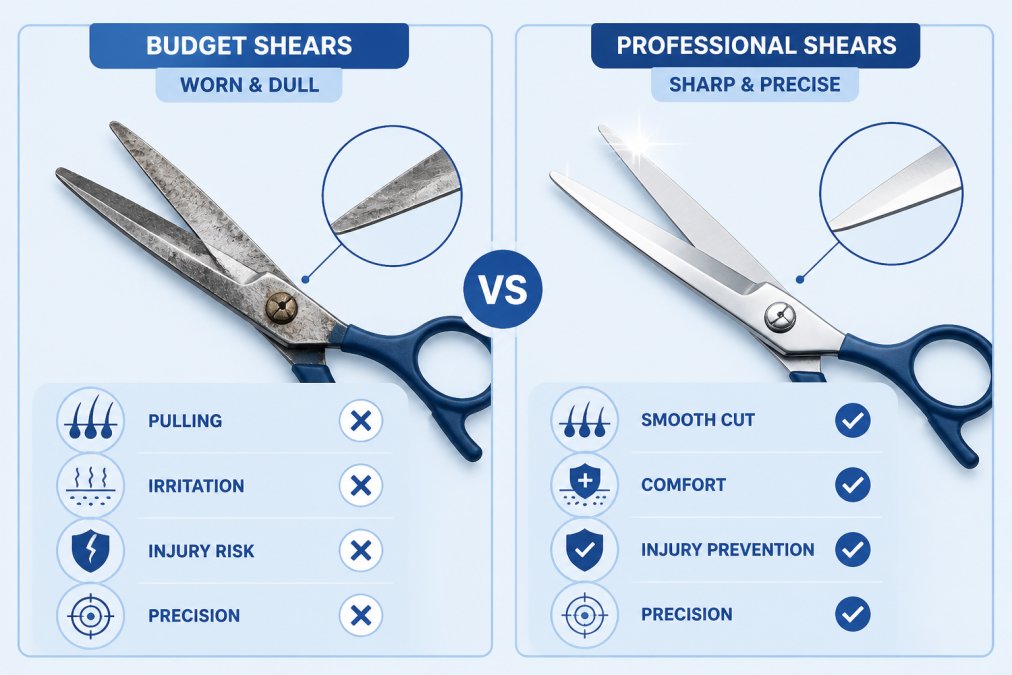
The blade alignment in professional-grade clippers is tighter than in budget models. Misaligned blades create uneven cutting, which can pull hair and cause skin irritation. Premium clippers maintain blade alignment through precision manufacturing and are often adjustable to account for wear over time. Lubrication systems in premium tools prevent blade friction, which reduces heat generation and maintains cutting performance.
How to Choose Dog Grooming Shears That Work for Your Needs
Selecting the right shears depends on your pet's coat type, your experience level, and the specific grooming tasks you'll perform. Straight shears work best for general trimming and finishing, while curved shears excel at following body contours. Thinning shears remove bulk without creating visible lines, essential for blending and creating natural-looking finishes.
Start by assessing your pet's coat type. Double-coated breeds need different tools than single-coated dogs. For double coats, invest in quality undercoat rakes and dematting tools before purchasing shears. Your skill level matters, professional-grade shears are designed for experienced handlers, but premium tools actually teach better technique because they respond precisely to your hand movements.
Consider the blade length carefully. Longer blades (8-10 inches) cover more area per stroke, speeding up work on large dogs but requiring more control. Shorter blades (6-7 inches) give better precision for detail work and small breeds.
| Shear Type | Best For | Blade Length | Learning Curve |
|---|---|---|---|
| Straight shears | General trimming, finishing | 7-9 inches | Moderate |
| Curved shears | Body contouring, blending | 7-9 inches | Moderate to High |
| Thinning shears | Blending, bulk removal | 7-9 inches | High |
| Chunker shears | Heavy mat removal | 6-8 inches | Low |
Japanese stainless steel holds an edge longer than German stainless steel but requires more careful maintenance. German steel is more forgiving of handling mistakes but needs more frequent sharpening. Weight distribution in shears matters more than total weight, a 4-ounce pair of well-balanced shears feels lighter and requires less hand effort than a 3.5-ounce pair with poor balance.
Dog Grooming Tool Maintenance Tips: Extending Longevity and Performance
The most important maintenance task is cleaning after every grooming session. Hair, skin cells, and oils accumulate on blades and in crevices, promoting corrosion and dulling edges. A simple rinse with warm water and a soft brush removes most debris.
Lubrication is critical for both clippers and shears. Professional-grade tools need lubrication every few grooming sessions. Apply a small amount of clipper oil to the blade area and work it in by running the tool briefly. Never over-lubricate; excess oil attracts dirt and creates more problems than it solves.
Professional sharpening costs between $15-40 per tool and can restore a dull blade to like-new condition. Many professional groomers send their tools for sharpening every 3-6 months, depending on usage. This is far cheaper than replacing tools and maintains performance that budget replacements can't match.
Keep tools in a dry environment away from moisture and humidity. A tool cabinet with silica gel packets maintains proper moisture levels and prevents rust. Inspect tools regularly for signs of wear, loose rivets, bent blades, or misaligned teeth indicate that the tool needs professional service.
Budget vs. Professional-Grade Tools: Long-Term Cost-Benefit Analysis
The upfront cost difference between budget and professional-grade tools can be substantial, sometimes 2-3 times higher for premium options. However, the total cost of ownership over a typical 5-year period tells a different story. A budget clipper might cost $40 but need replacement every 12-18 months, resulting in 3-4 purchases over five years. A professional-grade clipper costs $150-250 but lasts 5+ years with basic maintenance, requiring perhaps one professional sharpening per year at $25-40.
Budget tools perform poorly after 6-12 months, requiring you to work harder and longer during grooming sessions. If you groom your pet monthly and a budget tool adds 30 minutes to each session compared to a professional tool, that's 6 hours per year of wasted time. Budget tools cause more injury risk and stress to your pet. A single clipper burn requiring veterinary treatment costs $100-300 and causes your pet pain. Professional-grade tools eliminate this risk almost entirely.
Professional-grade tools retain value far better than budget alternatives. A well-maintained premium tool can be sold for 50-70% of its original cost, while budget tools have essentially zero resale value. Tools that cause microtrauma to hair shafts and skin irritation lead to more grooming-related health issues, saving hundreds in veterinary costs when prevented.
| Cost Factor | Budget Tools | Professional Tools | Winner |
|---|---|---|---|
| Initial cost | $40-60 | $150-300 | Budget |
| Annual maintenance | $0-10 | $25-40 | Budget |
| Replacement frequency | Every 12-18 months | Every 5+ years | Professional |
| Time cost (poor performance) | $100+/year | $0 | Professional |
| Injury prevention value | Low | High | Professional |
| Resale value | $0 | 50-70% | Professional |
| 5-year total cost | $200-300 | $300-400 | Similar |
When you factor in the time savings, injury prevention, pet stress reduction, and performance consistency, professional-grade tools become the economically rational choice for any pet owner who grooms regularly.
Choosing premium grooming tools is fundamentally an investment in your pet's health and your own sanity. At Pets R Smarter, we partner with industry professionals to ensure every product we offer prioritizes your pet's comfort, safety, and skin health through thoughtful design and quality materials. Our curated selection of premium grooming solutions, backed by our unwavering Tail Satisfaction Guarantee, means you can groom with confidence knowing you're using tools that actually work. Explore our collection of premium grooming solutions and give your pet the care they truly deserve.
Frequently Asked Questions
How do premium grooming tools differ from budget options?
Premium grooming tools use higher-grade stainless steel blades that stay sharp longer, feature ergonomic designs that reduce hand fatigue, and include precision engineering for cleaner cuts. Budget tools often use lower-quality metals that dull quickly, lack proper grip comfort, and can snag or pull hair rather than cut cleanly. Over time, premium tools reduce grooming time and minimize stress on your pet's skin.
Can ergonomic grooming tools for pets really reduce my dog's anxiety during grooming?
Yes. Ergonomic tools reduce handler fatigue, which means smoother, more controlled movements and shorter grooming sessions. When you're not struggling with uncomfortable grips or fighting dull blades, your dog senses your calm confidence. Sharper, well-maintained blades also work faster and cause less tugging, which many anxious dogs find less stressful than prolonged grooming with inferior tools.
What are the best dog grooming tool maintenance tips to keep tools working like new?
Clean blades after every use with a soft brush to remove hair and debris. Oil moving parts weekly with appropriate grooming tool lubricant to maintain smooth operation and heat dissipation. Store tools in a dry place away from moisture. Sharpen blades regularly through a professional sharpening service or follow manufacturer guidelines. Check for rust or corrosion monthly. Proper maintenance extends tool life by years and keeps blades performing at peak precision.
Is the higher cost of premium grooming tools worth the investment?
Long-term, yes. Premium tools cost more upfront but last 3-5 times longer than budget alternatives, meaning lower replacement costs over time. They also reduce grooming time by 20-30% due to superior cutting efficiency, saving you hours annually. Professional-grade tools minimize skin irritation and matting, potentially reducing vet visits. When you factor in durability, performance, and your pet's comfort and health benefits, premium tools typically cost less per use over their lifetime.
This article was written using GrandRanker